
Vandaag of morgen in huis

Kwaliteit gegarandeerd

Welkomstaanbiedingen ontgrendelen: GRATIS bezorging | Tot 80% korting | Gratis 30 dagen JoyPlus-proefperiode
Download de app
A flat car battery or a soft tyre always seems to happen at the worst time. A car jump starter with compressor combines a portable jump starter with a tyre inflator and, sometimes, a power bank and LED emergency light. That sounds convenient, but not every device is right for every car, motorbike or situation.
The main pitfalls often aren’t about appearance, but about specifications and how the device is used:
For most cars, SUVs and motorbikes, you’ll need a portable 12V jump starter. Also check the recommended engine size for petrol and diesel engines. A diesel engine generally needs more starting power than a petrol engine of a similar size.
Only use a diesel engine jump starter if the product information clearly states that it supports diesel engines. A standard 12V car battery booster may not be suitable for a lorry or another vehicle with a different electrical system. Check your vehicle’s manual and the manufacturer’s specifications first.
A high amp rating catches the eye, but don’t compare products on that figure alone. Also check:
The ACEZUK M03 is listed as 7000 A in the product name, while its description states an improved peak current of 8000 A. This difference is a good reason to check the current product page and manual before buying. According to the product description, the device is designed for 12V batteries and vehicles with diesel engines up to 10.0 litres. Treat figures like these as product specifications, not as a guarantee that every engine will start in all conditions.
A 150 PSI jump starter with air compressor can come in handy if a tyre is soft, but PSI only tells you the maximum pressure. Also look for:
According to the ACEZUK M03 product description, the compressor delivers 35 litres per minute, has four preset modes and switches off when the set pressure is reached. The same description advises against running the pump continuously and recommends letting the device cool down if it gets very hot. This matters if you need to top up several tyres on an SUV or caravan.
A portable car power bank is handy on a long drive or camping trip. Check how many USB ports it has and whether it includes USB-C as well as USB-A. Also look at the charging time and the type of adaptor recommended.
An LED emergency light can help when connecting jump leads in the dark. Different light modes, such as steady, flashing or SOS, can be useful, but they also use battery power. Store the jump starter somewhere dry and avoid leaving it exposed to extreme heat or frost for long periods.
For use in the Netherlands, clear controls, sturdy clamps and an easy-to-read display are particularly important. Features are only useful if you can find them quickly when you’re under pressure.
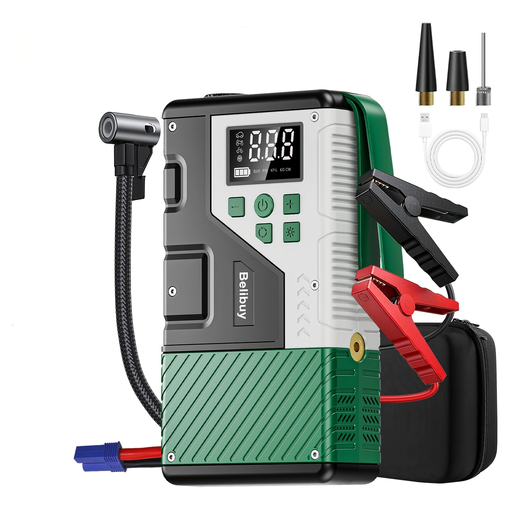
Why it suits this type of user: The combination of 12V jump-starting, a compressor, an LCD and an LED light makes this a straightforward option for motorists who want to keep one device in the car.
The product name specifies both 150 PSI and 12V, and mentions an LCD and emergency terminals. Before buying, check the full compatibility information and operating time.
12V model, built-in 150 PSI compressor, LCD and LED light, according to the product listing.

Why it suits this type of user: A good fit if you want to charge devices as well as jump-start your vehicle, and regularly top up tyres, bikes or other inflatables.
The product description mentions smart safety features, automatic shut-off and a warning to let the compressor cool down. Check the stated 7000A in the name against the 8000A in the description before buying.
26800 mAh, USB and USB-C ports, 150 PSI compressor, 3.4-inch screen and four pressure modes, according to the product description.
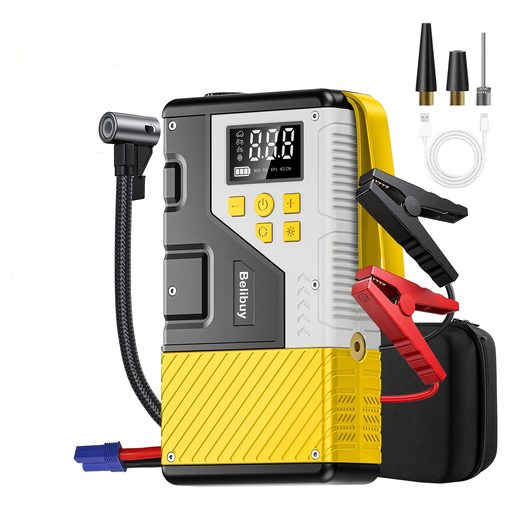
Why it suits this type of user: A second colour option in the same product range can be handy if you want to spot your emergency kit quickly in a full boot or workspace.
The listing makes the key features clear: 12V, 150 PSI, LCD and LED light. Before ordering, check what’s included in the box and whether it’s suitable for your engine size.
12V emergency jump starter, compressor up to 150 PSI, large LCD and LED lighting, according to the product name.
Don’t use a compressor to deal with a puncture. A tyre that loses pressure quickly needs to be checked. Recharge the jump starter after use and check it every few months. According to the ACEZUK product description, recharging every two to three months is recommended.
We’ve put together a full, up-to-date list of products that meet these strict selection criteria and the applicable European safety regulations.
No. Check the engine size, engine type and vehicle voltage. A 12V car jump starter is designed for vehicles with a 12V system, but the stated range for petrol and diesel engines varies from model to model.
Its lifespan depends on storage temperature, how often it’s charged, battery quality and how it’s used. Store the device somewhere dry, charge it according to the manual and let the compressor cool down between uses. A lithium battery left completely flat for a long time may lose capacity.
Charging the built-in battery generally uses less power than running an electric tyre inflator from the car, but the exact amount varies by model. An LCD, light and USB charging function also use power. So charge the unit before a long journey and check the remaining battery level before setting off.
