
Vandaag of morgen in huis

Kwaliteit gegarandeerd

Welkomstaanbiedingen ontgrendelen: GRATIS bezorging | Tot 80% korting | Gratis 30 dagen JoyPlus-proefperiode
Download de app
A flat battery or soft tyre rarely happens at a convenient time. With a car jump starter with compressor, you can often get going and inflate your tyres yourself, without having to wait for roadside assistance. However, these devices vary considerably in capacity, connections and ease of use.
Watch out for these three common pitfalls:
First, check the voltage. 12V is common for cars, many SUVs, motorbikes, boats and lawnmowers. A car battery booster rated for engines up to, for example, 9,0 litres petrol or 6,5 litres diesel isn’t automatically suitable for every engine of that size. Cold weather, battery condition and cable connections all affect performance.
Also look for:
A so-called boost or force-start function may help with very low battery voltage, according to the product description, but it doesn’t guarantee that a completely faulty battery will work again. Only use this function after checking that the connections are correct.
A jump starter with tyre inflator is handy for a soft tyre, but always check the following:
You’ll find the correct tyre pressure on the sticker inside the door frame, on the fuel flap or in your car’s manual. The pump’s maximum PSI isn’t the recommended tyre pressure. Don’t run the compressor for longer than the manual allows, either; let it cool down if the casing gets warm.
A portable jump starter can sit in your car unused for months. Choose a model with a clear charge indicator, a sturdy storage case and automatic shut-off. According to the relevant product descriptions, several models include protection against overheating, overcharging, overcurrent and incorrect polarity, among other things.
A CE marking indicates a declaration of conformity with applicable European requirements, but it isn’t an independent quality assessment or a guarantee of a particular lifespan. Don’t store a lithium battery for long periods in a hot, sealed car. Recharge the device after use and check its charge level every few months.
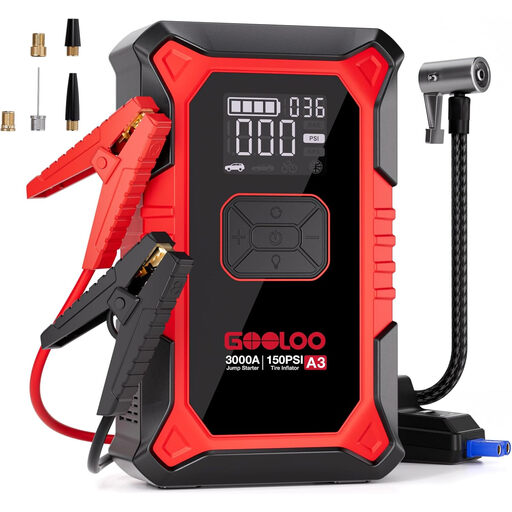
Why it suits this user: The GOOLOO A3 combines a 12V emergency car jump starter with a compressor, power bank and light in one portable device. According to the product information, it supports petrol engines up to 9,0 litres and diesel engines up to 6,5 litres.
The digital pressure reading and automatic shut-off help reduce the risk of over-inflating. Be sure to check the recommended tyre pressure yourself.
According to the product specifications: 150 PSI, 35 l/min, five inflation modes, ten safety features and a stated runtime of up to 45 minutes on a full charge.
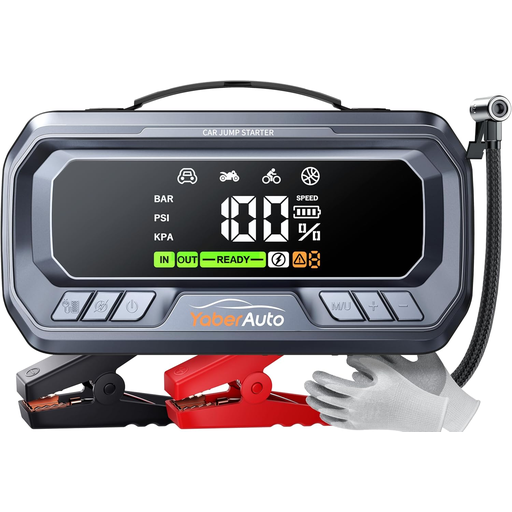
Why it suits this user: This model is designed for drivers who want a powerful power bank and straightforward controls as well as a car jump starter. The product information lists a 3,3-inch LCD screen and 65W USB-C PD charging.
According to the description, the screen shows both the set and measured pressure. Make sure the 12V compatibility is suitable for your vehicle before buying.
According to the stated specifications: 160 PSI, automatic shut-off, 600-lumen emergency light, 16.000 mAh battery and several USB and DC outputs.
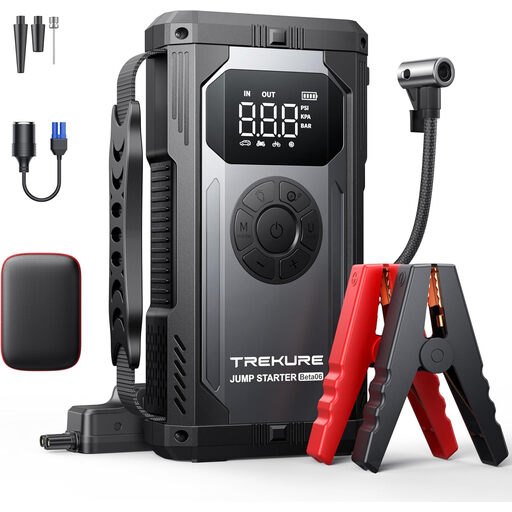
Why it suits this user: Its high stated peak current, compressor and emergency light make it a good fit for use with SUVs, vans and campers. According to the product information, this model is designed for 12V vehicles with petrol or diesel engines up to 10,0 litres.
The LCD display, automatic shut-off and safety features help you use it in a controlled way. Let the compressor cool down between uses, following the safety instructions.
Stated features include 150 PSI, 35 l/min, three lighting modes, two USB connections and ten protection functions.
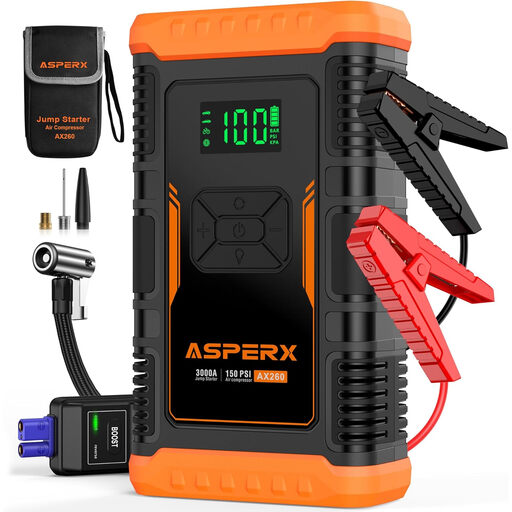
Why it suits this user: Combining jump-starting, inflation, charging and lighting in a compact device makes this model useful for motorbikes, SUVs and days out. The listed compressor has five modes and a digital pressure display.
Preset pressure and automatic shut-off mean less need to check it manually. Check the battery charge before setting off and take the right adapters with you.
According to the product information: 150 PSI, 35 l/min, LCD screen, USB outputs and stated support for petrol engines up to 10 litres and diesel engines up to 8 litres.
We’ve put together a complete, up-to-date list of products that meet these strict selection criteria and the applicable European safety requirements.
Switch off the car, check that the jump starter has enough charge and connect the red clamp to the positive terminal. Connect the black clamp to the negative terminal or a suitable unpainted earthing point, as shown in the manual. Only crank the engine for a few seconds at a time. After starting, remove the clamps in the reverse order specified in the instructions. Only use the supplied leads, and use the force-start function only when it’s specifically needed.
Its lifespan depends on charging cycles, storage temperature and maintenance. Manufacturers sometimes state more than 1.000 charging cycles, but this is a product specification, not a guarantee for every user. Recharge the jump starter after use, avoid prolonged exposure to heat and check the battery periodically.
A cordless compressor uses its built-in battery and draws relatively more power when inflating to high pressure or pumping up several tyres. As a result, running costs mainly come from recharging it. A model with automatic shut-off and sufficient battery capacity helps prevent it from running for longer than necessary. For frequent, intensive use, a compressor powered from a car’s 12V socket may be more practical than a small cordless model.
