
Vandaag of morgen in huis

Kwaliteit gegarandeerd

Welkomstaanbiedingen ontgrendelen: GRATIS bezorging | Tot 80% korting | Gratis 30 dagen JoyPlus-proefperiode
Download de app
A flat battery often happens at the worst possible moment: on a cold morning, during a long journey or in a car park with no help nearby. With a car jump starter, you can try to start a 12V vehicle independently in certain circumstances. However, not every model is suitable for every car.
Marketing claims such as “extremely powerful” or a high amp rating do not tell the whole story. Pay particular attention to the combination of engine compatibility, safety features, battery capacity and ease of use.
A rating of 2,000A or more sounds impressive, but peak current is a short-term maximum value. Also check which type of engine the device is designed for and whether the manufacturer distinguishes between petrol and diesel engines. A diesel engine generally requires more starting power than a petrol engine.
A jump starter with a power bank may state “20,000mAh”, while the quoted nominal capacity is lower. For example, the Porbi S901 lists a battery capacity of 20,000mAh and a nominal capacity of 10,000mAh. So do not compare mAh alone. Also consider charging time, voltage and the available output ports.
A cheap portable battery booster without clear reverse-polarity protection can cause damage if connected incorrectly. Check for features such as short-circuit protection, reverse-polarity protection, overheating protection and spark protection. Always use the supplied smart cables and follow the instructions.
Choose a 12V battery booster that is suitable for your vehicle. For a compact petrol car, a model rated at 800A to 1,500A may be sufficient according to the product specification. For an SUV, van, motorhome or diesel engine, it is sensible to allow a larger margin.
Pay attention to the specific compatibility details:
The engine limits mentioned come from the brands’ product information. They do not guarantee that every flat or damaged battery will start.
A good car jump starter should clearly indicate when the clamps are connected correctly. A display or status light can help with this. Look for:
A force-start function requires extra care. If the battery is completely flat, automatic detection may not work. In that case, follow the manufacturer’s instructions precisely and never allow the clamps to touch each other.
A portable jump starter should fit in your car without being constantly exposed to extreme heat. A compact model is convenient for a car or motorbike. A heavier model may offer more connections or an air compressor, but it will also take up more space.
Useful features include:
A compressor is not a substitute for regular tyre-pressure checks. Check the pressure when the tyres are cold using a suitable tyre-pressure gauge.
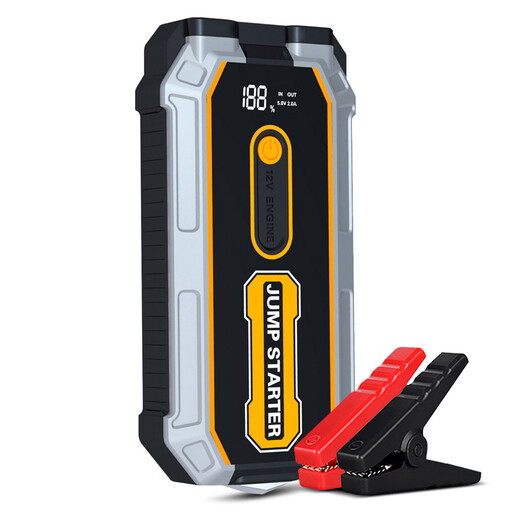
Why it suits this profile: According to the product information, this compact model weighs approximately 330 grams and is suitable for 12V petrol and diesel vehicles, motorbikes and boats.
The LCD display shows the remaining charge. The specifications also list a peak current of 1,200A and a starting current of 600A separately.
12,800mAh battery according to the product information, 10W USB output, three-mode LED light and a weight of around 330 grams.
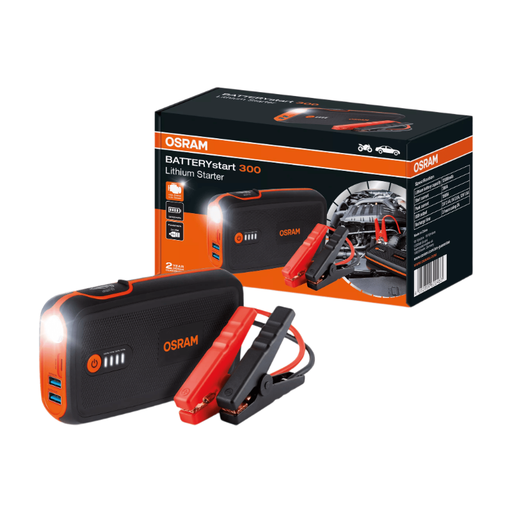
Why it suits this profile: For motorists who value a branded product, broad engine compatibility and an additional 12V connection.
The product specification states clear limits: up to 8 litres for petrol engines and 4 litres for diesel engines. That is more useful than simply quoting a high amp rating.
2,000A peak power, 16,800mAh battery according to the product information, two USB ports, 12V output and a two-year manufacturer’s warranty.
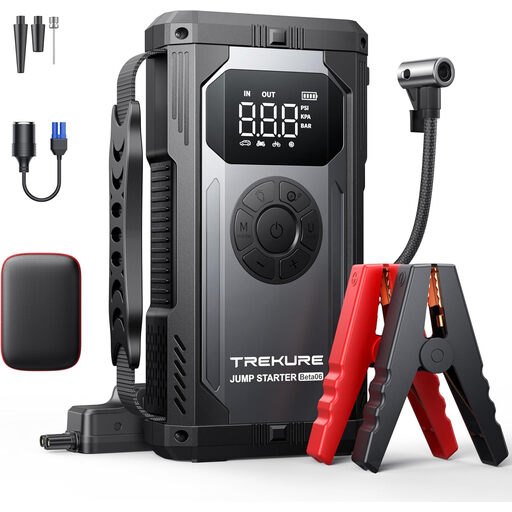
Why it suits this profile: A practical choice for SUV, motorhome and van owners who want to inflate tyres as well as jump-start their vehicle.
The specification lists an LCD screen, automatic shut-off at the set tyre pressure and ten stated protection functions.
According to the product information: 5,500A peak current, compressor up to 150 PSI, 23,800mAh battery and 12V output.
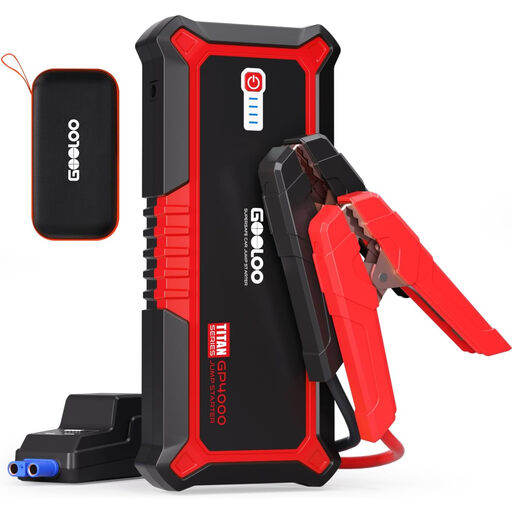
Why it suits this profile: According to the product information, this model is designed for all petrol and diesel engines up to 10 litres, as well as SUVs, motorhomes, tractors and vans.
The description lists ten protection functions and smart metal clamps. However, check beforehand that your vehicle’s engine size falls within the stated limit.
4,000A peak current according to the product information, boost function, two USB ports, torch and a stated operating temperature range of -20°C to 60°C.
We have put together a complete, up-to-date list of products that fully meet these strict selection criteria and the applicable European safety regulations.
A jump starter is not a replacement for a battery that is worn out, damaged or leaking. Have recurring starting problems checked.
No. Check the voltage, battery type and maximum engine size for petrol and diesel. The condition of the battery and the outside temperature can also affect the result.
Follow the brand’s maintenance instructions. If you use the device regularly, recharge it after every use. For storage, periodic top-ups are recommended; some models specify every two to six months. Do not store a lithium battery in a hot car for extended periods.
That depends on how you plan to use it. For motorists who only need an emergency starter, a compact model without a compressor may be sufficient. If you often take long journeys, go camping or use a motorhome, you may benefit from a built-in tyre inflator. When comparing models, consider the maximum pressure, airflow, hose length and automatic shut-off.
