
Vandaag of morgen in huis

Kwaliteit gegarandeerd

Welkomstaanbiedingen ontgrendelen: GRATIS bezorging | Tot 80% korting | Gratis 30 dagen JoyPlus-proefperiode
Download de app
A flat car battery usually happens at the worst possible time: on a cold morning, after a weekend away or when you are parked somewhere remote. A car jump starter can get you moving again without needing another car or roadside assistance. However, not every portable jump starter is suitable for every vehicle.
Many buyers focus mainly on the highest amp figure shown on the packaging. This is one of the common pitfalls. You should also consider engine size, vehicle voltage, the quality of the clamps and how the device needs to be maintained.
A claim such as 2,000A or 7,000A sounds impressive, but it does not by itself tell you whether the jump starter is suitable for your car. The stated peak current is a short-term maximum value. The starting current, supported engine size and compatibility with petrol or diesel engines are at least as important.
A compact 12V jump starter rated at 800A may be suitable for a smaller petrol engine, while a diesel van or motorhome will need more reserve power. Always check both the product specifications and your vehicle’s handbook.
A jump starter power bank can charge phones, tablets or a dashcam. However, the capacity in mAh does not directly indicate how much starting power is available. Also check the Wh rating, starting current and connections.
A lithium jump starter is often relatively compact and lightweight, but lithium batteries must be stored correctly and recharged regularly. A device left unused in a hot car for months may be less useful when you need it.
Incorrectly connected clamps can cause damage or sparks. Choose a car battery booster with a clear polarity warning, short-circuit protection, and protection against overheating and overcharging. Also check whether sturdy jump leads, a storage bag and clear instructions are included.
A lamp or air pump can be useful, but these features do not automatically make a jump starter suitable for your vehicle.
Most cars, motorbikes, SUVs, vans and motorhomes use a 12V battery system. A 12V jump starter is not intended for the 24V systems found in some heavy goods vehicles or buses. Check this in the instruction manual or on the battery.
Next, pay attention to the stated engine limit:
The starting current provides a useful indication of the current the device can deliver when starting the engine. Peak current is mainly a short-term maximum value. So do not simply compare 1,500A with 2,000A; look at the full product specification.
Battery capacity is often stated in mAh or Wh. A larger capacity may mean the device can provide several starting attempts or additional charging sessions, but its weight and dimensions may also increase. For everyday use in a car, a compact model may be sufficient; for intensive use on the road, a larger car jump starter may be more practical.
Sturdy clamps with well-insulated handles provide a better grip. Check that the cables are long enough to reach the battery properly. Important safety features include:
A stated temperature range is useful for storage in a car in the UK, but always follow the instructions. Do not leave a device in direct sunlight or in a very hot car for extended periods.
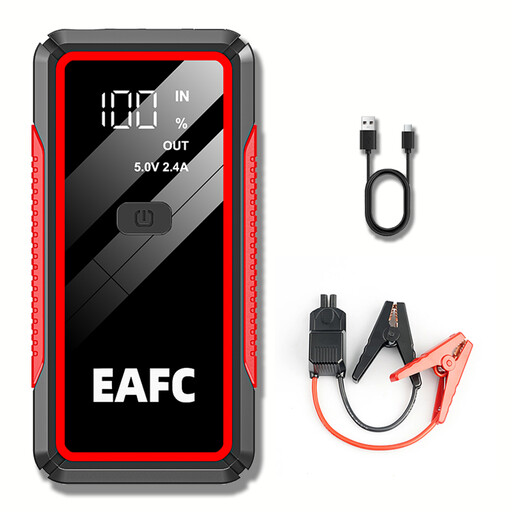
Why it suits this profile: This compact model is designed for motorists looking for a simple emergency car starter for a car, SUV or motorbike.
The product information states both a 2,000A peak current and support for petrol engines up to 6.0 litres and diesel engines up to 4.0 litres. Smart clamps and polarity protection are also specified.
10,000mAh lithium battery, USB output, digital display and LED lamp with three modes; the stated weight is approximately 700 grams.
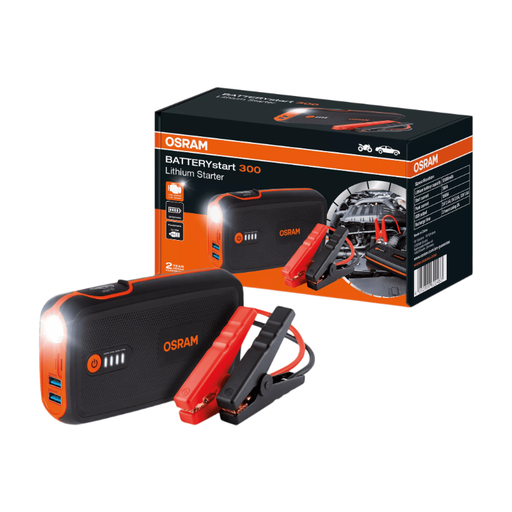
Why it suits this profile: A suitable choice for anyone who values a recognised brand, clear product specifications and a compact car battery booster for everyday use.
The stated specifications list 600A nominal current and 1,500A peak current separately. This makes comparison more transparent than simply relying on a large peak figure on the packaging.
12V system, 13,000mAh lithium battery, dual USB output, integrated LED lamp and, according to the product information, suitable for petrol engines up to 6.0 litres and diesel engines up to 3.0 litres.
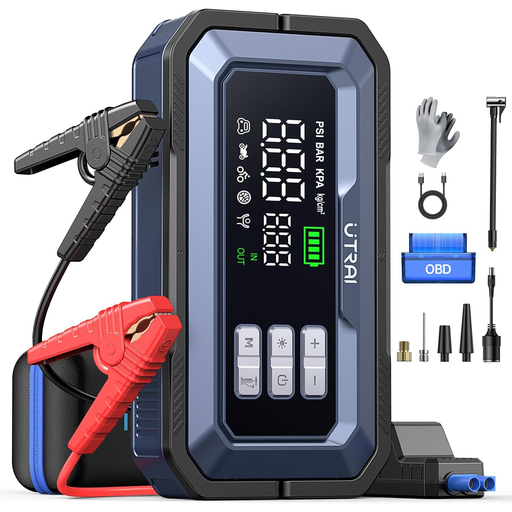
Why it suits this profile: Designed for drivers of larger vehicles, motorhomes and outdoor enthusiasts who also want a compressor and additional power connections.
The specifications list not only a 7,000A peak current but also a 1,000A starting current, support for diesel engines up to 14 litres and a temperature range of -20°C to 60°C.
According to the product information: 150 PSI compressor with automatic pressure cut-off, 160W DC output, 18W USB-C charging, 2,000-lumen light and OBD2 adapter.
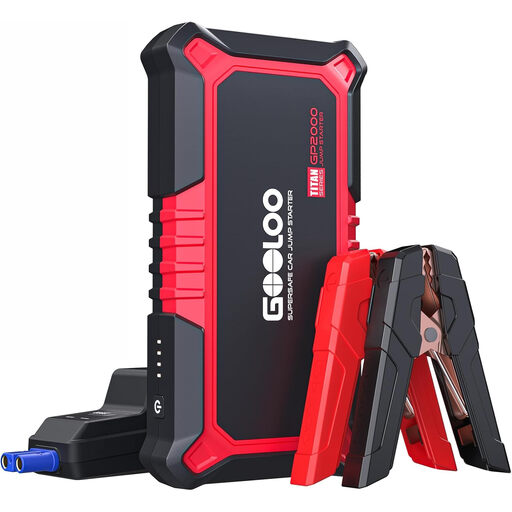
Why it suits this profile: A practical mid-range option for cars, motorbikes and SUVs, combining a convenient size, lamp function and clear connection instructions.
The product information lists 10 protection features and gives separate limits for petrol engines up to 8.0 litres and diesel engines up to 6.0 litres.
2,000A peak current, two USB outputs, 400-lumen LED lamp, a stated standby time of up to 24 months and a weight of approximately 545 grams.
We have compiled a complete, up-to-date list of products that fully meet these strict selection criteria and the applicable European safety regulations.
Do not use a jump starter with a damaged, leaking or swollen battery. If you are unsure about the battery or the connection, calling for roadside assistance is safer.
No. The vehicle must have a 12V system and fall within the device’s specified engine-size limit. Also check that the battery is not faulty or physically damaged. A 12V jump starter is not intended for an electric car’s high-voltage battery or for a 24V system.
This varies by model. As a general precaution, it is advisable to check the charge level regularly and recharge the device immediately after use. Some manufacturers recommend recharging every two to six months during long-term storage. Follow the specific instructions and store the jump starter somewhere dry and cool, away from direct sunlight.
That depends on how you intend to use it. A jump starter with an air pump is practical when you want to top up your tyre pressure while on the road or inflate bicycle tyres and sports balls. A compressor does not replace repairing a puncture, and the stated 150 PSI is a maximum pressure rating, not automatically the recommended pressure for a car tyre. Always use the tyre pressure specified for your vehicle.
