
Vandaag of morgen in huis

Kwaliteit gegarandeerd

Welkomstaanbiedingen ontgrendelen: GRATIS bezorging | Tot 80% korting | Gratis 30 dagen JoyPlus-proefperiode
Download de app
A dead battery always happens unexpectedly and at the worst possible time. Waiting for roadside assistance is often time-consuming and not always an option. Having your own car jump starter is the solution and provides peace of mind. But the market is flooded with models that promise the world. Many drivers fall for marketing traps and end up with a device that fails when they need it most.
As a Joybuy Product Recommendation Officer, I see where things go wrong every day. Before you invest in a jump starter, it's crucial to recognise and avoid the following common pitfalls.
To avoid buyer's remorse, focus on the specifications that truly matter. Don't be distracted by marketing jargon.
The most important specification is the starting capacity, which is directly related to your engine type.
The capacity, expressed in milliampere-hours (mAh), mainly tells you about the power bank function, not the starting power.
A reliable jump starter must be safe for both you and your car.
Based on these objective criteria, we have selected a few models that suit different user profiles.

Why it fits this profile: Perfect for owners of compact or mid-size gasoline cars who need a reliable, no-frills emergency starter. It's small enough for the glove compartment and provides just enough power for the most common situations, without making you pay for unnecessary features.
This model doesn't focus on an exaggerated peak current. The 1200A is a realistic value for its intended vehicles, so you're not paying for unused capacity.
Benefit: Very compact and lightweight (330g). Plus: Functions as a 12800mAh power bank with an LCD display that clearly shows the remaining charge.
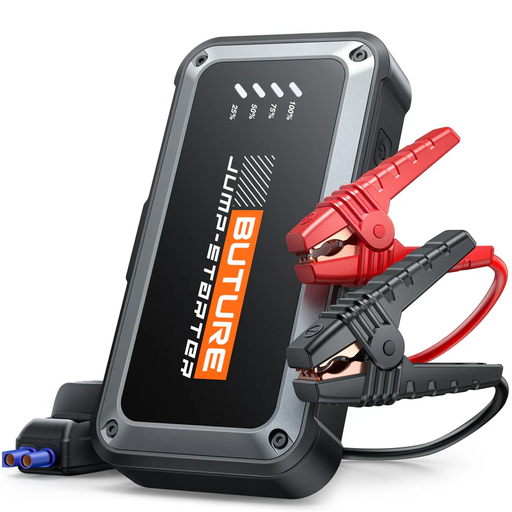
Why it fits this profile: Designed for drivers of SUVs, vans, and cars with heavy-duty engines. This model delivers the high starting current needed for larger engines, especially diesels, providing the reliability this user group requires.
The specifications are explicitly aimed at heavy-duty vehicles (up to 9.0L gasoline / 8.5L diesel). This prevents the classic mistake of buying an underpowered booster for a diesel engine.
Benefit: Powerful starting capacity for large engines. Plus: Robust, water-resistant housing and a wide-angle LED light with an SOS function.
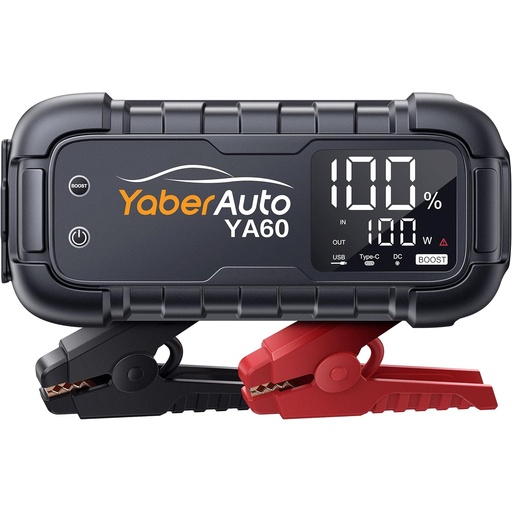
Why it fits this profile: For the RV or boat owner, or the tech enthusiast looking for a multifunctional Swiss Army knife. This device combines an extremely high starting capacity with modern charging technology, making it much more than just an emergency starter.
Where most power banks charge slowly, this model solves that problem with 65W two-way fast charging. It not only charges your laptop quickly but also recharges itself in just 1.5 hours.
Benefit: 65W USB-C fast charging and a 150W DC output for powering devices like a cooler or air pump. Plus: Massive 8000A peak capacity, suitable for virtually all gasoline and up to 12.0L diesel engines.
We have compiled a complete, up-to-date list of products that fully meet these strict selection criteria and safety regulations.
Even when not in use, the battery slowly loses its charge. It is recommended to fully charge your jump starter every 3 to 6 months. This keeps the battery in good condition and ensures it's ready for an emergency.
Yes, a high-quality car battery booster is designed with multiple safety mechanisms. Features like reverse polarity protection, short-circuit protection, and over-voltage protection prevent damage to the vehicle's onboard electronics. Always ensure the indicator lights show a safe, correct connection (usually a green light) before starting the car.
No, this is a common mistake. A jump starter for diesel engines requires significantly more starting current than one for a gasoline engine of a similar size. Always check the manufacturer's specifications to see if the car emergency starter is suitable for the displacement (in litres) and type of your diesel engine.
