
Vandaag of morgen in huis

Kwaliteit gegarandeerd

Welkomstaanbiedingen ontgrendelen: GRATIS bezorging | Tot 80% korting | Gratis 30 dagen JoyPlus-proefperiode
Download de app
A dead battery always happens unexpectedly and at the worst possible time. Waiting for roadside assistance often isn't an option. A car jump starter is the solution: a compact device that lets you get your car running again on your own. But the market is flooded with models promising the world. Many drivers fall for marketing traps and end up with a device that leaves them stranded.
As a Joybuy Product Recommendation Officer, I'm here to help you make the right choices. We'll look beyond the advertising and focus on what truly matters. Here are the three most common pitfalls when buying a jump starter and how to avoid them.
Manufacturers love to advertise enormous numbers like 4000A or even 7000A. This is the peak power, the maximum current the booster can deliver for a fraction of a second. While this number provides an indication, it doesn't tell the whole story. A jump starter with high peak amps but low continuous current might still fail to start a large engine. The quality of the internal battery cells and cables is at least as important. A battery booster that's too weak for your engine is a waste of money.
A jump starter with an air compressor, power bank function, and built-in flashlight sounds ideal. And it can be. The pitfall is that with many cheap, multifunctional models, the quality of each individual feature is subpar. The compressor is too weak to properly inflate a car tire, the power bank charges your phone agonizingly slowly, and most importantly, the jump-starting function fails when faced with a truly dead battery. Focus first on the primary function: reliably starting your car.
Not every car jump starter is suitable for every vehicle. A compact 1.2-liter gasoline engine requires significantly less starting power than a 3.0-liter diesel engine in an RV or van. Due to their higher compression ratio, diesel engines demand a much more powerful starting current. Buying a model only suitable for small gasoline engines when you drive a large diesel is a recipe for disappointment on a cold morning.
To avoid a bad purchase, you need to pay attention to a few crucial specifications. These determine whether a portable battery starter is right for your situation.
This is the most important factor. It determines if the jump starter has enough power for your engine.
Always check the manufacturer's specifications, which often indicate the engine displacement (in liters) the device is suitable for.
The capacity, expressed in milliampere-hours (mAh), determines how many times you can start a car on a single charge, or how often you can charge your phone. A higher capacity is convenient but often makes the device larger and heavier.
If you're looking for a power bank with jump-starting capabilities, pay attention to the USB ports. A Quick Charge or USB-C port will charge your devices significantly faster. A built-in compressor is a useful addition for emergencies, but check the maximum pressure (PSI) and output (liters per minute) to see if it's usable for your tires.
A modern jump starter must be equipped with built-in safety protections. This is non-negotiable. Essential features include:
Good jumper cables with a 'smart' module often indicate with lights or a sound signal whether the connection is correct and safe.
Below is a selection of jump starters, matched to specific user profiles. These aren't "winners," but practical choices that excel for a particular purpose.
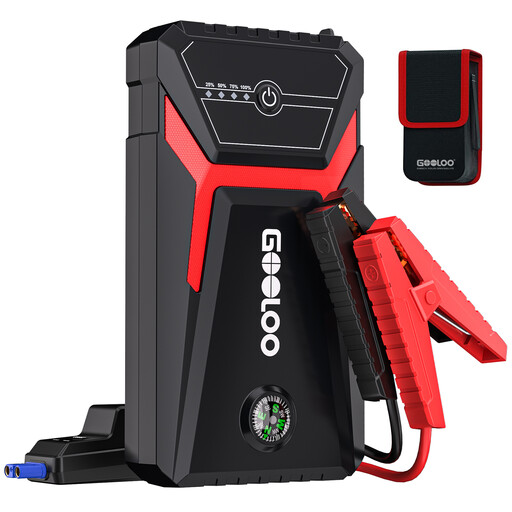
Why This Fits Their Persona: Ideal for drivers of compact to mid-size gasoline cars who want a reliable, no-frills solution without paying for features they don't need. Compact enough to store in the glove compartment.
This model focuses on the core function: starting. It avoids the 'all-in-one' trap by providing solid starting performance for the specified engines, without weak extras.
1500A peak power is suitable for gasoline engines up to 6.0L and diesel engines up to 4.0L. Includes smart jumper cables with 10 safety features.
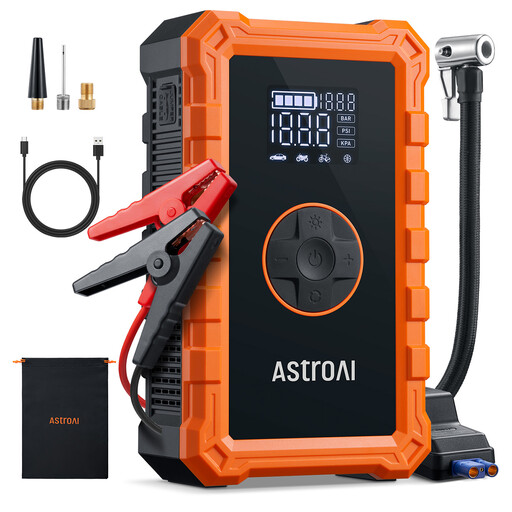
Why This Fits Their Persona: Perfect for the driver who wants to be prepared for more than just a dead battery. It combines a jump starter with a functional tire inflator, ideal for the family car or for longer trips.
This is an 'all-in-one' that gets it right. The compressor delivers a useful 150 PSI with auto-shutoff, and the jump-start function is powerful enough for most passenger cars (up to 6.0L gas/3.0L diesel).
Combines two essential emergency tools in one compact housing. The large 2.4" screen clearly displays status, battery level, and tire pressure.
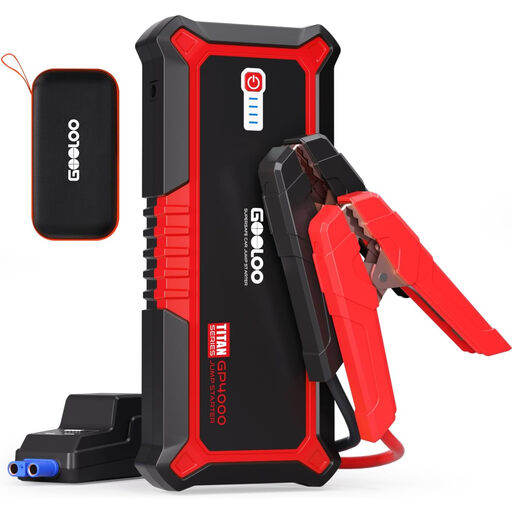
Why This Fits Their Persona: For owners of RVs, vans, boats, or cars with large diesel engines. This model delivers the serious power needed to reliably start large, demanding engines, even in low temperatures.
This model sidesteps the 'forgetting compatibility' pitfall. With 4000A peak power and suitability for all gasoline engines and diesels up to 10.0L, it's highly unlikely this device will be too weak for your vehicle.
Massive starting power and a 'BOOST' button for completely dead batteries. The rugged housing and all-metal clamps are built for heavy-duty use.
We have compiled a complete, up-to-date list of products that meet these strict selection criteria and safety regulations.
Most manufacturers recommend fully charging a jump starter every 2 to 3 months, even if you don't use it. Lithium-ion batteries slowly lose their charge over time. Regular charging ensures the battery remains in good condition and that the booster is ready for use when you need it.
No, this is a common mistake. Diesel engines have a higher compression ratio and require significantly more starting power than gasoline engines of a similar size. Always check that the jump starter is explicitly rated for diesel engines and note the maximum engine displacement (e.g., "suitable for diesels up to 8.0L"). When in doubt, always choose a model with higher peak amps.
That depends on your needs. For those who want maximum peace of mind in a single device, it's an excellent choice. You can tackle both a dead battery and a flat tire. However, if you use a compressor frequently, a separate, more powerful model might be a better investment. For occasional emergency use, a combined model like the AstroAI S8 is a practical and space-saving solution.
