
Vandaag of morgen in huis

Kwaliteit gegarandeerd

Welkomstaanbiedingen ontgrendelen: GRATIS bezorging | Tot 80% korting | Gratis 30 dagen JoyPlus-proefperiode
Download de app
A flat 12V battery often happens at the worst possible time: on a cold morning, after a short trip, or when your car has been sitting unused for a long time. A car jump starter can be a lifesaver in these situations, without you needing a second vehicle and traditional jump leads. But not every portable car jump starter is suitable for every car, motorbike, campervan or boat.
Pay close attention to three common pitfalls:
Most portable car jump starters are designed for 12V systems. Never use such a device on a 24V lorry system without checking first. In addition, check the maximum engine size supported for petrol and diesel engines separately. Diesel engines often require more power to start.
You should also consult your vehicle's manual to find out the battery type. Some models are suitable for standard lead-acid batteries, while start-stop cars often use an AGM or EFB battery. If this isn't clearly stated in the product information, ask the seller before you buy.
A higher peak current can be important for larger SUVs, vans, campervans and diesel engines. However, the amperage alone isn't a reliable basis for your purchase. You should also look for:
Features like these reduce the risk of incorrect connection, but they are no substitute for reading the user manual. A jump starter with a built-in torch is also handy for breakdowns in the dark, but the brightness of the light doesn't determine how well the device can start an engine.
A lithium jump starter is compact and relatively lightweight, but it needs to be kept charged. Product information sometimes mentions a long standby time; this is a manufacturer's claim and can vary depending on temperature, storage duration and remaining charge. Therefore, you should check the booster pack regularly and charge it according to the manual's instructions.
If you want to power mobile phones, tablets or a compressor while on the road, you can opt for a jump starter with a power bank and USB outputs. Note the difference between charging capacity in mAh and power output in watts. A power bank for electronics is not automatically suitable as a car emergency starter.
Do not use a booster pack on a damaged, leaking or swollen battery. If you smell a strong chemical odour or see smoke, stop immediately. When in doubt, consult the vehicle or product manual.
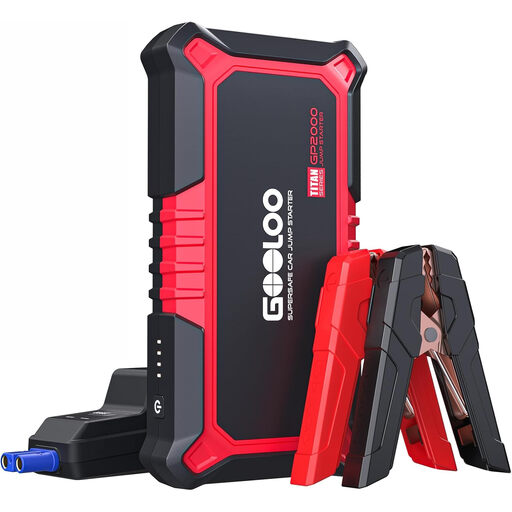
Why it's a good match: The GP2000 is a compact 12V jump starter for car and motorbike owners who want to keep a basic solution in their vehicle. The manufacturer states it supports petrol engines up to 8.0 litres and diesel engines up to 6.0 litres.
The product information lists ten safety features, including reverse polarity, short circuit and overheat protection. However, you should still check the manual and compatibility yourself.
2000A peak current, USB outputs, a 400-lumen torch and a weight of around 545 grams according to the specifications.
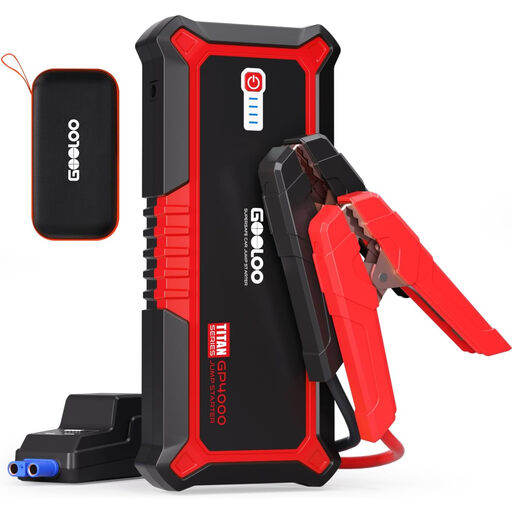
Why it's a good match: This model is aimed at larger vehicles, such as SUVs, campervans, vans and lorries with a 12V system. According to the product description, it supports all petrol engines and diesel engines up to 10.0 litres.
The specifications mention metal clamps and multiple safety features. The stated warranty and box contents should be checked before purchasing.
4000A peak current, USB and USB-C ports, a built-in torch and a storage case; according to the product information, a wall charger is not included.
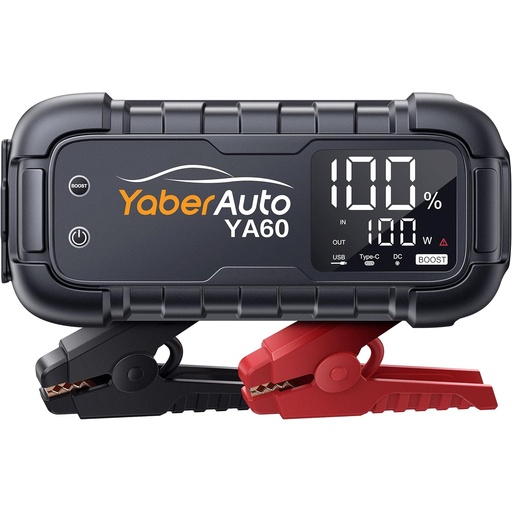
Why it's a good match: The YA60 is designed for users with larger vehicles or multiple power needs on the go. The manufacturer states it supports petrol and diesel engines up to 12.0 litres.
The specified 65W USB-C port, DC output and smart safety features make its functions clear. Check that your accessories support the stated power output.
8000A peak current, 26,800mAh lithium-polymer battery, 65W two-way charging, 150W DC output and a 600-lumen torch according to the product specifications.
We have compiled a complete, up-to-date list of products that fully meet these strict selection criteria and comply with current European safety regulations.
A jump starter can help with a starting problem, but a smart battery charger is more suitable if you're storing a car, motorbike, boat or campervan for an extended period. According to product information, models such as a 12V 6A or 12A charger can support various lead-acid types, including AGM, GEL and EFB. Always check the capacity in Ah, the charging mode, and whether it is specified for indoor use or use in a dry area.
Booster packs with jump leads are an alternative, but they take up more space and usually require a second vehicle or a suitable power source. A lithium jump starter is more self-contained, as long as it's sufficiently charged.
Yes, but only if the product specifications state that it supports your diesel engine. Check the maximum engine capacity and ensure the car has a 12V battery. A higher peak current is particularly relevant for larger diesel engines, but it offers no guarantee if the battery is faulty or damaged.
Follow the instructions in the manual for your specific model. As a practical precaution, you should check the charge level every few months, especially before a long journey or the winter. Store the booster pack in a dry place and avoid exposing it to extreme heat inside the car.
No. A jump starter provides a short burst of power to start the engine. A car battery charger gradually charges the battery from the mains and, on suitable models, may also have a maintenance function. If you regularly have a flat battery, you should also have the battery and your vehicle's charging system checked.
