
Vandaag of morgen in huis

Kwaliteit gegarandeerd

Welkomstaanbiedingen ontgrendelen: GRATIS bezorging | Tot 80% korting | Gratis 30 dagen JoyPlus-proefperiode
Download de app
A dead battery always happens unexpectedly. Whether it's on a cold morning or after a long holiday, being stranded is a hassle. A car jump starter (also known as a booster pack) is the solution. It allows you to start your car without help from another vehicle. But the market is flooded with models that promise the world. Many people fall for marketing traps and buy a device that leaves them stranded when it really matters.
Before you make a choice, it's wise to know the most common pitfalls:
To avoid a bad purchase, there are a few technical specifications you need to check. These determine whether a portable jump starter is suitable for your car and situation.
The most important specification is the starting current, measured in Amperes (A). This indicates how much power the booster can deliver. The required current depends on your engine:
So, don't just look at the peak amps, but at the actual starting current and the manufacturer's recommendation for engine displacement (in liters). A good 12V jump starter will clearly state which engine types it is suitable for (e.g., 'up to 8.0L gasoline or 6.0L diesel').
The capacity, expressed in milliampere-hours (mAh), determines how many times you can start a car or how long you can charge your phone. A higher capacity is useful, but pay special attention to the standby time. This indicates how long the car battery booster holds its charge. A model that you have to charge every month is not practical. Look for models that retain their charge for at least 3 to 6 months. Many modern lithium-ion models also function as a handy power bank with jumper cables for your electronic devices.
Modern jump starters should be equipped with built-in safety protections. This is not a luxury, but a necessity to prevent damage to yourself, the booster, and the car's electronics. Always check for the following features:
A jump starter with these protections is safe to use, even if you are not technically inclined.
Not every driver has the same needs. Below are some popular choices, linked to different user profiles.
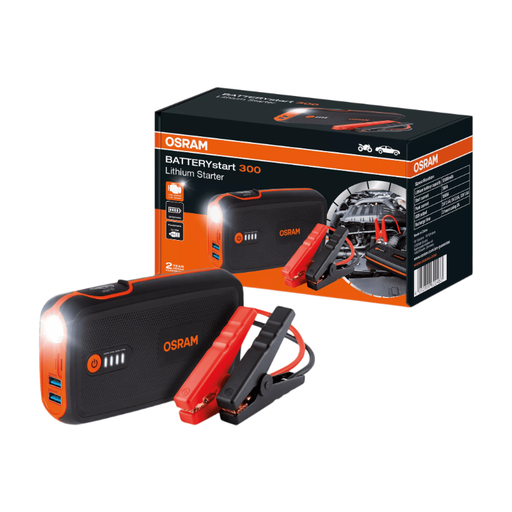
Why This Fits Their Persona: Ideal for drivers of standard gasoline cars or smaller diesels. Its compact size fits easily in the glove compartment. OSRAM is a well-known name, which provides confidence for a product you only use in emergencies.
This model focuses on the core function: reliable starting. No unnecessary extras, but a solid foundation with the necessary safety features from a reputable brand.
Compact and lightweight design. Suitable for gasoline engines up to 6.0L and diesel engines up to 3.0L. Includes power bank function and LED flashlight.
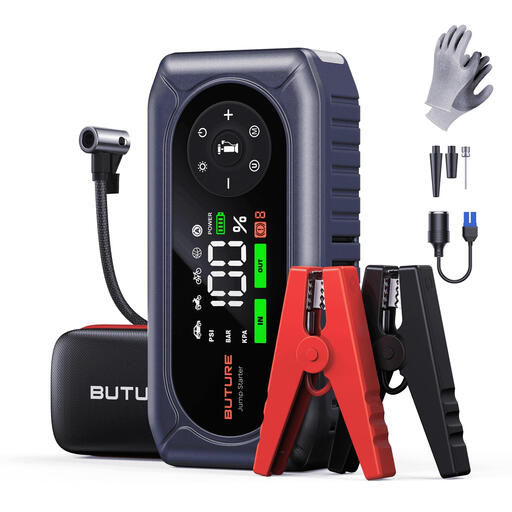
Why This Fits Their Persona: For the owner of an SUV, van, or RV who wants to be prepared not only for a dead battery but also for a flat tire. This device combines a powerful starter with a fully-fledged tire inflator.
The built-in 150 PSI compressor is a serious addition, not a gimmick. The high peak starting current of 4500A ensures that the primary function, starting the car, is not compromised.
Powerful 5-in-1 solution: jump starter, 150 PSI air compressor, power bank, and 4-mode LED light. Suitable for large engines (up to 9.0L gasoline / 8.0L diesel).
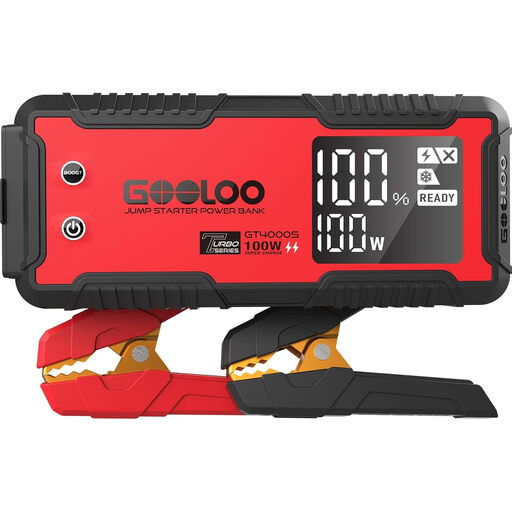
Why This Fits Their Persona: For those who accept no compromises. Owners of heavy-duty diesel vehicles, boats, or anyone who values speed and power. The 100W fast-charging feature is unique and ensures the booster itself is recharged at lightning speed.
This model delivers the promised power for the toughest jobs. The fast-charging feature is a premium attribute that adds real value, rather than being a marketing gimmick. According to GOOLOO, a 5-minute charge is enough for a jump-start attempt.
Very high peak starting current of 4000A. Unique 100W two-way fast charging (fully charged in approx. 1.2 hours). Suitable for all gasoline engines and diesels up to 10.0L.
We have compiled a complete, up-to-date list of products that meet these selection criteria and local regulations.
1. How often should I charge a jump starter? This depends on the model's self-discharge rate. A good lithium-ion jump starter typically only needs to be topped up once every 3 to 6 months to keep it in peak condition. Check the manufacturer's recommendation and set a reminder in your calendar.
2. Is a jump starter safe for my modern car's electronics? Yes, provided you choose a model with the correct safety features. A jump starter with protection against reverse polarity, short circuits, and overvoltage is designed to protect the sensitive electronics of modern cars. It is often safer to use than jump-starting with cables from another car, as it prevents voltage spikes.
3. Can I use any jump starter for my diesel car? No, not every jump starter is powerful enough for a diesel engine. Diesel engines have a higher compression ratio and require significantly more starting current than gasoline engines of a similar size. Always check that the specifications of the car battery booster explicitly state that it is suitable for diesel engines and pay attention to the recommended maximum engine displacement (in liters).
Written by the Joybuy Product Recommendation Officer, July 28, 2026.
