
Vandaag of morgen in huis

Kwaliteit gegarandeerd

Welkomstaanbiedingen ontgrendelen: GRATIS bezorging | Tot 80% korting | Gratis 30 dagen JoyPlus-proefperiode
Download de app
A flat car battery often strikes at the worst possible time: just before you set off, in a dark car park or on your way to the campsite. A car jump starter can get you moving again without relying on another motorist. However, not every model is suitable for every car.
The biggest pitfall is that manufacturers often advertise a high peak current. That figure doesn’t always tell you whether a portable jump starter is suitable for your engine. Features such as a compressor, power bank and LED light may sound useful, but they’re only worthwhile if the essentials are right: vehicle compatibility, safety and sufficient charge.
A figure such as 3,000A or 6,000A sounds impressive, but check which engine size and fuel type the device is designed for, too. A petrol jump starter may not be suitable for the same vehicles as a diesel jump starter. Also check whether the device is intended for 12V systems only. A car jump starter isn’t automatically suitable for lorries or other 24V vehicles.
A capacity figure in mAh mainly tells you about the internal battery and its use as a power bank. For an emergency start, the stated starting current and peak current matter more. Pay attention to the difference between nominal and stated capacity, too. For example, the Porbi X11 lists 24,800 mAh, with a rated capacity of 14,800 mAh according to the product information.
A jump starter with a compressor is handy when a tyre is soft, but a portable compressor is no substitute for a garage air pump. Check the maximum pressure, hose and automatic shut-off. Several models also state that the compressor shouldn’t run for more than about ten minutes at a time. Let the device cool down afterwards.
Start by assessing your vehicle:
The stated engine size is a product claim. According to the manufacturer’s product description, the UTRAI JS-9 supports petrol engines up to 8.5 litres and diesel engines up to 6.5 litres, for example. Use this information to help you choose, and always follow the instructions for the specific model.
A good car battery booster should ideally have protection against reverse polarity, short circuits, overheating and overcurrent. A display or indicator light can help you check the connection, but it doesn’t replace using the device correctly.
Before you buy, check:
A CE mark mentioned in a product listing isn’t a reason to overlook other specifications. Check the instructions, warnings and product details before you buy.
A car tyre inflator built into a jump starter is most useful for small adjustments while you’re on the road. Check the:
For power bank use, the type of connection is especially relevant. A USB-C port with PD may be suitable for fast charging certain devices. Actual charging speed depends on the cable, device and charging protocol. According to the product description, the Porbi X11 has a PD65W output and a QC3.0 USB output.
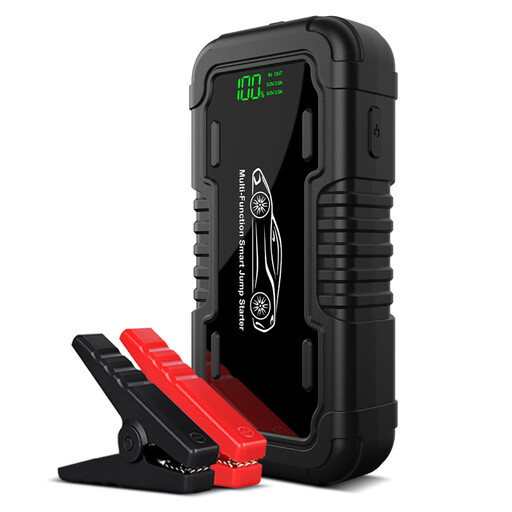
Why it suits this profile: A compact car jump starter for drivers who mainly want to start a flat 12V battery and charge their phone on the go.
The product information lists an 800A starting current, a 2,000A peak current and explicit support for 12V petrol and diesel vehicles.
Listed capacity of 20,000 mAh, LCD display, QC3.0 18W power bank and LED light with three modes.
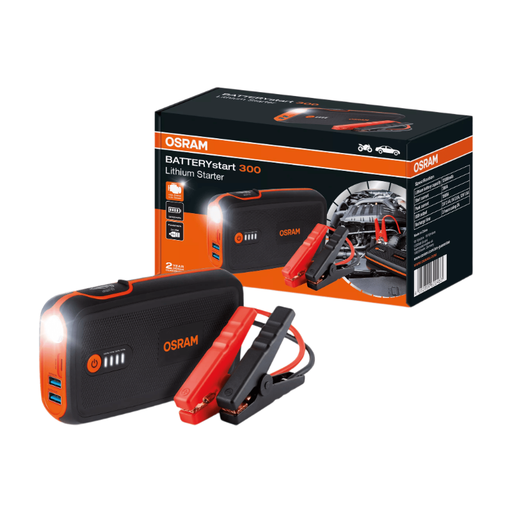
Why it suits this profile: A good option if you value a recognised brand, a 12V output and a clearly stated vehicle limit.
The product description lists a 2,000A peak current and clearly states a limit of up to 8L petrol or 4L diesel.
16,800 mAh, dual USB output, 12V socket and integrated LED light.
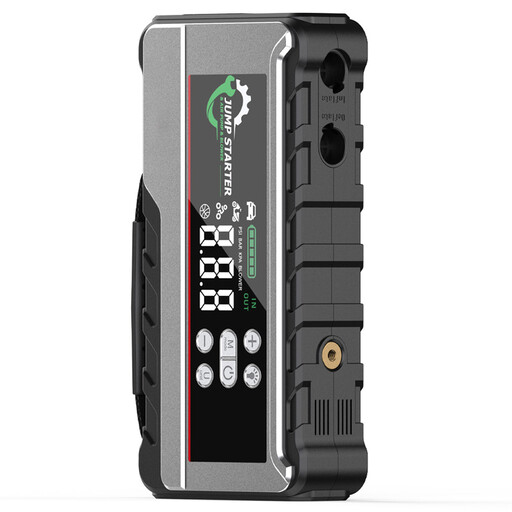
Why it suits this profile: For travellers, SUV and van owners who want one device for jump starting, inflating tyres and portable power.
The specifications list compatibility with 12V petrol and diesel vehicles, plus a compressor with a maximum pressure of 150 PSI.
3,000A peak current, PD65W power bank, compressor and a separate air blower for larger inflatables.
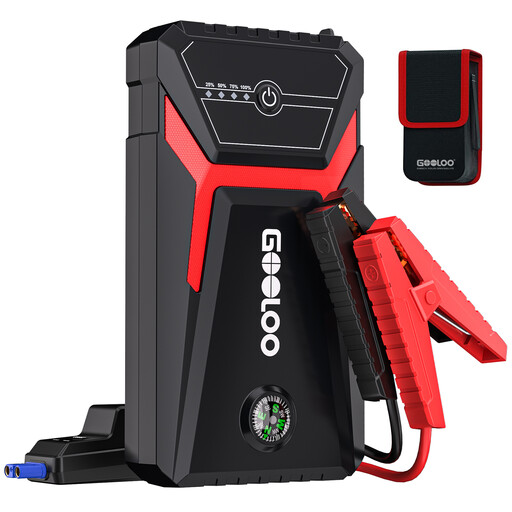
Why it suits this profile: A practical choice for drivers with several 12V vehicles, including SUVs, motorbikes and light commercial vehicles.
The manufacturer lists a 1,500A peak current and suitability for petrol engines up to 6.0L and diesel engines up to 4.0L.
Ten listed safety protections, two USB outputs and an LED light with normal, strobe and SOS modes.
We’ve put together a complete, up-to-date list of products that meet these strict selection criteria and the applicable European safety requirements.
Don’t use a car jump starter with a damaged, leaking or frozen battery. If in doubt, calling for roadside assistance is safer than connecting it yourself.
It depends on the lithium battery, storage temperature and model. Recharge the device after use and check its charge level regularly. Some manufacturers recommend recharging every three to six months. Store the jump starter somewhere dry, away from prolonged direct sunlight or extreme heat.
Only if the product information explicitly mentions diesel and your engine size is within the stated limit. Diesel engines generally need more starting power. So check both the 12V specification and the stated diesel capacity.
If you drive regularly, go camping or travel long distances, a combined car jump starter and tyre inflator can save space. Use the compressor mainly for occasional top-ups, and check its maximum operating time beforehand. If you regularly inflate several tyres, a separate compressor may be more practical.
