
Vandaag of morgen in huis

Kwaliteit gegarandeerd

Welkomstaanbiedingen ontgrendelen: GRATIS bezorging | Tot 80% korting | Gratis 30 dagen JoyPlus-proefperiode
Download de app
A flat car battery always seems to happen at the worst time: on a cold morning, during a campervan holiday or after the car has been left standing for a while. With a car jump starter, you can try to start a 12V vehicle yourself, without needing another car and jump leads. However, not every portable jump starter is suitable for every car.
The peak current shown on the packaging doesn’t tell you everything. You should also check the engine type, maximum engine capacity, safety features and how to maintain the device.
Peak current, measured in amps, is an important point of comparison. But the stated figure is a product specification, not a guarantee that it will start every engine in all conditions. Diesel engines generally need more starting power than petrol engines. A cold or damaged battery can also affect performance.
Always compare the following:
A jump starter power bank with a high mAh rating isn’t automatically suitable as a powerful car jump starter. Capacity mainly determines how much energy is available for charging and how many times the device may be used. Starting performance also depends on the internal battery, electronics and cables.
Also check the difference between the stated capacity and the usable capacity. A 12V jump starter may also have USB ports for a phone, tablet or sat nav, but that doesn’t make it a fully fledged portable car battery charger.
A jump starter with a compressor can be handy if a tyre is soft, but check that the air hose, connectors and pressure display suit your needs. A stated maximum pressure, such as 150 PSI, doesn’t tell you how quickly it will inflate a car tyre. The compressor may get hot if used for a long time, so follow the instructions and let the device cool down when advised.
An LED light, SOS mode or 12V output can also be useful, but they don’t replace a warning triangle, breakdown service or proper safety procedures.
Choose a lithium jump starter that’s suitable for your type of vehicle. A model with a lower stated engine limit may be sufficient for a small petrol car. For a diesel car, campervan, pick-up or van, it’s sensible to allow more headroom.
Before buying, check:
A jump starter for petrol cars isn’t necessarily suitable for a diesel engine. Motorcycles, boats and campervans may also have different requirements. Always check your vehicle’s owner’s manual.
A car jump starter should give you clear instructions if it’s connected incorrectly. Many models list features such as reverse polarity, short-circuit, overheating, overload and spark protection. Treat these as technical safeguards, not as a reason to skip the correct connection sequence.
The usual procedure is:
Don’t use a jump starter if the battery is visibly leaking, cracked, swollen or frozen. If in doubt, contact a breakdown service.
An emergency jump starter is only useful if it’s charged when you need it. Product information for different models recommends recharging periodically after use and during longer periods of storage, for example every two to six months. The recommended interval varies by model.
Store the jump starter in a dry place, away from direct sunlight, and don’t leave it in extreme heat for long periods. A device kept permanently in a hot car may wear out more quickly. Before a long journey, check the charge level, cables, clamps and any compressor accessories.
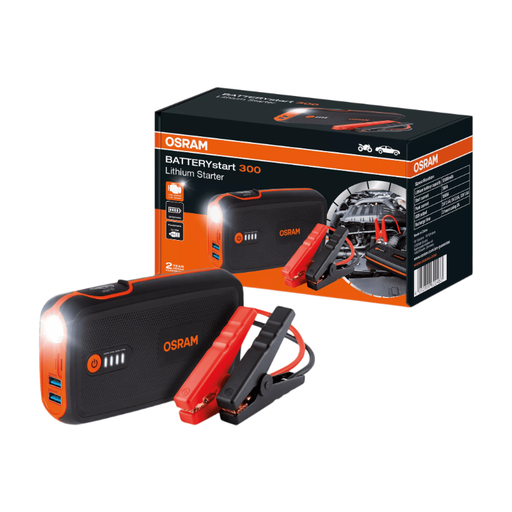
Why it suits this profile: This compact model is designed for everyday cars and motorcycles. According to the product information, it supports 12V vehicles with petrol engines up to 6 litres and diesel engines up to 3 litres.
The stated vehicle limits make it easier to check compatibility instead of looking only at battery capacity.
1500A peak output, two USB outputs, a built-in LED light and a stated weight of 706 grams.

Why it suits this profile: According to the product description, this model is designed for 12V cars, lorries, campervans and boats, and supports petrol engines up to 9 litres or diesel engines up to 7 litres.
The description lists a boost mode, smart clamps and several safety features. Always check the manual for details of how they work.
3000A peak current, a USB-C port, a 400-lumen LED light and a stated operating temperature range of approximately -20 °C to 60 °C.
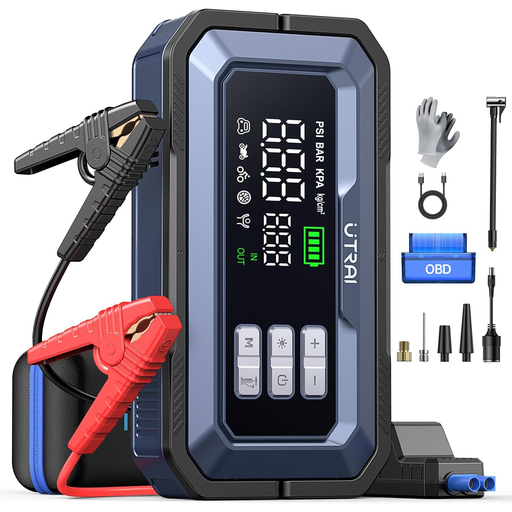
Why it suits this profile: This is a versatile emergency solution for people with a campervan, larger diesel vehicle, outdoor equipment or regular tyre problems.
The compressor has adjustable pressure and automatic shut-off. If you’re pumping for longer, let the device cool down between uses.
7000A peak current, compressor up to 150 PSI, 160W DC output, USB-C PD 18W and a 2000-lumen light, according to the product information.
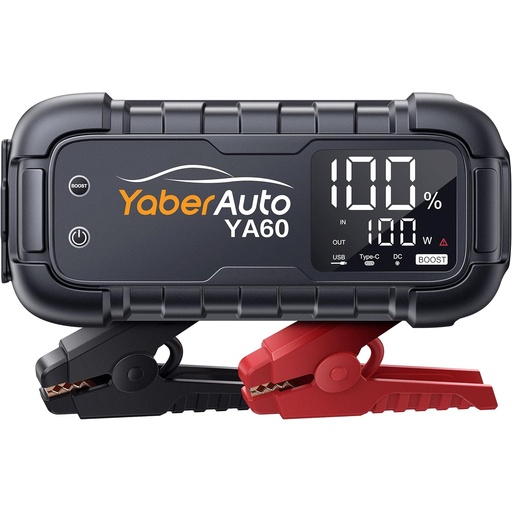
Why it suits this profile: The product information says it supports all petrol engines and diesel engines up to 12 litres, and includes connections for several 12V devices.
The stated limits are clearly listed. Only use the boost function as instructed in the manual, and check the battery voltage first.
8000A peak current, 65W two-way charging, 150W DC output, dual USB-A outputs and 600-lumen lighting, according to the specifications.
We’ve put together a complete, up-to-date list of products that meet these strict selection criteria and the applicable European safety regulations.
Only if the jump starter’s specifications cover your diesel engine. Check the maximum engine capacity and recommended vehicle type. A diesel often needs more starting power than a similar petrol car. Also, only use the jump starter with a compatible 12V system.
Follow the manufacturer’s maintenance instructions. Many models need to be recharged periodically after use and while in storage. Check the charge level before you travel. A device left unused in the car for months may have partially discharged, particularly in very hot or cold temperatures.
Only if the model has a built-in compressor, as some 4-in-1 models do. Check the maximum pressure, hose, supplied valve adapters and operating time. An emergency compressor is designed to top up a tyre; a punctured tyre should be checked by a professional.
