
Vandaag of morgen in huis

Kwaliteit gegarandeerd

Welkomstaanbiedingen ontgrendelen: GRATIS bezorging | Tot 80% korting | Gratis 30 dagen JoyPlus-proefperiode
Download de app
A flat car battery often strikes at the worst possible time: on a cold morning, by the side of the motorway or at a campsite with no power socket. A car jump starter can get you moving again without relying on another driver with jump leads. However, many models look similar, even though they can differ considerably in how they work, their capacity and the accessories included.
Look out for these common pitfalls:
Most models in this category are designed for 12V vehicles: cars, SUVs, motorbikes, vans and some campervans. Also check the stated limits for petrol and diesel engines. Diesel engines generally need more starting power than a comparable petrol engine.
A 12V battery booster for a small petrol car doesn’t necessarily need the same specifications as a jump starter for a van or SUV. So check:
A higher amp rating may give you extra headroom, but it doesn’t guarantee that every vehicle will start. A damaged, leaking or internally faulty battery can also cause a problem that goes beyond a flat battery.
Capacity is often given in mAh or Wh. These figures aren’t always directly comparable, as manufacturers may use different measuring methods. Check how the device itself is charged, too.
A car power bank with a USB-A or USB-C output can charge phones, tablets or navigation devices. Some models also have a 12V socket for accessories. Check whether a mains adaptor is included; some jump starters come with only a USB-C cable.
Useful things to check:
Where possible, choose a model with protection against reverse polarity, short circuits, overheating, overcurrent and overcharging. According to the product specifications for various models, smart jump leads can also warn you if the clamps are connected incorrectly. Always check the manual; safety features don’t replace correct connection.
Normally, you should attach the red clamp to the positive terminal (+) and the black clamp to the negative terminal (–), unless the vehicle manufacturer specifies a different connection point. Use only the leads supplied or recommended. Don’t use the jump starter if its casing, leads or clamps are damaged.
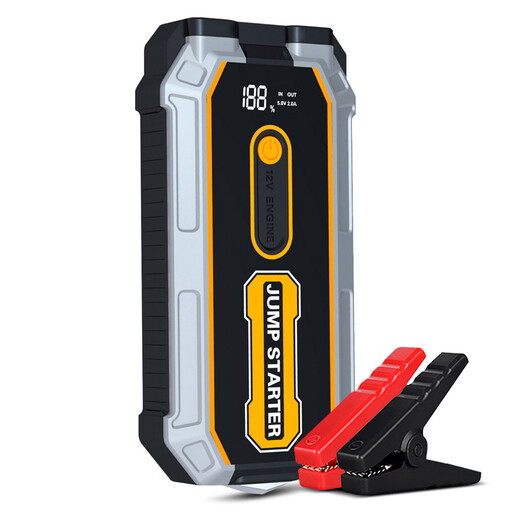
Why it suits this profile: According to the product specifications, this is a compact option for motorists and motorcyclists who want to carry an emergency jump starter and power bank without using up much space in the car.
The LCD indicator shows the remaining charge. Check beforehand that the 1200A peak current is suitable for your vehicle.
12800mAh according to the product specifications, USB output, LCD display and three LED modes. The stated weight is around 330 grams.
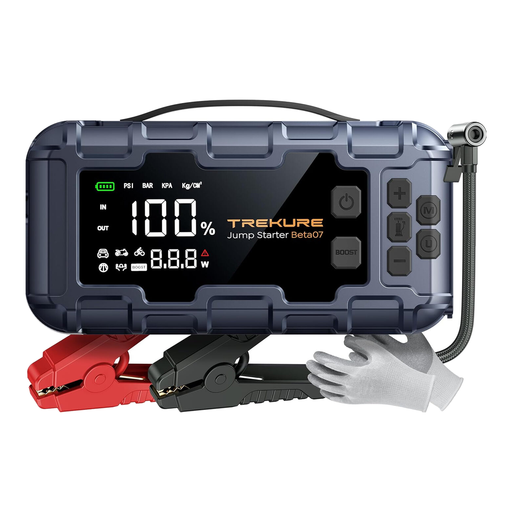
Why it suits this profile: According to the product specifications, this model combines a 12V jump-start function with a compressor, USB-C PD charging and a larger display. It’s a good fit for drivers who want one device for a range of roadside emergencies.
The built-in compressor has a stated pressure of 160 PSI, automatic shut-off and preset pressure modes. Check the current product information for the exact accessories included.
6000A peak current, 45W USB-C PD, stated airflow of 45 l/min, 600-lumen LED and insulated gloves included.
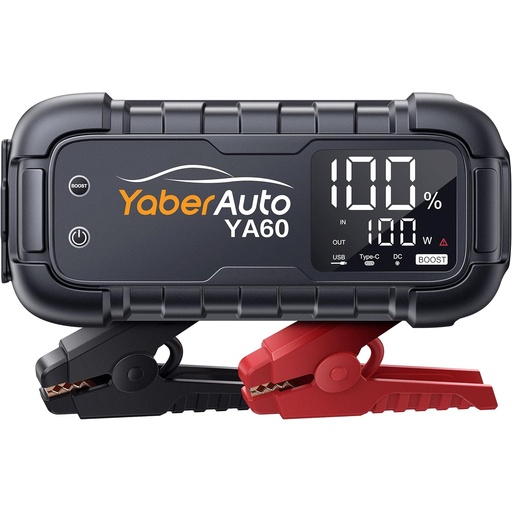
Why it suits this profile: According to the product specifications, this model is aimed at drivers of larger vehicles and users who also want to power laptops, phones or 12V accessories on the go.
The specifications list ten intelligent safety protections and charging advice for long-term storage. Don’t use the device if the battery is swollen or damaged.
8000A peak current, 65W USB-C, two USB-A outputs, 150W DC output and a 600-lumen LED emergency light.
We’ve put together a complete, up-to-date list of products that meet these strict selection criteria and current European safety regulations.
Fully charge a new jump starter before putting it in your car. Don’t just test the LED light: also check that the charge indicator works and that the jump leads connect properly. Store the device somewhere dry and out of direct sunlight. High temperatures inside a parked car can affect the lifespan of a lithium battery.
Practical checklist:
A jump starter with a compressor is handy if a tyre is low on air, but it’s no substitute for a repair or tyre service. After inflating the tyre, check its pressure with a suitable gauge and have any punctures inspected.
That depends on the condition of the battery, the vehicle and the jump starter. Some models have a boost function for very low voltage, but that doesn’t mean they can fix an internally faulty battery. Always follow the manual and don’t keep trying indefinitely.
It varies by model. For long-term storage, manufacturers often advise charging it periodically, for example every three to six months. Check the product specifications and don’t leave the device for long periods in extreme heat or cold.
For drivers who regularly take long journeys, go camping or enjoy outdoor activities, a built-in portable car tyre compressor can be useful. If you only need help with a flat battery, a simpler model may offer fewer accessories and potentially cost less to buy. So consider how you expect to use it.
