
Vandaag of morgen in huis

Kwaliteit gegarandeerd

Welkomstaanbiedingen ontgrendelen: GRATIS bezorging | Tot 80% korting | Gratis 30 dagen JoyPlus-proefperiode
Download de app
A flat battery never happens at a convenient time. You might be in a car park, on the motorway or at home just before setting off, and the engine won’t start. A car jump starter can get you moving again without relying on another vehicle. But not every model is right for every car, motorbike or motorhome.
Watch out for these three common pitfalls:
Use the points below to compare a car battery jump starter based on practical specifications rather than marketing claims.
Most portable jump starters are designed for 12V systems. That doesn’t mean every model is suitable for every 12V car. Check the maximum engine capacity specified for petrol and diesel engines too.
A diesel engine generally needs more starting current than a petrol engine. So a model rated for engines up to 6.0 litres for petrol and 4.0 litres for diesel may have different operating limits from a model with the same nominal voltage but lower engine limits.
So check the following:
A jump starter for petrol and diesel vehicles isn’t a universal solution for every battery. If the battery is damaged, leaking or mechanically faulty, even a powerful car jump starter won’t fix the underlying problem.
The amp rating is often the first thing sellers advertise. A 1500A, 4000A or 8000A model sounds impressive, but always compare the full product specifications. Check whether the manufacturer also lists the starting current, battery type, boost function and maximum engine size.
Battery capacity is usually given in mAh. This figure is mainly relevant to the number of starting attempts and use as a portable car power bank, but it isn’t directly comparable across different models. Voltage, internal battery cells and stated output power also play a part.
For everyday use, a compact model rated at 800A to 1500A may be enough. For a large SUV, van, motorhome or diesel engine, a more powerful car jump starter may be a better choice. However, treat the stated peak current as a product specification, not a guarantee that it will start every vehicle in all conditions.
A useful car battery booster should make it clear how to connect the cables. Many models list protection against:
These features reduce the risk of an incorrect connection, but always follow the instructions. Usually, you should connect the red clamp to the positive terminal and the black clamp to the negative terminal or a suitable unpainted metal earth point, depending on the model’s instructions.
Also check how the device charges. Some jump starters have USB-C, while others come with a car charger or separate fast charger. Check whether the charger is included. Store the jump starter somewhere dry, out of direct sunlight and not in an extremely hot car. Recharge it periodically according to the instructions, even when you’re not using it.
An LED light, SOS mode or LCD screen can be useful if you break down in the dark. A jump starter with a compressor can also come in handy for an underinflated tyre, but check the maximum pressure, hose and supplied valve adaptors.
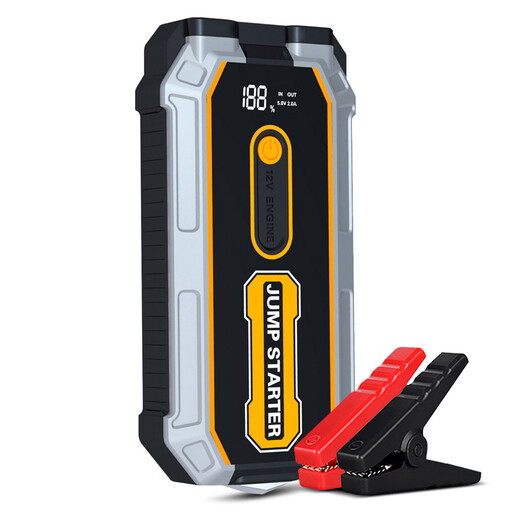
Why it suits this profile: According to the product specifications, this is a compact model weighing around 330 grams, for 12V petrol and diesel vehicles. The LCD screen shows the remaining battery level, making it easy for drivers to check that the car jump starter is ready to use.
The stated 1200A peak current is complemented by a listed capacity of 12800mAh, a USB output and a clear status display. Be sure to check the maximum engine size for your vehicle.
1200A peak current, 12800mAh battery, LCD display, USB power bank and LED light with three modes.
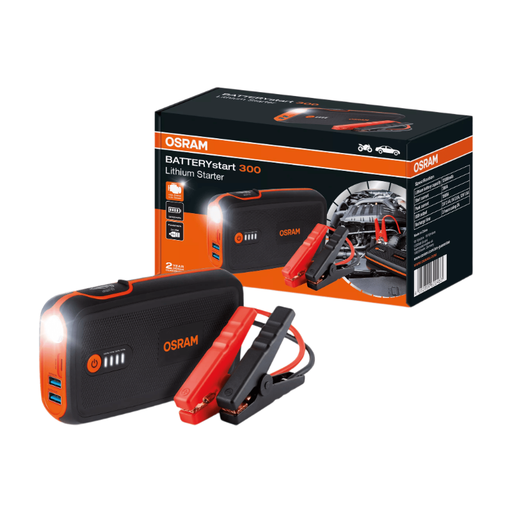
Why it suits this profile: This model lists a 12V output as well as two USB ports. That makes it a good fit for drivers, motorhome owners and outdoor enthusiasts who want to power other 12V devices as well as jump-start their vehicle in an emergency.
The product information clearly specifies 12V compatibility, a limit of 8 litres for petrol and 4 litres for diesel, and included battery clamps. Compare these limits with your own vehicle.
2000A peak power, 16800mAh lithium-ion battery, 12V output, dual USB ports and integrated LED light.
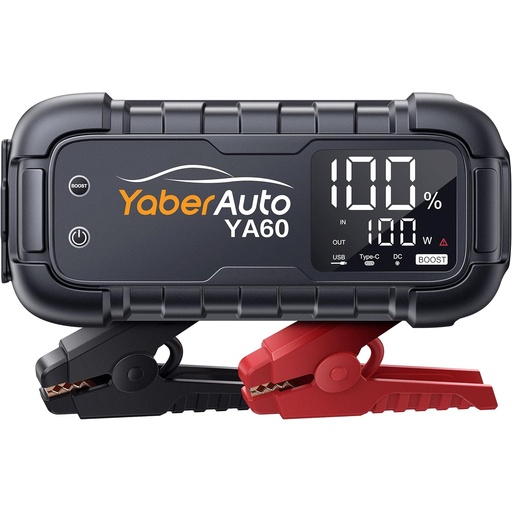
Why it suits this profile: The listed specifications are aimed at larger 12V vehicles and heavy use. With 8000A peak current, 65W USB-C and a 150W DC output, it’s well suited to motorhomes, vans, SUVs and outdoor equipment.
The manufacturer lists ten safety features, a boost button and a limit of up to 12.0 litres for diesel engines. Use these details as a point of comparison and follow the recommended charging and connection procedure.
8000A peak current, 26800mAh capacity, 65W two-way fast charging, 150W DC output and 600-lumen light.
We’ve put together a complete, up-to-date list of products that meet these strict selection criteria and the applicable European safety regulations.
Read the instructions first and check that the jump starter is suitable for a 12V system. Connect the red clamp to the positive terminal and the black clamp to the specified earth point or negative terminal. Start the car as instructed, then remove the clamps once the engine is running. Don’t leave the clamps connected longer than necessary.
That depends on the battery type, storage temperature, use and maintenance. Recharge the device periodically according to the instructions. Some models recommend charging every two to three months, while others have a longer maintenance interval. Check the battery level before a long journey, and don’t store the jump starter in heat or damp conditions for extended periods.
No. A portable jump starter is designed to provide temporary starting assistance when a 12V battery is flat or undercharged. If the battery keeps going flat, is damaged or fails again after a jump start, have the car’s battery and charging system checked.
