
Vandaag of morgen in huis

Kwaliteit gegarandeerd

Welkomstaanbiedingen ontgrendelen: GRATIS bezorging | Tot 80% korting | Gratis 30 dagen JoyPlus-proefperiode
Download de app
A flat battery often strikes at the worst possible moment: on a cold morning, by the side of the motorway or just before setting off with your caravan. With a car jump starter, you can try to start a 12V vehicle yourself, without needing another car or traditional jump leads. But not every model is right for every car.
Look out for these three common pitfalls:
Most portable jump starters in this category are designed for vehicles with a 12V lead-acid battery. That doesn’t mean every model is suitable for every car. Check the maximum engine size for petrol and diesel separately.
A small petrol car usually has different requirements from a diesel van, SUV, campervan, boat or tractor. These devices aren’t intended for electric vehicles with a high-voltage battery. If in doubt, always check your vehicle’s handbook.
Pay attention to the starting procedure, too. Usually, you connect the red clamp to the positive terminal and the black clamp to a suitable earth point. The exact order, minimum charge level and use of any boost function vary by model.
Manufacturers often state a high peak current, but this doesn’t fully predict how the device will perform in every situation. A cold, damaged or completely faulty battery can still cause problems. So use a car battery booster as an emergency starting aid, not as a solution for a battery that needs replacing.
Check whether the smart jump leads have features such as:
These features help when connecting the leads, but they don’t make incorrect use risk-free. Don’t let the metal clamps touch each other, and follow the instructions provided.
If you want a jump starter with a compressor as well as an emergency starting aid, check that its capacity suits your needs. A stated pressure of 150 or 160 PSI is a technical maximum; for car tyres, adjustable tyre pressure and automatic shut-off are especially useful.
A digital pressure gauge, several units such as PSI, BAR and KPA, and different nozzles make the device easier to use. Also consider the battery capacity, weight and storage bag. A heavy model with a compressor is suitable for intensive use, but less convenient if all you need is a small emergency starting aid to keep in the boot.
According to the product information for the models mentioned, regular recharging is advisable. Some manufacturers recommend charging every two to six months. Don’t store a lithium-powered device in a very hot car for long periods, and don’t use it with a damaged, leaking or frozen battery.
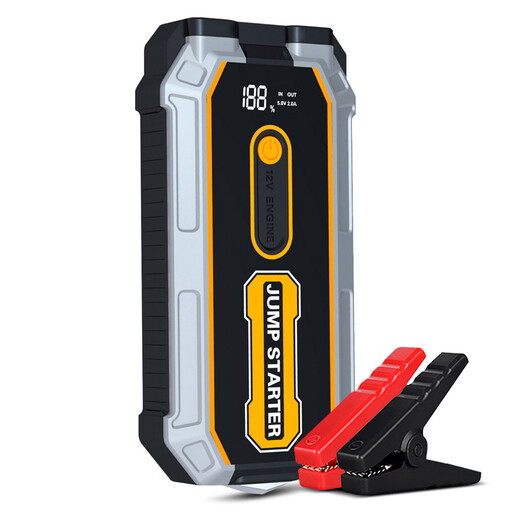
Why it suits this profile: This compact model is designed for drivers who want to keep a straightforward 12V emergency starting aid and power bank in their car.
The product specifications state a peak current of 1200A, an LCD screen and compatibility with 12V petrol and diesel vehicles. This lets you check the charge level before setting off.
Around 330 grams, a 10W USB output and a three-mode light. The product information states that it comes with a limited one-year warranty.
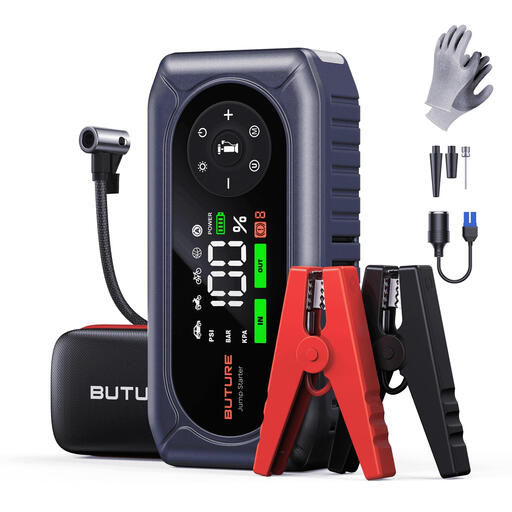
Why it suits this profile: Ideal if you want one device for jump-starting, inflating tyres, providing light and charging mobile devices.
The specifications include automatic shut-off, five inflation modes and three pressure units. The instructions recommend letting the compressor cool down between uses.
4500A peak current, a compressor rated up to 150 PSI, an LCD screen and 10 listed safety features. According to the product description, the model is designed for petrol engines up to 9.0 litres and diesel engines up to 8.0 litres.
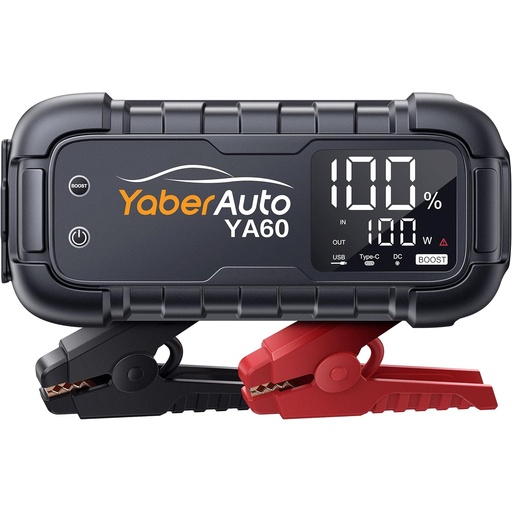
Why it suits this profile: An option for SUV, campervan and van drivers who want plenty of charging power on the go as well as emergency jump-starting.
As well as the stated 8000A peak current, the product specifications list 10 intelligent safety features, a 65W USB-C port and an on-device charge level display.
26800mAh, USB-C up to 65W, two USB-A outputs and a 150W DC output. According to the product information, the model is suitable for 12V petrol engines and diesel engines up to 12.0 litres.
We’ve put together a full, up-to-date list of products that meet these strict selection criteria and the applicable European safety regulations.
Only use a 12V jump starter when the voltage and battery type match the product specifications. Follow these practical steps:
Only use the boost function if the instructions allow it and you’re certain the connections are correct. A car jump starter isn’t suitable for a damaged or leaking battery.
No. Check that your vehicle has a 12V system and compare the permitted engine size for petrol and diesel. A 24V system, an electric car’s high-voltage battery or a faulty battery is generally outside the intended use.
It depends on the battery type, storage temperature, usage and charging routine. Follow the manufacturer’s advice and recharge the device regularly. Don’t leave it in direct sunlight or in a very hot, enclosed car for long periods.
It depends on the model and the tyre. Check the airflow, maximum running time, pressure settings and automatic shut-off. A compressor is particularly handy for adjusting tyre pressure or topping up a slowly deflating tyre; if the tyre is damaged, you’ll need professional help.
