
Vandaag of morgen in huis

Kwaliteit gegarandeerd

Welkomstaanbiedingen ontgrendelen: GRATIS bezorging | Tot 80% korting | Gratis 30 dagen JoyPlus-proefperiode
Download de app
A flat car battery often strikes at the worst possible time: in a car park, on an early commute or on your way to the campsite. With a car jump starter, you can try to start a 12V vehicle yourself, without jump leads or help from another car.
However, not every portable jump starter is suitable for every car. Manufacturers sometimes quote high peak current figures, but that number alone doesn’t tell you whether a model is right for your vehicle. So pay particular attention to the points below.
A high peak current sounds appealing, but check the stated engine capacity too. A jump starter for a small petrol engine has different requirements from one for a diesel SUV, van or boat. Always check the combination of:
A 12V jump starter is also not designed for the 24V systems found in some heavy goods vehicles and buses. It also can’t be used to start an electric car with a high-voltage battery.
A jump starter with a compressor can come in handy if you have a soft tyre, but the stated 150 PSI is the maximum pressure, not the same as the actual inflation speed. Check the airflow rate too, for example 35 or 45 litres per minute, as well as the maximum operating time and automatic shut-off.
A car tyre inflator should also have a suitable connector, hose and pressure display. Use the recommended tyre pressure in your car’s manual or on the sticker inside the car; the pump’s maximum PSI is not the target pressure for your tyres.
Protection against reverse polarity, short circuits and overheating is useful. However, it doesn’t replace connecting the clamps correctly. Product descriptions state that various models offer several layers of protection, but always use the supplied cables and follow the instructions.
A CE marking, or a reference to one in a product description, is no reason to skip the connection instructions. Also check that the casing, cables and clamps are undamaged when you receive the product.
For a compact petrol car, a model rated at 1.200A or 2.000A may be suitable according to its stated specifications. Larger diesel engines, SUVs and vans are more likely to need a model with a higher stated peak current. Treat this as a product specification, not a guarantee that it will start your vehicle: the battery’s condition, the temperature and the engine type all play a part.
A portable battery booster with a higher capacity can work as a power bank for longer, but it’s often heavier. A compact model fits more easily in the glove compartment, while a larger jump starter with an air compressor takes up more boot space.
Look out for:
A lithium battery should not be left for long periods in a very hot, enclosed car. Recharge your car jump starter after use and check its charge level before setting off on a long journey.
A jump starter with an air compressor is a good choice for drivers who want one device for jump starting, inflating tyres and emergency lighting. An adjustable display showing PSI, BAR or kPa, along with automatic shut-off, makes it easier to use.
A car power bank with USB ports can charge phones or tablets. An LED light with an SOS or flashing function can improve your visibility at the roadside, but it doesn’t replace a warning triangle or other mandatory safety equipment.
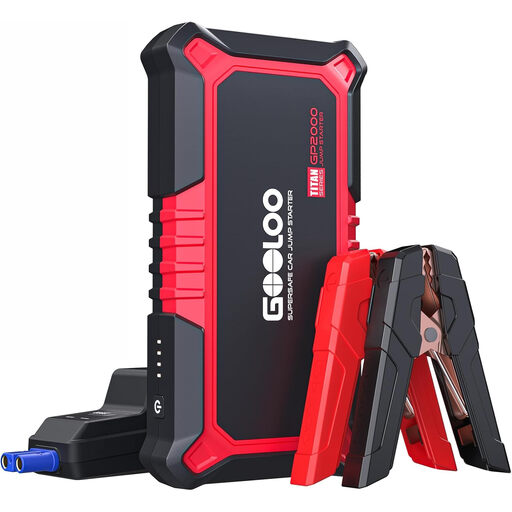
Why it suits this type of user: The GP2000 is a relatively compact model for drivers looking for an emergency car jump starter for a 12V car, motorbike or SUV.
The product description gives more than just a 2.000A peak current: it also states the vehicle limits, up to 8,0-litre petrol engines and 6,0-litre diesel engines. Check these figures against your car.
Around 545 grams, USB ports, a 400-lumen LED light and, according to the product description, ten safety features.
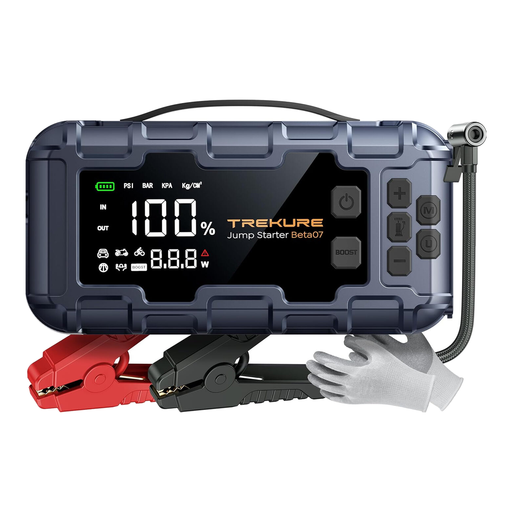
Why it suits this type of user: This model combines a car jump starter with a compressor, display and fast-charging options for drivers who spend a lot of time on the road.
The product description lists vehicle compatibility, a 160 PSI compressor, pressure modes and a display. This lets you compare features instead of focusing only on the amp rating.
According to the product specifications: 6.000A peak current, 45W USB-C PD, a 600-lumen light and five preset pressure modes.
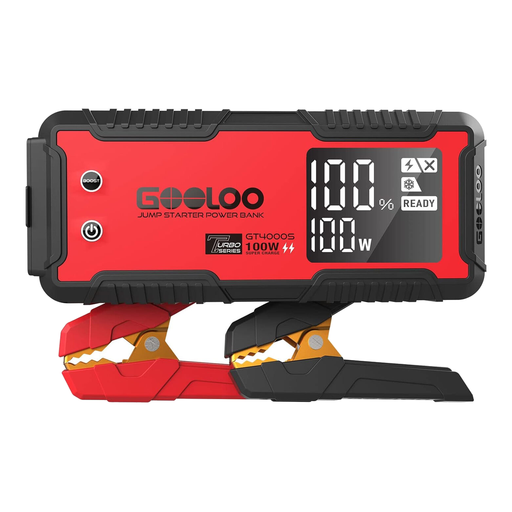
Why it suits this type of user: A good choice if you need a jump starter for larger 12V vehicles and also want to charge a laptop or other USB-C devices.
The stated limits are up to 12,0-litre petrol engines and 10,0-litre diesel engines. This helps when comparing it with SUVs, campervans and vans, but always check your own vehicle’s specifications.
According to the product description: 100W charging, three USB ports, a 400-lumen light and a stated standby time of up to 24 months.
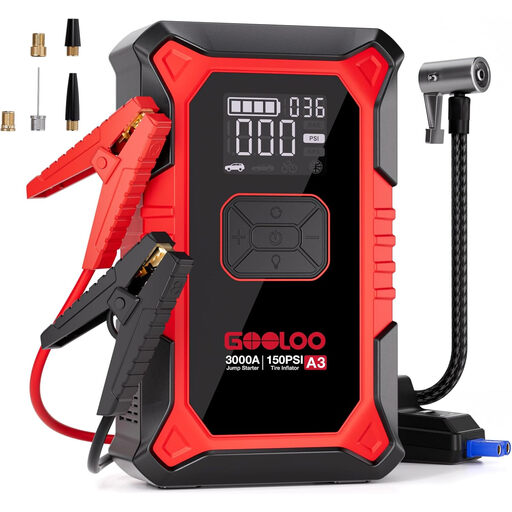
Why it suits this type of user: A practical choice if you want to take one device with you for jump starting, inflating tyres, lighting and charging mobile devices.
As well as 3.000A, the product information lists an airflow rate of 35 l/min, pressure detection and automatic shut-off. This makes it easier to compare the compressor with others.
According to the product specifications: up to 150 PSI, five inflation modes, a digital pressure gauge and support for engines up to 9,0-litre petrol or 6,5-litre diesel.
Don’t use a jump starter with a damaged, leaking or frozen battery. If in doubt, contact your breakdown service or a garage.
We’ve put together a complete, up-to-date list of products that meet these strict selection criteria and the applicable European safety requirements.
No. Check the voltage, fuel type and maximum engine capacity. Most models in this guide are designed for 12V vehicles. They aren’t suitable for a 24V system or an electric car’s high-voltage battery.
It varies by model and use. Recharge the device after use and check its charge level every few months. Follow the manufacturer’s storage and charging advice, particularly if you’re keeping the jump starter in your car for a long time.
It depends on how you’ll use it. If you often make long journeys, go camping or drive a motorbike, boat or SUV, a combination car battery booster and tyre inflator can be practical. If you only need to be able to start a flat battery, a more compact model without a compressor can save weight and space.
