
Vandaag of morgen in huis

Kwaliteit gegarandeerd

Welkomstaanbiedingen ontgrendelen: GRATIS bezorging | Tot 80% korting | Gratis 30 dagen JoyPlus-proefperiode
Download de app
A flat 12V battery often strikes at the worst possible moment: on a cold morning, at the campsite or on your way to work. A car jump starter could help you get going again without needing another vehicle or traditional jump leads. However, not every portable jump starter is suitable for every vehicle.
Many buyers focus only on the highest amp figure on the packaging, which can lead to a disappointing purchase. You should also check engine compatibility, safety features, the condition of your vehicle’s battery and how you’ll store the device.
A figure such as 2000A or 4000A sounds impressive, but peak current isn’t the same as continuous starting current. Manufacturers don’t always measure these figures in the same way, either. So check which engine sizes the model is designed for.
A small petrol car will usually have different requirements from a diesel van, SUV, campervan or agricultural vehicle. A 12V jump starter for petrol and diesel engines therefore needs to be suitable for your specific engine size.
Many models also work as a jump starter with power bank. USB ports are handy for charging a phone, sat nav or camera, but the stated mAh capacity doesn’t automatically tell you how many jump starts you’ll get. Usable capacity depends on the battery type, the conversion to starting voltage and the temperature.
Treat the power bank function as an added bonus, rather than your main reason for buying.
Smart jump leads with protection may include safeguards against reverse polarity, short circuits, overloading, overheating and sparks. These can make connecting the device more straightforward, but they’re no substitute for reading the instructions.
Always check that your vehicle has a 12V lead-acid battery. A jump starter isn’t designed for use with an electric car’s drive system. Don’t use it with a damaged, leaking or swollen battery either.
Look out for three details:
A compact portable battery booster may be enough for a small petrol car. For a diesel SUV, campervan or van, it’s sensible to allow more headroom. A model listed as suitable for up to 8.0 litres of petrol and 6.0 litres of diesel, such as the GOOLOO GP2000, is in a different category from a lightweight emergency car jump starter designed for a motorbike.
A larger battery pack can be useful for multiple jump starts and charging devices. Also check:
A jump starter that spends months in your boot needs to have enough charge left when you need it. Heat in a parked car and freezing temperatures can affect battery performance. Store the device somewhere dry, check its charge level regularly and recharge it after use.
Where possible, choose cables with clear polarity markings and an indicator to show whether they’re connected correctly. An LCD display can show the remaining charge and any error messages. A jump starter with a torch is also handy if you break down in the dark; some models offer steady light, SOS and flashing modes.
A display and light make a device easier to use, but don’t tell you anything by themselves about its actual starting power.
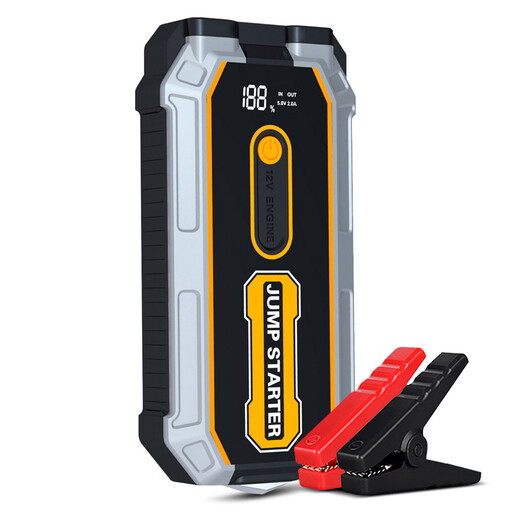
Why it suits this buyer: A compact choice for drivers who simply want to carry an easy-to-use car jump starter for emergencies.
The product information lists a peak current of 1200A, 12V compatibility and an LCD display. This lets you check the charge level before setting off.
Around 330 grams, a USB output, three light modes and support for 12V petrol and diesel vehicles, according to the product description.
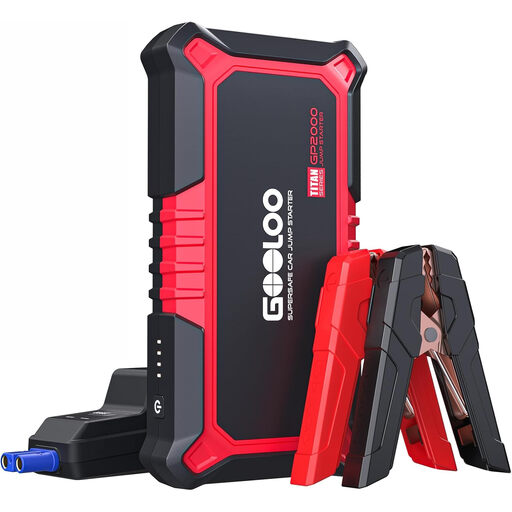
Why it suits this buyer: A robust car battery booster for anyone looking for a device for their car, SUV, motorbike, van or similar 12V vehicle.
The smart cable described includes several safety features. Be sure to check the 12V specification yourself and follow the instructions provided.
According to the product information, it has a peak current of 2000A, is suitable for engines up to 8.0 litres of petrol and 6.0 litres of diesel, and includes two USB outputs and a 400-lumen light.
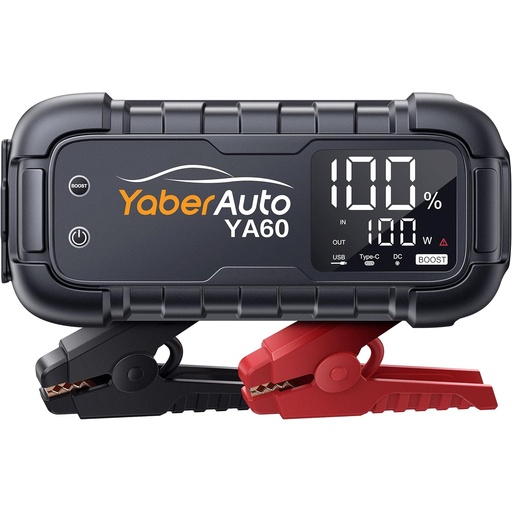
Why it suits this buyer: Designed for drivers of larger vehicles, campervans and SUVs, as well as anyone who wants to power devices or accessories on the go.
The stated compatibility covers all petrol engines and diesel engines up to 12.0 litres. Always check this against your vehicle details in the manual.
65W two-way charging, USB-C, two USB-A ports, a 150W DC output, a 600-lumen light and a stated capacity of 26.800mAh.
We’ve put together a complete, up-to-date list of products that meet these strict selection criteria and the applicable European safety regulations.
No. The vehicle will usually need a compatible 12V lead-acid battery, and the jump starter must be suitable for its engine size. Don’t try to jump-start a battery that is internally damaged, frozen or leaking.
Its lifespan depends on the battery type, how it’s used, storage temperature and maintenance. Recharge it regularly as directed in the instructions, even if you don’t use it often. Don’t leave it in direct sunlight or extreme heat for long periods, and check the casing and cables before use.
Jump leads are often cheaper, but you’ll need a second vehicle and a suitable connection point. A jump starter usually costs more, but works independently and may offer extra features such as a power bank, LCD display and emergency lighting. When comparing options, focus on compatibility, safety features and maintenance, not just the price.
