
Vandaag of morgen in huis

Kwaliteit gegarandeerd

Welkomstaanbiedingen ontgrendelen: GRATIS bezorging | Tot 80% korting | Gratis 30 dagen JoyPlus-proefperiode
Download de app
A flat battery usually happens at the worst possible time: in a car park, on the motorway or just before setting off with the caravan. A car jump starter can get you out of a tight spot without relying on another car. But not every model with a high amp rating or built-in power bank is right for your vehicle.
Look out for these three common pitfalls:
Most cars, vans, motorbikes and motorhomes use a 12V system. Always check your vehicle’s manual. A 12V jump starter is not automatically suitable for every vehicle with a 12V connection: the starting current required varies from one engine to another.
Also check:
A large diesel engine generally needs more starting power than a small petrol engine. If in doubt, choose a model with generous specifications, but treat the stated peak current as a product specification, not a guarantee that it will start every battery in every situation.
A good car battery booster has sturdy battery clamps and a cable module that checks the connection. Useful safety features include:
Always follow the manual. In general, connect the red clamp to the positive terminal (+) and the black clamp to the negative terminal (–) or the designated earth point. Do not use damaged cables, and do not let the clamps touch each other.
A jump starter with an air compressor is useful if you also want to check or temporarily top up your tyre pressure. Don’t just look at the maximum pressure in psi. Check for:
A higher battery capacity is useful if you want to combine several starting attempts with USB charging and inflation. The trade-off is usually extra weight. A compact emergency jump starter is easier to carry in a motorbike or car boot, while a larger model may offer more features for a motorhome, caravan or work van.
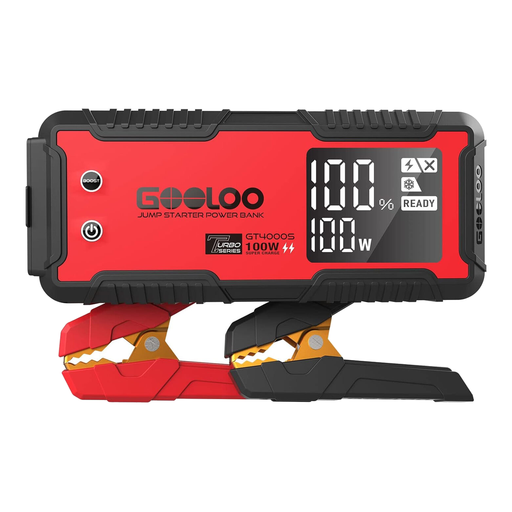
Why it suits this profile: A compact, portable car jump starter for drivers looking for a straightforward solution to a flat battery. It has a 10,000 mAh lithium battery, QC 18 W charging and a storage case.
The product information mentions a spark-proof design, reverse-polarity protection and a boost function. Before buying, check that the 800 A specification is suitable for your engine.
800 A peak current, 10,000 mAh capacity, boost function and protective storage case.

Why it suits this profile: Suitable for drivers with a larger petrol or diesel engine who want a 12V car jump starter with multiple connection options.
As well as the stated 3000 A peak current, the product information lists protection against sparks, reverse polarity and overloads. Check the stated engine limit against your vehicle.
According to the product description, suitable for petrol engines up to 9 litres and diesel engines up to 7 litres, with USB-C, USB outputs and an LED light.
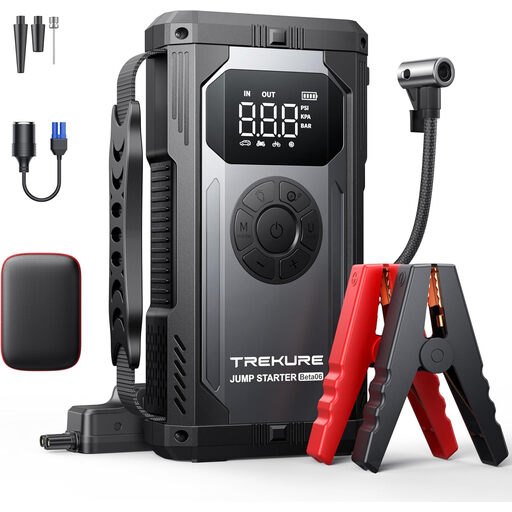
Why it suits this profile: A practical choice for motorhome and caravan owners, outdoor enthusiasts and drivers who want to top up tyres or other inflatables as well as jump-starting their vehicle.
According to the product information, the compressor has an LCD display, adjustable pressure and automatic shut-off. This means you need to check it manually less often, but always check the tyre pressure yourself after inflating.
5500 A peak current, compressor up to 150 psi, 23,800 mAh lithium-polymer battery, 12V output and emergency light.
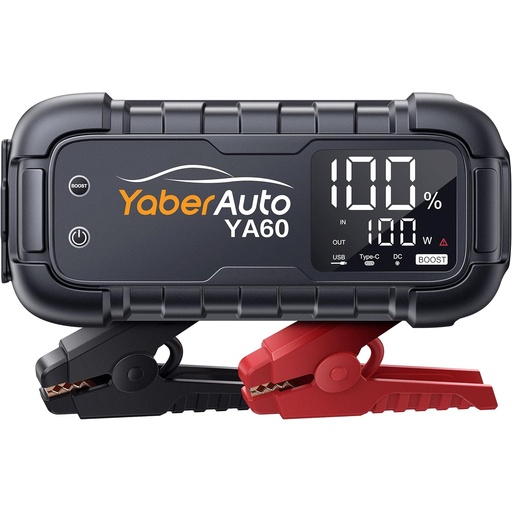
Why it suits this profile: A good option for people with heavy-duty 12V vehicles and several devices. This model combines a high stated peak current with 65W charging and a range of outputs.
The product information lists ten intelligent safety protections and recommends recharging every six months as part of its maintenance. Check the clamps, cables and charge level before use.
According to the product specifications, 8000 A peak current, support for diesel engines up to 12.0 litres, 65W USB-C, 150W DC output and 600-lumen LED lighting.
We’ve put together a complete, up-to-date list of products that meet these strict selection criteria and the applicable European safety regulations.
Fully charge a new car jump starter before storing it. Keep the device dry, out of direct sunlight and away from prolonged exposure to heat in a car. Check the charge level periodically, following the manufacturer’s instructions.
If you break down:
Do not use a jump starter with a leaking, swollen or visibly damaged battery. If in doubt, contact roadside assistance or a garage.
Its lifespan depends on charging cycles, storage temperature and maintenance. If it has not been used for a long time, recharge it as instructed in the manual. Some models state a longer standby period, but this depends on conditions and does not guarantee how much charge will be available.
Only if the product specifications support your diesel engine. Compare the stated maximum engine capacity and starting current with your vehicle. A diesel motorhome or van often needs more power than a small petrol car.
If you only need to jump-start a battery occasionally, a compact model may be enough. A battery jump starter with a compressor is especially handy on long journeys, when camping or when travelling with a caravan. You’ll pay for the extra weight and features, but you’ll also have an air pump, power bank and emergency light to hand.
