
Vandaag of morgen in huis

Kwaliteit gegarandeerd

Welkomstaanbiedingen ontgrendelen: GRATIS bezorging | Tot 80% korting | Gratis 30 dagen JoyPlus-proefperiode
Download de app
A flat battery often strikes at the worst possible moment: in a dark car park, on a camping trip or just before you leave for work. With a car jump starter, you can start a 12V vehicle without another car or long jump leads. However, not every model is suitable for every vehicle.
Marketing often focuses on high amp ratings, large capacities and extra features. Those figures don’t tell the whole story. Read on to find out which specifications matter, which pitfalls to avoid and what type of portable jump starter suits your needs.
A rating such as 2000A or 4000A sounds impressive, but peak current isn’t the only figure that matters. Check which petrol and diesel engines the model is listed as suitable for in the product information. For example, a jump starter rated for diesel engines up to 4.0 litres isn’t automatically suitable for a large van or motorhome.
Also consider the type of vehicle. Some models are designed for cars and motorbikes, while others can also be used with lorries, boats, motorhomes or tractors.
A car battery booster left in the boot for months may have a low charge when you need it. Check how often the manufacturer recommends charging it. According to the product information, GOOLOO GP4000 should be topped up every 2 to 3 months if it hasn’t been used for a while. Other models list a longer standby period, but that doesn’t mean you can skip regular checks.
A display showing the battery level makes it easier to keep the device ready. That way, you can check whether your car emergency starter is ready to use before a long journey.
A torch, power bank and fast-charging port are handy, but the leads and safety features deserve more attention. Look for features such as short-circuit protection, reverse-polarity protection, overheat protection and spark protection. Always follow the instructions for your chosen model.
A jump starter isn’t designed for a damaged, leaking or frozen battery. Also check that your vehicle uses a 12V system. A 12V jump starter isn’t suitable for an electric car’s high-voltage battery or, without checking compatibility, a 24V lorry system.
First, check the maximum engine size listed by the manufacturer or seller. Here are some examples from the range:
These are product specifications, not a guarantee that every engine will start in every situation. The condition of the battery, temperature, cable connection and engine can all affect the result.
Smart jump leads can warn you if they’re connected incorrectly or cut off the power if there’s a problem. Check whether the cable module provides protection against:
Make sure the clamps make firm contact with the battery terminals or the recommended metal earthing point. Don’t crank the engine for too long. Many manuals recommend trying for no more than a few seconds, then pausing briefly.
A higher mAh rating may provide extra charging capacity for phones or other devices, but it doesn’t tell you on its own how many jump-start attempts you can make. Also consider the weight and storage space needed. A compact jump starter can fit in the glovebox, while a more powerful model for SUVs or motorhomes may take up more room.
A jump starter with a power bank is useful when travelling. A jump starter with a torch can also provide light if you need to check your vehicle at the roadside. Treat these features as extras, not as a substitute for starting performance and safety features.
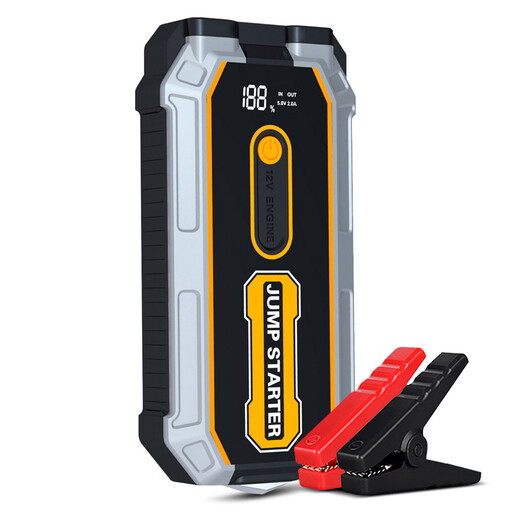
Why it suits this type of user: According to the product information, this model combines a 1200A peak current with a compact 330g design, an LCD display and a power bank function. It’s a good fit for drivers looking for straightforward jump-starting support for a car, SUV, motorbike or boat.
The LCD display shows the remaining charge. Check beforehand that the stated engine compatibility is suitable for your vehicle.
1200A peak current, 12800mAh battery according to the product information, USB output and LED light with three modes.
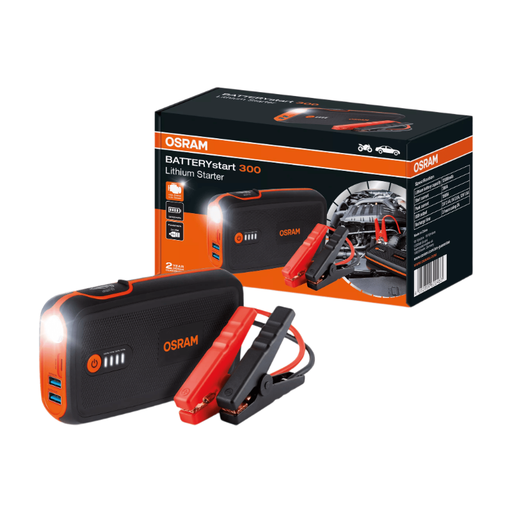
Why it suits this type of user: According to the product specifications, this model is suitable for petrol engines up to 8.0 litres and diesel engines up to 4.0 litres. The 12V output can be used for accessories such as a tyre inflator or cool box.
The stated engine limits and extra 12V connection make it easier to check whether this is the right choice than relying on a high amp rating alone.
2000A peak current, 16800mAh lithium-ion battery, dual USB ports and an integrated LED torch.
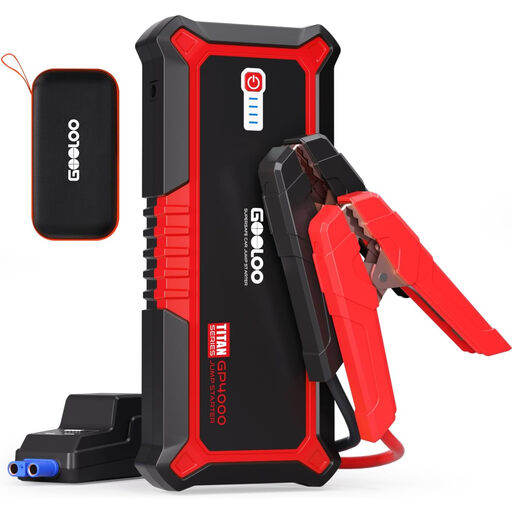
Why it suits this type of user: According to the product description, this powerful jump starter is designed for a range of 12V vehicles, including motorhomes, lorries, boats, SUVs and vans.
The product information lists ten safety features and a BOOST function for low battery voltage. Even so, always check the manual and engine size.
4000A, support for diesel engines up to 10.0 litres according to the product information, USB ports, torch and 12V output.
We’ve put together a complete, up-to-date list of products that meet these strict selection criteria and the applicable European safety regulations.
Yes, provided the jump starter is suitable for the 12V system, the engine size is within the stated limits and the device has enough charge. A completely faulty battery, poor cable connection or problem with the starter motor can’t always be fixed with a jump starter.
Its lifespan depends on storage temperature, charging habits and how often it’s used. Keep the device somewhere dry and out of direct sunlight. Check the charge regularly and follow the charging schedule in the manual. Don’t use a jump starter if its casing is damaged or its battery is swollen.
Standard jump leads are usually simpler and cheaper, but you’ll need a second vehicle or a suitable power source. A portable jump starter works on its own and can also double as a power bank or torch. If you’re often on the road, travelling in a motorhome or parking somewhere remote, that extra independence may be worth the additional cost.
