
Vandaag of morgen in huis

Kwaliteit gegarandeerd

Welkomstaanbiedingen ontgrendelen: GRATIS bezorging | Tot 80% korting | Gratis 30 dagen JoyPlus-proefperiode
Download de app
A flat battery often strikes at the worst possible time: just before you leave for work, on your way to the campsite or after a cold night. With a car jump starter, you can sometimes start a vehicle with a flat 12V battery yourself, without needing another car or jump leads.
However, not every model is suitable for every vehicle. A high peak current on the packaging, for example, doesn’t tell you everything about how useful a jump starter will be. An integrated compressor, large power bank or bright LED light can also push up the price, even if you don’t need those features. Read on to find out which specifications really matter and which models suit different needs.
Manufacturers often list a high peak current, such as 3000A or 4500A. This is a brief maximum value and doesn’t guarantee that the jump starter will start every vehicle. Also check:
A jump starter for petrol and diesel may be suitable for both fuel types, but the maximum engine size usually differs.
Battery capacity in mAh gives you an idea of the energy available for USB devices and how many functions the unit can perform. It isn’t a direct measure of starting performance. So, as well as capacity, check the stated starting current, peak current and vehicle compatibility.
For a typical car, a compact car battery starter with a lower capacity may be more practical than a heavier model with lots of extra features.
A jump starter with a compressor may list a maximum pressure of 150 PSI. The recommended tyre pressure for a car is usually much lower, so it’s more important to check for:
Use the pressure shown on the sticker inside your car’s door frame or fuel flap, or in the owner’s manual. The compressor’s maximum pressure is not the correct target pressure for your tyre.
Most models in this category are designed for cars, SUVs, vans, motorbikes and other vehicles with a 12V battery system. A 12V car jump starter isn’t automatically suitable for heavy goods vehicles with a 24V system.
Ideally, choose a model with a stated maximum engine size comfortably above your car’s. A model rated for petrol engines up to 6 litres may be enough for a small petrol car. For a large SUV, diesel van or boat, it’s sensible to allow more headroom.
Check whether the portable jump starter has protection against:
These features reduce the risks involved, but they don’t replace reading the manual. Connect the red clamp to the positive terminal and the black clamp to the negative terminal or a suitable metal earth point, depending on the instructions for your vehicle and product.
Don’t attempt to start the vehicle for longer than the recommended time in one go. Let the device and battery cool down between attempts. Don’t use a car jump starter with a damaged, frozen or leaking battery.
A car power bank can come in handy for charging a phone, sat nav or tablet. An LED light with an SOS or flashing mode is useful if you break down in the dark. A jump starter with an air compressor can also temporarily inflate under-inflated tyres.
Think about how you’ll use the device. If you commute, a compact car battery booster may be all you need. For camping or long journeys, a compressor, multiple USB ports and a digital display may offer more value.
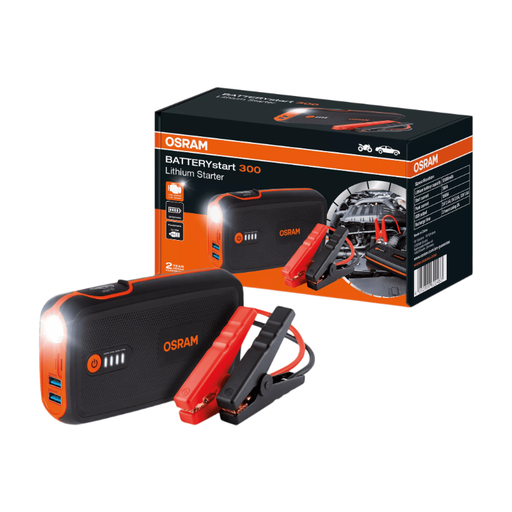
Why it suits this need: This compact model is designed for 12V cars and motorbikes with petrol engines up to 6 litres or diesel engines up to 3 litres, according to the product information. Its integrated USB ports also make it useful as a power bank.
The stated engine limits and 1500A peak current make it clearer which vehicles the unit is intended for than a capacity claim alone. There’s no compressor to add to its size or price.
13000mAh battery, dual USB output, integrated LED light and a weight of approximately 706 grams, according to the product information.
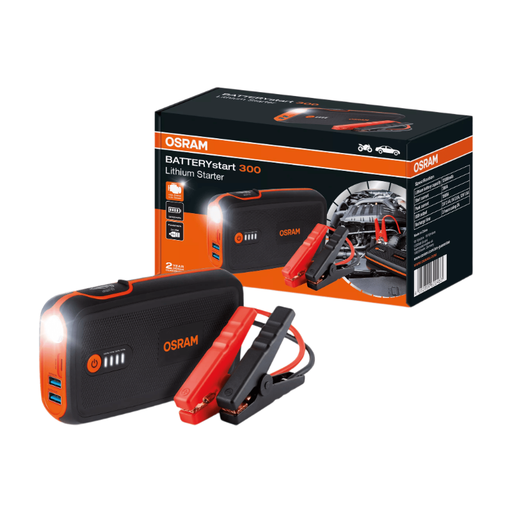
Why it suits this need: This model combines a 2000A peak output with a 12V output for accessories. According to the product information, it’s suitable for petrol engines up to 8 litres and diesel engines up to 4 litres.
Its suitability is linked to specific engine sizes and voltage. That means you don’t have to rely solely on words like ‘powerful’ or on battery capacity.
16800mAh lithium-ion battery, dual USB port, 12V output, LED light and a stated two-year manufacturer’s warranty.
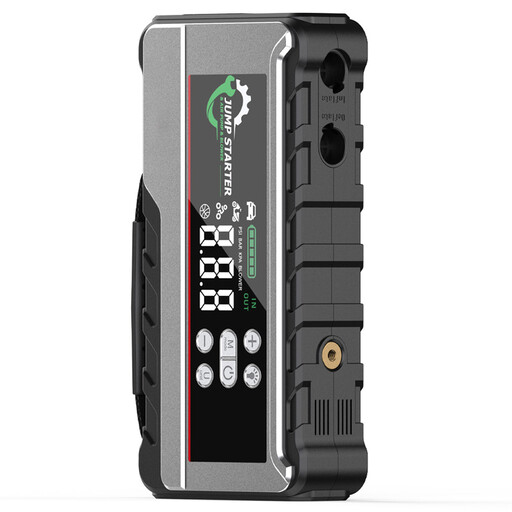
Why it suits this need: For drivers of SUVs and vans, motorcyclists and campers, this model offers a compressor, power bank and air blower as well as a jump starter.
According to the product information, the compressor has a digital pressure function, automatic shut-off and a maximum pressure of 150 PSI. Always check the recommended tyre pressure before use.
3000A peak current, 150 PSI compressor, PD65W charging, stated capacity of 24800mAh and three LED modes.
We’ve put together a complete, up-to-date list of products that meet these strict selection criteria and the applicable European safety regulations.
A compact car jump starter isn’t a substitute for battery maintenance. If your battery regularly goes flat, have the battery, alternator and charging voltage checked. If you mainly want to charge or maintain a battery, you could also consider a suitable car battery charger.
No. Check the voltage, fuel type and maximum engine size. Most models are designed for 12V vehicles. A 24V heavy goods vehicle or a vehicle with a damaged battery may fall outside the stated applications.
Its lifespan depends on charging cycles, storage temperature and maintenance. Recharge the device regularly as instructed in the manual and avoid exposing it to heat for extended periods. Any stated number of charging cycles is a manufacturer’s product specification, not a guarantee for every usage scenario.
That depends on how you’ll use it. If you often go on long journeys, camp or ride a motorbike, an integrated compressor could be useful. If you only need to start a car with a flat battery, a simpler model is often the more practical and compact choice.
