
Vandaag of morgen in huis

Kwaliteit gegarandeerd

Welkomstaanbiedingen ontgrendelen: GRATIS bezorging | Tot 80% korting | Gratis 30 dagen JoyPlus-proefperiode
Download de app
A flat car battery rarely happens at a convenient time. You may be in a car park, beside a dark road or at a campsite without access to a power socket. An car jump starter can then provide practical roadside assistance, without relying on another car.
However, not every portable jump starter is suitable for every vehicle. Marketing copy often places great emphasis on a high amp rating, while other important features receive less attention. Pay particular attention to these three pitfalls:
A 12V jump starter is designed for vehicles with a 12V battery system. Check your car, motorbike, motorhome, boat or van’s manual to make sure this matches. A jump starter is generally not intended for electric vehicles with a high-voltage drive system.
Next, look at the difference between petrol and diesel. Diesel engines often require more power when starting. A model described as suitable for a petrol engine of up to 8 litres may therefore not be suitable for a diesel engine of the same size.
For an ordinary passenger car, a model rated at 1200A to 2000A may be sufficient based on the stated specifications. For an SUV, van, motorhome or boat, a greater margin is advisable. Always use the stated engine size as the manufacturer’s guideline, not as a guarantee for every situation.
The peak current is often displayed prominently. Examples in the range include 1200A, 1500A, 3000A, 4000A and higher. This figure is useful for comparisons, but on its own it does not tell you how many times you can start a car.
Battery capacity is usually stated in mAh. For example, the Porbi S306 has a stated capacity of 12,800mAh and a listed nominal output of 7,200mAh. The Porbi S901 lists 14,000mAh and a nominal capacity of 10,000mAh. This difference shows why you should read the full product specifications.
A car battery booster should be sufficiently charged before use. Some models recommend a minimum charge level of 25%, 50% or a full charge. Always follow the manual. A portable battery charger left unused in a warm boot for months may also lose capacity. Regularly recharging it, for example every two to six months depending on the instructions, helps keep the device ready for use.
Look for features such as:
A safety feature does not prevent incorrect use from creating risks. Connect the red clamp to the positive terminal and the black clamp to the negative terminal or a suitable unpainted metal earthing point, exactly as instructed in the manual. Do not use a car emergency starter if the battery is visibly leaking, swollen, cracked or frozen. Allow the device to cool down between multiple starting attempts and remove the clamps as soon as the engine is running.

Why it suits this profile: According to the product information, this compact model weighs around 330 grams and is suitable for 12V petrol and diesel vehicles. That makes it easy to store in a glove compartment or emergency kit.
The product specification states both the peak current and nominal capacity: 1200A, 12,800mAh and 7,200mAh rated output. This makes it easier to assess the figures in context.
LCD display, 10W USB output, LED light with three modes and dimensions of approximately 165 × 84 × 30 mm.
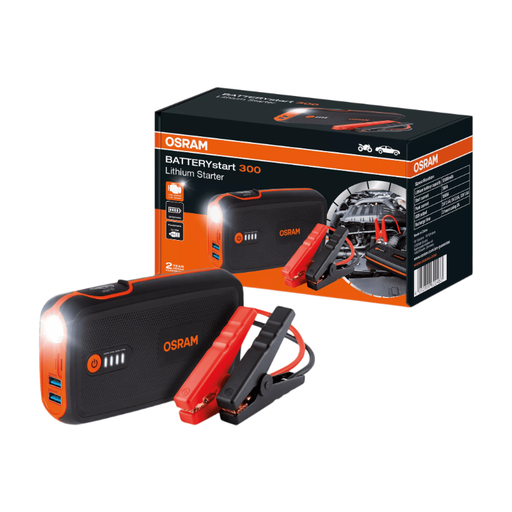
Why it suits this profile: For motorists looking for a compact device from a well-known brand, this model offers a stated peak current of 1500A, a 13,000mAh lithium battery and a two-year manufacturer’s warranty.
The product information specifies limits of up to 6L petrol and 3L diesel. This prevents you from relying solely on the general “12V” label.
Two USB outputs, integrated LED light, 12V system and a stated weight of approximately 706 grams.
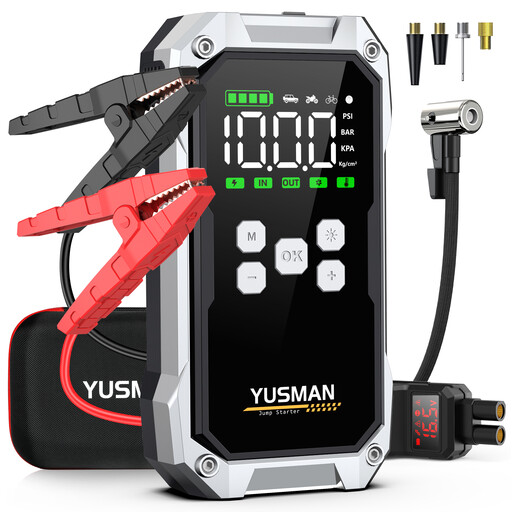
Why it suits this profile: This model is aimed at drivers of larger vehicles and users who also want to inflate tyres or other inflatables while on the road.
In addition to the stated 5000A and 21,800mAh, the product description lists limits of up to 10L diesel and a starting charge level above 25%. Always check these figures against your vehicle’s specifications.
Built-in compressor up to 150 PSI, LCD screen, two USB ports and four LED modes.
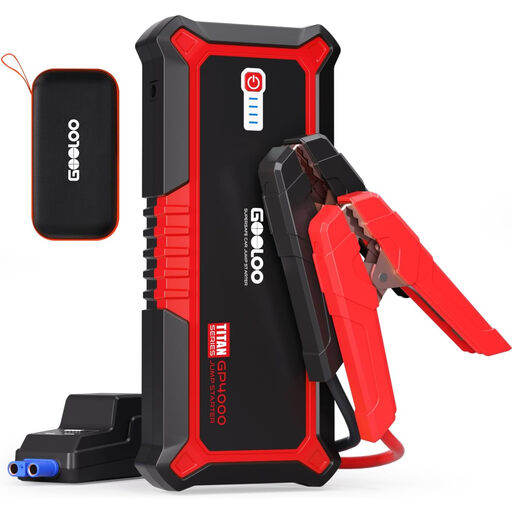
Why it suits this profile: According to the product description, this model is designed for 12V vehicles, supporting petrol and diesel engines of up to 10 litres. This suits larger vehicles, provided your vehicle falls within these limits.
The manufacturer lists several built-in safety features and smart metal clamps. Before buying, however, check the supplied manual and the exact compatibility with your vehicle.
4000A peak current according to the product listing, two USB ports, USB-C input, LED torch and storage case.
We have put together a complete, up-to-date list of products that fully meet these strict selection criteria and the applicable European safety regulations.
Switch off the car and turn off all electrical equipment. Connect the red clamp to the battery’s positive terminal and the black clamp to the negative terminal or a suitable earthing point. Wait for the correct signal from the device and start the engine according to the manual. Do not keep trying to start the engine for an extended period. Remove the clamps in the stated order once the engine has started.
This depends on the lithium battery, storage temperature, charging frequency and usage. Many models recommend recharging the device every two to six months. Store a jump starter somewhere cool and dry, and do not leave it in direct sunlight or a hot car for extended periods. Check the charge level and cables before a long journey.
After purchase, the direct usage costs are generally limited to charging via USB-C, a USB adapter or the supplied car charger, depending on the model. A jump starter with a power bank can also charge phones or other USB devices. Bear in mind that extra features, a larger battery or a higher starting current often affect the purchase price and weight.
