
Vandaag of morgen in huis

Kwaliteit gegarandeerd

Welkomstaanbiedingen ontgrendelen: GRATIS bezorging | Tot 80% korting | Gratis 30 dagen JoyPlus-proefperiode
Download de app
A flat battery often strikes at the worst possible moment: just before you set off, in a dark car park or while you’re on a camping trip. A car jump starter can sometimes start a 12V vehicle without needing another car or traditional jump leads. But not every model is right for every car.
Many buyers focus on the highest amp rating. That’s one of the most common pitfalls. A high peak current doesn’t automatically mean a jump starter is suitable for your engine, battery or situation. Read on to find out which specifications you really need to check, and which popular options suit different needs.
A model rated at, say, 4,000A or 8,000A sounds powerful, but check the stated starting current, engine size and fuel type too. A diesel engine generally needs more starting power than a petrol engine of a similar size. The stated capacity is also a manufacturer’s specification; actual performance may depend on the temperature, battery condition and connections.
A 12V jump starter is designed for vehicles with a 12V battery system. That doesn’t mean it’s suitable for 24V lorries, the high-voltage batteries in electric vehicles or every agricultural machine. Check your vehicle’s handbook and compare the maximum engine sizes listed for petrol and diesel.
A cheap battery booster without clear cable protection can be awkward to use if you connect it incorrectly. Look for features such as reverse polarity, short-circuit, overheating and overcharge protection. Storage matters too: if your jump starter is kept in a hot car for months, it needs to be recharged regularly and protected from moisture and extreme heat, as explained in the manual.
Peak current is a maximum value delivered for a short time. Starting current often gives you a more practical idea of the power available when starting the engine. Also check the stated engine limits, for example:
A jump starter for petrol and diesel cars shouldn’t be chosen on its amp rating alone. Starting current, engine size and vehicle type are more relevant when considered together.
Capacity is often shown in mAh, but the usable capacity may be lower than the stated nominal figure. So check the charging time, USB outputs and input type too. A jump starter with a power bank is handy for charging phones, tablets or navigation devices, but extra charging features don’t automatically make it a better emergency starter.
For everyday use, a USB-C port can be useful. Some models also support fast charging, while others are designed mainly to fit neatly in your glove compartment.
Sturdy clamps, cables that are long enough and a clear status display make connection easier. An LCD screen can show the remaining battery level. A built-in LED light with steady, flashing or SOS modes is useful if you break down in the dark, but it’s no substitute for a warning triangle or a safe place away from the road.
An IP rating, such as IP44 or IP65, describes protection against dust and water according to the product information. Always check exactly what the specific rating means: water-resistant doesn’t mean fully waterproof.
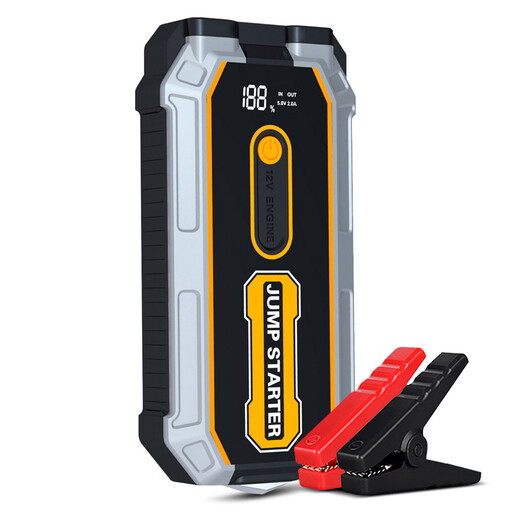
Why it suits this profile: According to the product description, this compact car battery booster weighs around 330 grams and is designed for 12V petrol and diesel vehicles, motorbikes and boats.
The specifications list both a 1200A peak current and a 600A starting current, as well as a maximum capacity for 12V vehicles. This gives you more context than a single high amp rating.
12800mAh nominal capacity, LCD display, 10W USB output and three LED modes.
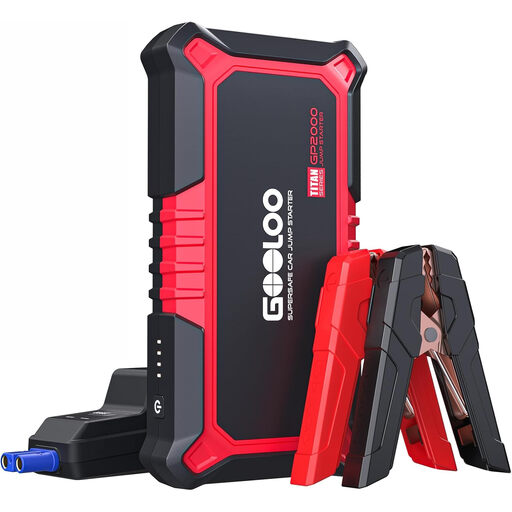
Why it suits this profile: This model is aimed at drivers who want clear safety features, a storage case and charging options for mobile devices, as well as starting power.
The product description lists ten safety features, including reverse polarity, short-circuit and overheating protection. Check the latest manual for precise instructions on use.
2000A peak current, support for petrol engines up to 8.0 litres and diesel engines up to 6.0 litres, plus a 400-lumen light.
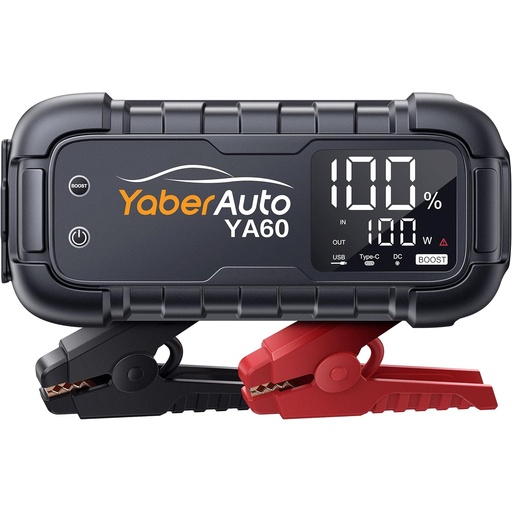
Why it suits this profile: For SUV, motorhome and outdoor enthusiasts, the stated 26800mAh battery, 150W DC output and 65W USB-C charging are handy for powering several devices.
As well as an 8000A peak current, the manufacturer states that it supports 12V petrol engines and diesel engines up to 12.0 litres. Always check this limit against your own vehicle’s specifications.
10 smart safety features, a 600-lumen light, USB-C 65W and 150W DC output.
A jump starter isn’t a substitute for battery maintenance. If your car regularly struggles to start, have the battery and charging system checked. If you get a flat tyre, a model with a compressor, such as a 2-in-1 device, can be particularly handy; a standard portable car charger won’t offer this feature.
We’ve put together a complete, up-to-date list of products that meet these strict selection criteria and the applicable European safety requirements.
No. Always check the voltage, fuel type, engine size and minimum battery voltage specified by the manufacturer. You shouldn’t try to start a damaged or frozen battery.
This depends on the battery type, storage temperature, usage and charging habits. Recharge the device periodically according to the manual, even when you’re not using it. Some product descriptions state a long standby time, but this is a manufacturer’s figure, not a guarantee for every storage condition.
The main costs are the purchase price and the electricity used to recharge it. A model with a power bank function can offer extra value if you also use it to charge phones or tablets. Do check the accessories, though: a mains charger, storage case or car charger isn’t included with every model.
