
Vandaag of morgen in huis

Kwaliteit gegarandeerd

Welkomstaanbiedingen ontgrendelen: GRATIS bezorging | Tot 80% korting | Gratis 30 dagen JoyPlus-proefperiode
Download de app
A flat battery often strikes at the worst possible moment: on a cold morning, during a weekend trip or after the car has been left standing for a long time. With a car jump starter, you can try to start a 12V vehicle yourself, without needing another car or traditional jump leads. But not every model is right for every car.
Many buyers focus mainly on the highest amp figure on the packaging. That can be misleading. A car battery booster also needs to suit your engine type and capacity, as well as the way you plan to store and use it.
A high peak current sounds appealing, but it doesn’t tell you everything about how suitable a jump starter is in practice. Always check the stated combination of:
A jump starter for petrol and diesel engines may have different limits for each. A model that, according to its product specifications, supports petrol engines up to 8,0 litres isn’t necessarily suitable for a diesel engine of the same size.
A higher battery capacity, such as 20.000 mAh, is useful for charging phones and other devices. But to start a car, the output current, cables and clamps matter too. So don’t judge it solely by its jump starter power bank function.
Also check the difference between the stated battery capacity and the so-called rated capacity. Manufacturers may show both values, as they do for Porbi models. So make sure you compare the same measurement across products.
A portable jump starter can sit in your boot for months. Heat, cold and self-discharge can affect how much charge is available. So check:
A jump starter isn’t a substitute for maintaining a worn-out battery. If the car still won’t start despite the jump starter being connected correctly, have the battery and charging system checked.
Most cars, motorbikes, SUVs and light vans use a 12V lead-acid battery. Check your vehicle’s handbook before connecting a 12V battery booster. According to their product information, the models below are designed for 12V vehicles, but the maximum engine capacity varies by model.
A compact model is often enough for a small petrol car. A diesel engine, motorhome, pick-up or large van will generally need higher specifications. Don’t use a jump starter on an electric vehicle unless the manufacturer expressly permits it.
Connect the red clamp to the positive terminal. Many manuals advise connecting the black clamp to a suitable unpainted metal earth point, away from the battery. Always follow the instructions for your model.
A car jump starter with smart cables may include features such as:
These are protective features listed in the product description; they don’t remove the need to connect the jump starter carefully.
A compact jump starter is easier to keep in your glove compartment, but it may have fewer ports or a lower capacity. A larger model may offer USB-C fast charging, a 12V output or a more powerful light.
A jump starter with a torch is useful if you break down in the dark. Check whether the light has steady, SOS and flashing modes. If you regularly go camping or travel, a model with a power bank function and several USB ports could offer extra value.

Why it suits this type of user: According to the product specifications, this compact model weighs around 330 grams and has an LCD display for checking the remaining charge. It’s designed for 12V petrol and diesel vehicles, including cars, SUVs and motorbikes.
The LCD indicator makes it easier to see when the jump starter needs charging, reducing the risk of keeping a flat emergency starter in your car.
1200A peak current, stated capacity of 12800mAh, USB output and an LED light with three modes.
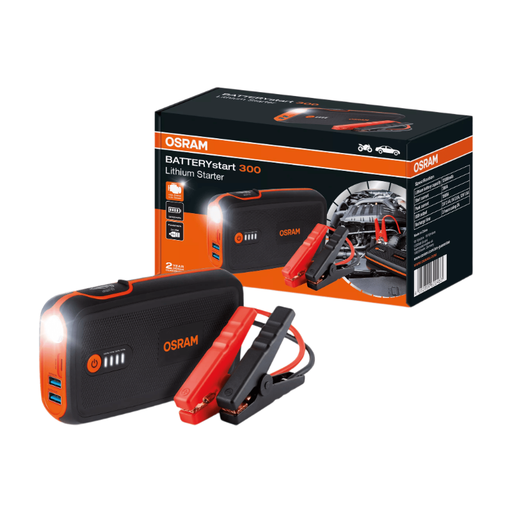
Why it suits this type of user: The product specifications state a peak current of 2000A and support for petrol engines up to 8 litres and diesel engines up to 4 litres. It also has an extra 12V output for devices such as a tyre inflator.
The stated engine limits are clearly listed. The unit also combines jump-starting, USB ports and a 12V socket in one casing.
Stated capacity of 16800mAh, dual USB output, 12V output and a two-year manufacturer’s warranty, according to the product information.
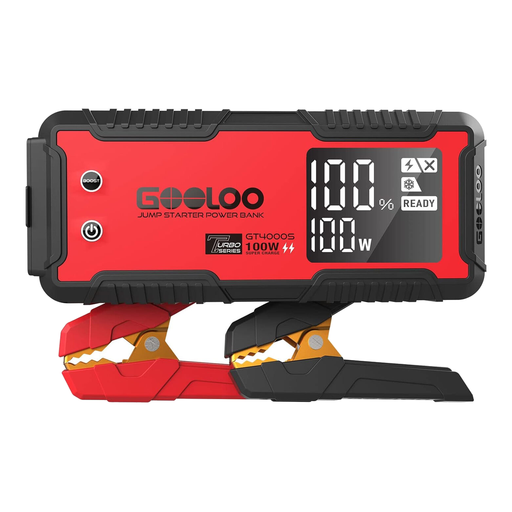
Why it suits this type of user: According to the product information, this model supports 12V vehicles with petrol engines up to 12 litres and diesel engines up to 10 litres. Its 100W charging function and 15V/12V output make it suitable for motorhomes, larger vehicles and frequent use.
The stated petrol and diesel limits help you avoid choosing a jump starter based only on its amp figure. According to the description, a screen displays the product status.
4000A peak current, 100W two-way charging, several USB ports and a 400-lumen light.
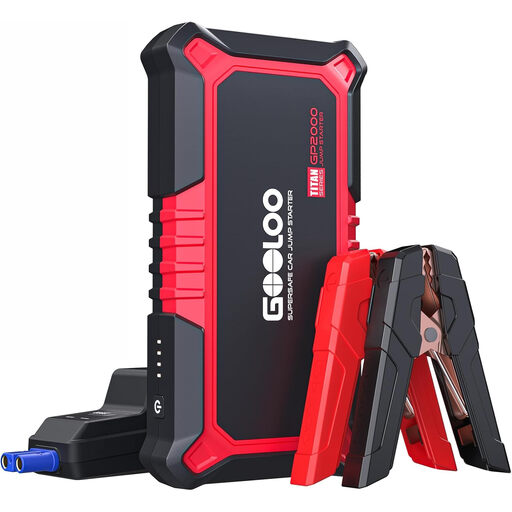
Why it suits this type of user: This model has a stated peak current of 2000A and supports petrol engines up to 8,0 litres and diesel engines up to 6,0 litres. Weighing around 545 grams and supplied with a storage bag, it’s suitable for keeping in your car as standard.
The product specifications list ten safety features and a standby time of up to 24 months. Still, check the charge regularly, especially after storing it in a warm car.
2000A peak current, two USB outputs, a 400-lumen LED light and smart jump leads, according to the product information.
We’ve put together a complete, up-to-date list of products that meet these strict selection criteria and the applicable European safety regulations.
Don’t use the device with a damaged, leaking or swollen battery. Store a lithium jump starter in a dry place, away from direct sunlight and within the temperature range specified by the manufacturer.
Yes, if the product specifications support both engine types. Always check the separate limits. For example, a model may be suitable for an 8-litre petrol engine but only a 6-litre diesel engine.
Its lifespan depends on the cell type, storage temperature, charging frequency and how it’s used. Manufacturers sometimes state a standby time or number of charging cycles. Treat these as product specifications based on certain conditions. Recharge the device periodically if it’s not used for a long time.
No. A jump starter provides temporary starting power; it isn’t a battery charger for a full recharge. Once the car has started, have the battery checked or recharge it with a suitable battery charger.
