
Vandaag of morgen in huis

Kwaliteit gegarandeerd

Welkomstaanbiedingen ontgrendelen: GRATIS bezorging | Tot 80% korting | Gratis 30 dagen JoyPlus-proefperiode
Download de app
A flat car battery always seems to happen at the worst time: on a cold morning, after a weekend parked up or on your way to the campsite. With a car jump starter, you can sometimes start a 12V vehicle yourself, without jump leads or help from another driver. However, not every car jump starter is suitable for every vehicle.
The product name alone doesn’t tell you much. Focus on starting current, vehicle compatibility, charge level and safe operation. Below, we cover the main pitfalls and offer practical recommendations for different situations.
A high peak current may sound appealing, but it doesn’t tell you everything about how useful a device will be. Check the following too:
A 12V jump starter isn’t suitable for the 24V systems found in some heavy commercial vehicles. You also can’t use a standard jump starter to start an electric car’s high-voltage battery. Some hybrids may only be compatible with a jump starter for their small 12V battery. Always check your vehicle and product manuals.
A jump starter with a compressor can come in handy when you need to top up your tyres on the go. However, maximum pressure isn’t the same as inflation speed. Check the airflow too, for example in litres per minute, as well as the maximum run time and whether the compressor switches off automatically.
A compact car tyre inflator will generally have limited capacity. Inflating a completely flat van tyre may take longer than making a small adjustment to the tyre pressure. Let the compressor cool down between uses if the manual recommends it.
A portable jump starter only works when its internal lithium battery has enough charge. A model left unused in the boot for months may not have enough power when you need it. Check the charge level regularly and recharge the device after use.
Also look out for the difference between nominal capacity and advertised capacity. Some models list both a capacity in mAh and a lower “rated capacity”. The latter gives you a more realistic idea of the usable capacity.
Choose a car battery starter based on your engine, not just the amp rating. A compact model may be enough for a small petrol car. For an SUV, van or diesel engine, it’s sensible to allow some extra headroom.
Product information may list compatibility limits such as:
These are compatibility limits stated in the product description, not a guarantee that every vehicle will start in all conditions. An old, damaged or frozen battery can cause separate problems.
Look for features such as:
Always follow the manual. You’ll usually connect the red clamp to the positive terminal and the black clamp to the negative terminal or a suitable metal earth point. Switch off your lights and other electronics, and don’t keep trying to start the engine for long periods.
A CE mark may be included in the product information, but check that the manual, responsible party and warranty details are clearly stated too. A certification mark is no substitute for using the device correctly.
A model with a compressor and power bank can combine several functions in one device. Check the following:
A basic car battery starter without a compressor is often lighter. If you regularly go camping or take long journeys, you may value a built-in light, power bank and tyre inflator.
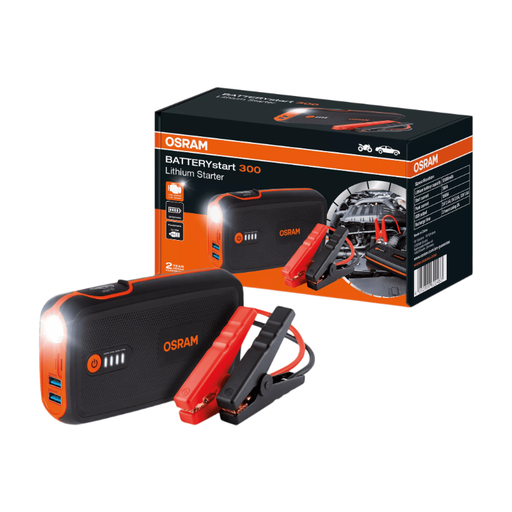
Why it suits this type of user: This compact model is designed for everyday cars and motorbikes with petrol engines up to 6.0 litres or diesel engines up to 3.0 litres. The built-in power bank and LED light add practical features without a compressor.
The stated engine limits make it easier to check compatibility in advance. There’s no compressor adding extra weight if all you need is an emergency starter.
1500A peak output, two USB ports, an LED light and a stated weight of around 706 grams.
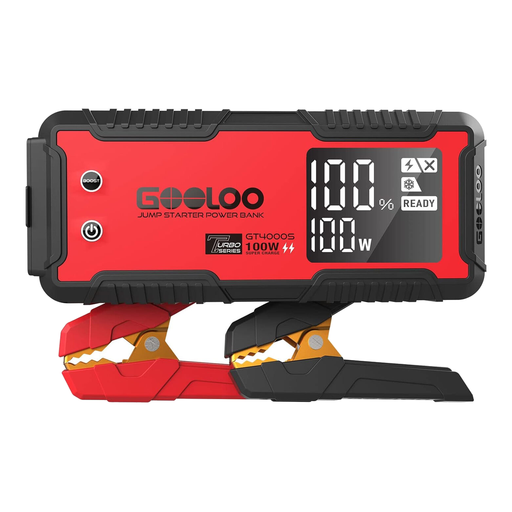
Why it suits this type of user: With a 4000A peak current, fast USB-C charging and support for engines up to 12.0 litres petrol or 10.0 litres diesel, this model is well suited to larger vehicles and more intensive use.
The product lists separate limits for petrol and diesel engines. The screen and safety features also help you check the device’s status and connections.
100W charging, three USB ports, a 12V output and, according to the product description, up to 60 starts per full charge.

Why it suits this type of user: This model combines an emergency starter with a 150 PSI compressor, LED lighting and a power bank. It’s a good fit for drivers of SUVs, vans and boats, or vehicles that are often parked outside.
The digital pressure display and automatic stop make the compressor easier to control. However, it’s still important to observe the stated limit for continuous use.
4500A peak current, five inflation modes, four nozzles and stated support for engines up to 9.0 litres petrol and 8.0 litres diesel.
We’ve put together a complete, up-to-date list of products that meet these strict selection criteria and the applicable European safety regulations.
No. Check that your vehicle has a 12V system and compare the stated engine limits for petrol and diesel. A jump starter isn’t designed for 24V vehicles or the high-voltage battery of an electric car. Don’t use the device if the battery is damaged or frozen.
Its lifespan depends on how it’s used, the storage temperature and how well it’s maintained. Recharge it after use and check the charge level every few months. Store it in a dry place and avoid leaving it in extreme heat for long periods. The number of charge cycles stated by manufacturers is a product specification; the actual lifespan may vary.
The internal battery uses power when you start a vehicle or inflate a tyre. There are no fuel costs, but you’ll need to recharge the device using USB-C, a mains adapter or, sometimes, a 12V socket. A compressor uses a relatively large amount of power, so stick to the stated maximum run time and let it cool down when needed.
