
Vandaag of morgen in huis

Kwaliteit gegarandeerd

Welkomstaanbiedingen ontgrendelen: GRATIS bezorging | Tot 80% korting | Gratis 30 dagen JoyPlus-proefperiode
Download de app
A flat battery never happens at a convenient time. You don’t want to be waiting for roadside assistance in a dark car park, on the motorway or at a campsite. A car jump starter can come to the rescue, but only if it’s suitable for your vehicle and properly charged.
On paper, many models look similar. But there are important differences in peak current, engine compatibility, accessories and ease of use. Watch out for these three common pitfalls:
Start by checking your vehicle’s specifications. A 12V jump starter is designed for vehicles with a 12V battery system, but the suitable engine capacity varies by model.
The stated peak current is a product specification, not a guarantee that every vehicle will start in all conditions. A worn battery, corroded battery terminals or an engine problem can affect performance.
A good battery booster has sturdy clamps that make secure contact with the battery terminals. Also look for a smart cable module with features such as:
According to the product descriptions, GOOLOO lists ten safety features on several models. This is a claim made by the brand itself, so check which features are actually included with the model you’re considering. A CE mark is also a declaration of conformity made by the manufacturer, not an independent quality rating.
A car power bank can charge phones, navigation devices and other USB devices. When comparing models, look beyond the mAh rating to the output voltage, wattage and stated charging time.
A compact model is easy to keep in the glove compartment. A larger jump starter with an air compressor takes up more room, but can come in handy if a tyre is slowly losing air. Check the following:
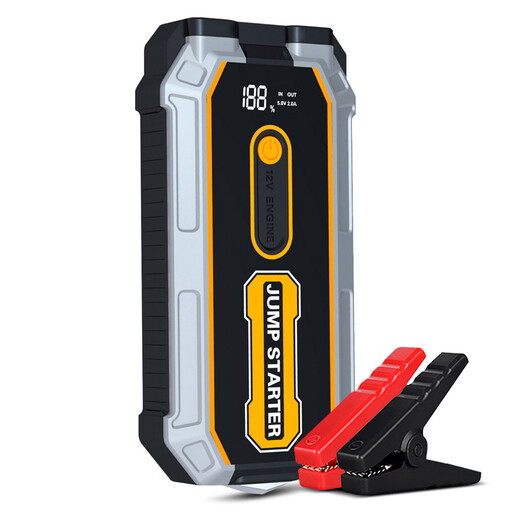
Why it suits this profile: Weighing around 330 grams, this compact model is designed for drivers who want to keep a straightforward emergency jump starter in the car without taking up much space.
The stated specifications cover both 12V petrol and diesel vehicles. The LCD indicator shows the remaining charge, so you’re less likely to set off with a flat device.
1200A peak current, USB output, LCD display and three-mode LED light.
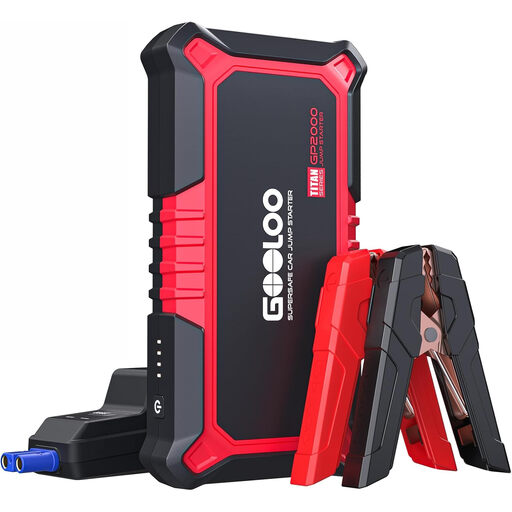
Why it suits this profile: A practical choice if you want to charge your phone as well as jump-start your car, and keep a light in the car for checks after dark.
The product specifications state a weight of around 545 grams, 2000A peak current and compatibility with petrol engines up to 8.0 litres and diesel engines up to 6.0 litres.
Two USB outputs, a 400-lumen LED light and ten safety features claimed by the brand.
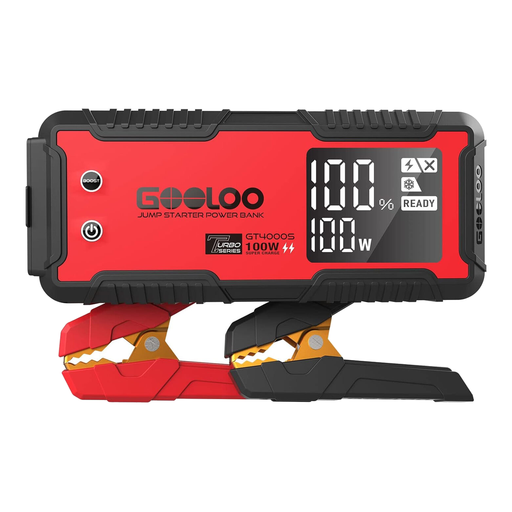
Why it suits this profile: A good fit for drivers of larger petrol or diesel vehicles who also value fast charging for their devices.
The specifications list a 3.2-inch screen, 4000A peak current and support for petrol engines up to 12.0 litres and diesel engines up to 10.0 litres. Always check these figures against your own vehicle’s specifications.
100W USB-C charging, multiple outputs and a standby time of up to 24 months stated by GOOLOO.
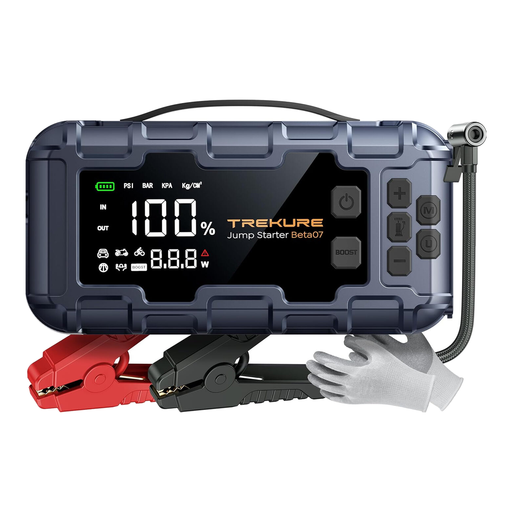
Why it suits this profile: A good option for SUV and motorhome owners, outdoor enthusiasts and drivers who want to carry a compressor as well as a car jump starter.
The product specifications list adjustable pressure, automatic shut-off, 160 PSI and an inflation speed of 45 litres per minute. Use the compressor within the specified limits.
6000A peak current, 45W USB-C, a 600-lumen LED light and a 12V output for accessories.
We’ve put together a complete, up-to-date list of products that meet these strict selection criteria and the applicable European safety requirements.
Read the manual before connecting the device. Check that it has enough charge and that your vehicle has a 12V battery. Many manuals recommend the following order:
Don’t use a jump starter with a damaged, leaking or swollen battery. Store the device somewhere dry, out of direct sunlight and out of children’s reach. Recharge it after use and check its charge periodically.
Its lifespan depends on storage temperature, how often it’s charged and how it’s used. Charge the device according to the manual, even if you don’t use it often. Some brands quote a particular standby time, but this is a manufacturer’s product specification, not a guarantee for every situation.
It can, as long as the model is rated in the product specifications for your diesel car’s engine size. Diesel engines often need more starting power. So, check the stated diesel engine capacity and peak current before you buy.
The electricity used to charge one is generally minimal. The main costs are the purchase price and any replacement needed as the internal battery wears out. A compressor uses more energy than a brief starting attempt alone. So, fully recharge the device after use and store it as instructed.
