
Vandaag of morgen in huis

Kwaliteit gegarandeerd

Welkomstaanbiedingen ontgrendelen: GRATIS bezorging | Tot 80% korting | Gratis 30 dagen JoyPlus-proefperiode
Download de app
A flat battery always seems to happen at the worst time: on a cold morning, after a weekend away or when your car has been standing for a while. With a car jump starter, you can sometimes start a 12V vehicle yourself, without another car or traditional jump leads. However, many models look similar, even though they can differ considerably in starting current, vehicle compatibility and safety features.
As Joybuy Product Recommendation Officer, I check product information against verifiable specifications. This helps you avoid paying extra just for a big amp figure or a high mAh rating.
A rating such as 2.000A or 4.000A sounds impressive, but peak current is not the same as normal starting current. So check which petrol and diesel engines the product description says the device is suitable for. A compact 12V jump starter for a small petrol engine has different requirements from a jump starter for a van, SUV or motorhome.
A 20.000mAh power bank is not automatically suitable for starting a car. Battery capacity mainly determines how long the device can supply power to USB devices, or how many emergency starts it may provide. Starting current, cable quality and battery compatibility are just as important.
Also look out for a possible difference between stated capacity and rated capacity. For example, the Porbi S901 is listed as 20.000mAh, with a rated output of 10.000mAh. These are different measurements, so they should not be compared like for like with other models.
A jump starter can sit in your boot for months. High temperatures, damp and a low charge level can affect whether it is ready when you need it. Check that it has protection against short circuits, reverse polarity, overheating and overcharging, among other things. Always follow the instructions and do not use a device if its casing, cable or battery is damaged.
First, check whether your car has a 12V lead-acid battery. According to the product information, the GOOLOO GP2000 is designed for 12V vehicles and engines up to 8,0 litres petrol or 6,0 litres diesel. That may be more than enough for a small car, while van, motorhome or SUV drivers may want more starting capacity in reserve.
Bear in mind that product claims vary between models. For example, the OSRAM BatteryStart 300 is listed for engines up to 6 litres petrol and 3 litres diesel. So don’t choose a jump starter based solely on its brand or appearance.
As well as peak current, check the stated starting current. For example, the Porbi S903 lists 800A starting current and 2.000A peak current. The GOOLOO GP4000 lists 4.000A peak power and support for petrol and diesel engines up to 10 litres, according to the product description.
Smart jump leads with safety features can be a practical advantage. Check that the clamps are sturdy, open easily and have clear positive and negative markings. Connect red to the positive terminal and black to a suitable unpainted metal earth point if the instructions say to do so. Starting attempts usually last only a few seconds; always follow the instructions for your specific model.
A portable jump starter should fit in your car and be straightforward to use. An LCD display can show the remaining charge, while an LED emergency light is useful if you break down in the dark. Many models also work as a car power bank, with USB-A or USB-C ports.
Check the difference between charging power and output power. QC3.0 or USB-C fast-charging features can charge devices more quickly, but they don’t automatically make a jump starter more suitable for every car. On some models, a 12V output may be intended for accessories such as a tyre inflator or cool box; check the maximum power rating before use.

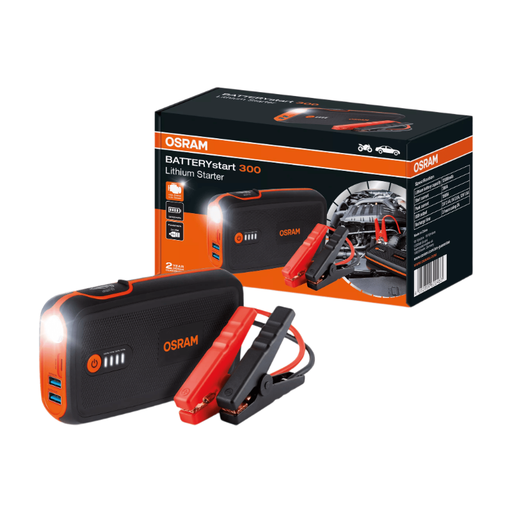
Why it suits this type of user: According to the product details, this compact model weighs around 330 grams and is designed for 12V petrol and diesel vehicles, motorbikes and boats. It’s a good fit for drivers looking for a straightforward emergency starter for everyday use.
The specifications list both 1.200A peak current and 600A starting current, giving you more information than a single big peak figure.
12800mAh battery, LCD display, 10W USB output and an LED light with three modes.
Why it suits this type of user: This model combines a 12V jump starter with USB ports and an additional 12V output. It’s a practical option for drivers who also want to power accessories on the go.
The product information clearly states the limits of 8L petrol and 4L diesel. Check these limits against your vehicle before buying.
2000A peak power, 16800mAh capacity, dual USB and a 12V socket; the manufacturer states that it comes with a two-year warranty.
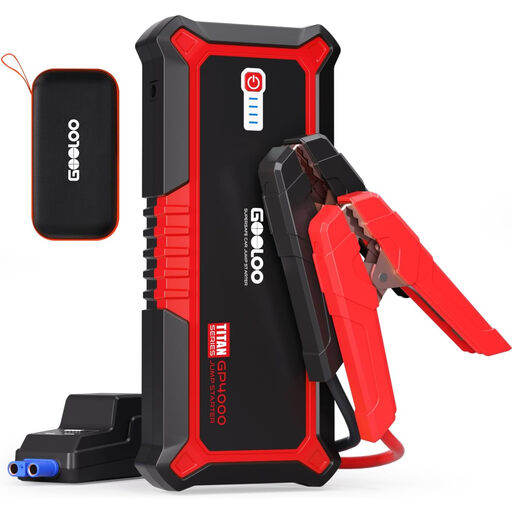
Why it suits this type of user: According to the product information, this model is designed for larger 12V vehicles, including motorhomes, lorries, vans and SUVs. The BOOST function is intended for batteries with a very low voltage.
The description lists ten safety features and all-metal clamps. Still, check the cable connections and only use the BOOST button as instructed in the manual.
4000A peak power, support for up to 10L diesel according to the listing, USB ports, USB-C and a built-in torch.
We’ve put together a complete, up-to-date list of products that meet these strict selection criteria and the applicable European safety requirements.
A CE mark may indicate that the manufacturer declares the product meets relevant European requirements, but it does not, by itself, tell you how well it will start every vehicle. Always check the manual, warranty terms and product details.
It depends on the condition of the battery and the model. Some devices have a boost function for very low voltage, but you should not use a jump starter with a damaged or leaking battery, or one with an internal fault. If the problem keeps happening, the battery will need to be checked or replaced.
Its lifespan depends on the battery type, storage temperature and how often it is charged. Charge the device according to the manual, even if you rarely use it. Some product descriptions state a long standby time, but that doesn’t guarantee that every jump starter will be ready to use after spending months in a hot car.
No. A jump starter can be used on its own, but jump leads can be a useful backup if the device is flat or turns out to be incompatible. In either case, choose clear polarity markings, sturdy clamps and instructions that are suitable for your vehicle.
