
Vandaag of morgen in huis

Kwaliteit gegarandeerd

Welkomstaanbiedingen ontgrendelen: GRATIS bezorging | Tot 80% korting | Gratis 30 dagen JoyPlus-proefperiode
Download de app
A flat car battery often strikes at the worst possible moment: in a dark car park, on a camping trip or just before you leave for work. With a car jump starter, you can try to start a vehicle with a flat 12V battery yourself, without needing another car or jump leads.
However, not every portable jump starter lives up to its claims in practice. High amp ratings, large battery capacities and extra features can distract from the specifications that really matter. Here’s what to look for in a car jump starter, battery booster or emergency car starter.
A peak current of, say, 4,000 or 8,000 A sounds impressive, but it doesn’t tell you on its own how suitable a device is. Also check:
A 12V jump starter for a compact petrol car has different requirements from a car battery booster for a motorhome, SUV or lorry. Always check the manual and vehicle compatibility.
A jump starter power bank with a high mAh rating isn’t automatically suitable for a large engine. Capacity mainly indicates how much energy is available for things such as USB charging. Starting and peak current, the cables and the safety features are just as important.
Also look out for the difference between battery capacity and rated output capacity. For example, the Porbi S306 is listed with a 12,800 mAh battery and a rated output of 7,200 mAh. These figures aren’t contradictory; they’re different measurements.
A jump starter with a compressor can be handy if a tyre is slowly losing air, but a stated pressure of 150 PSI doesn’t mean it’ll inflate every car tyre quickly. Actual inflation speed depends on tyre size, the remaining pressure and how much heat the compressor generates.
A torch, LCD screen or power bank can also be useful, but none is a substitute for correct connections and regular charging. Check, too, whether a charging adapter, storage bag and air hose are actually included.
Choose a car jump starter with a stated capacity that suits your vehicle. For many cars and motorbikes, a model for 12V systems with the right petrol or diesel rating will be sufficient. If you own an SUV, motorhome, boat or lorry, check the maximum engine capacity rather than relying on the amp rating alone.
For example, the GOOLOO GP2000 product description states that it supports petrol engines up to 8.0 litres and diesel engines up to 6.0 litres. According to the product information, this model is designed for cars, motorbikes, motorhomes, tractors and lorries, among other vehicles. Use figures like these to help you choose, not as a guarantee that it will start every flat or damaged battery.
A good car jump starter has clear instructions and protection against issues such as:
The clamps should fit securely onto the battery terminals. Some models recommend attaching the black clamp to an unpainted metal earth point rather than directly to the negative terminal. Always follow the instructions for the model you choose.
A jump starter kept in a car for months will be exposed to frost and high temperatures. Check its stated operating range and maintenance instructions. Many product descriptions recommend charging lithium models every two to six months. Other battery chemistries may claim lower self-discharge, but these are claims made by the brand.
According to information from GOKKCL, the GK01 uses a sodium-ion battery with a self-discharge rate of around 1% per month and a stated lifespan of at least 6,000 charge cycles. These specifications come from the brand’s product description; always check the latest manual and terms before buying.
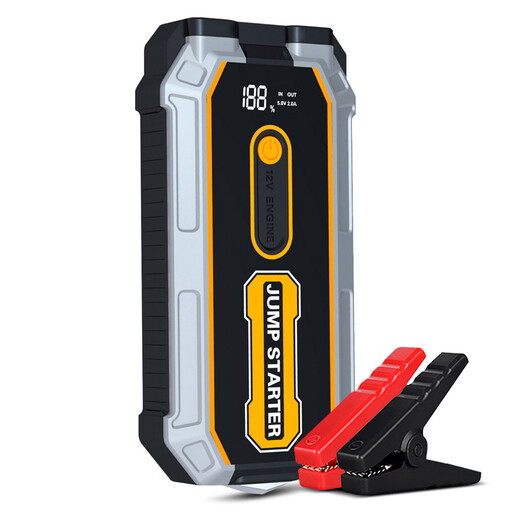
Why it suits this type of buyer: A compact option for drivers and motorcyclists looking for a car jump starter for emergencies and USB charging.
The product information lists both a 600 A starting current and a 1,200 A peak current, making it easier to tell the figures apart.
Around 330 g, LCD display, 5V/2.1A USB output and three lighting modes.
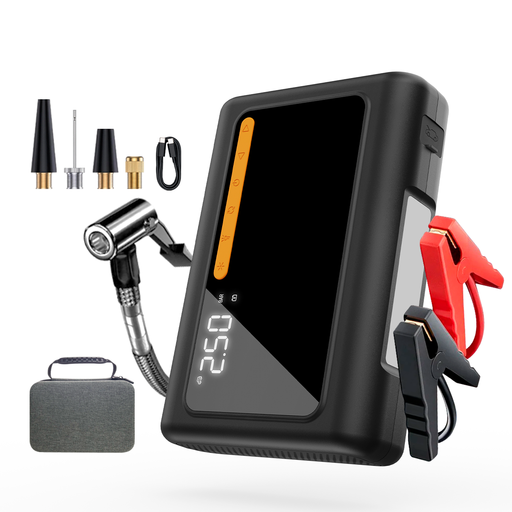
Why it suits this type of buyer: A good option if you want to keep a car jump starter in your car long-term and need a compressor too.
The specifications list a 600 A starting current, a 1,500 A peak current and a 150 PSI air pump separately.
PD60W charging, 25-cylinder pump, 200-lumen light and a stated operating range of -40 °C to 80 °C.
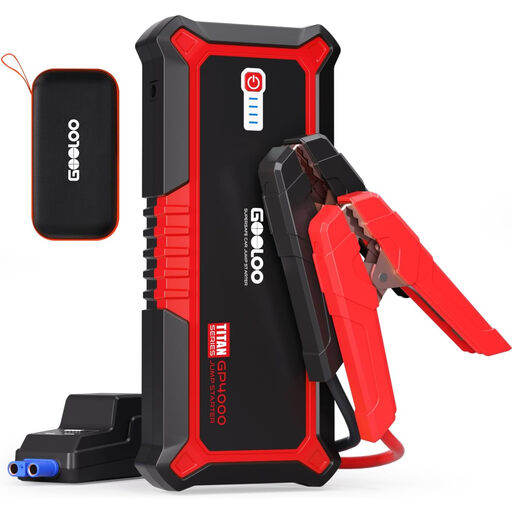
Why it suits this type of buyer: For SUV, motorhome, boat and lorry owners looking for a higher stated starting capacity and multiple connections.
The product description states that it supports all petrol engines and diesel engines up to 10.0 litres, and has ten safety features.
4,000 A peak current, two USB ports, a torch and a stated temperature range of -20 °C to 60 °C.
We’ve put together a complete, up-to-date list of products that meet these strict selection criteria and current European safety regulations.
Don’t use an emergency car starter if you can see a leak or the battery is damaged or frozen. A jump starter also won’t replace a garage check if the battery keeps going flat.
That depends on the battery type, storage temperature, charging frequency and how it’s used. Follow the manufacturer’s maintenance schedule. Many lithium models need charging periodically, even if they haven’t been used.
Only if the product specifications say it supports your diesel engine. Check the maximum engine capacity and stated starting current. A model for small petrol engines won’t necessarily be suitable for a diesel van or lorry.
A jump starter with a compressor can be useful if you also regularly need to top up your tyres. If you only need to get a flat battery started, a lighter model without a pump may be a better choice. For a compressor, check the air hose, automatic shut-off, maximum pressure and recommended cooling time.
