
Vandaag of morgen in huis

Kwaliteit gegarandeerd

Welkomstaanbiedingen ontgrendelen: GRATIS bezorging | Tot 80% korting | Gratis 30 dagen JoyPlus-proefperiode
Download de app
A flat car battery usually happens at the worst possible time: in a car park, on the motorway or just before setting off with a caravan or motorhome. A car jump starter can get you moving again without needing a second vehicle or jump leads. However, not every model is suitable for every vehicle.
Marketing often focuses on a high amp rating, lots of extra features and terms such as “supersafe”. The important question is not which number appears on the packaging, but whether the car battery jump starter suits your engine, how you use your vehicle and your maintenance routine.
A high peak current sounds impressive, but it does not tell you everything about practical use. Also check which engine size and fuel type the manufacturer specifies for the product. A 12V battery booster for a small petrol car has different requirements from an emergency starter for a diesel motorhome, SUV or van.
The stated engine compatibility is also a claim made in the brand’s product information. Do not treat it as a guarantee for every situation, particularly if the battery is damaged, frozen or completely faulty.
A jump starter with a compressor can be useful when a tyre is soft, but a built-in air pump is not a substitute for a full-size garage compressor. Check the maximum pressure, airflow, included connections and maximum operating time.
For example, the BuTure BC02 states that the compressor may be used continuously for a maximum of 10 minutes and must then be allowed to cool down. Instructions like these are more important than simply looking at the figure “150 PSI”.
A portable jump starter only works when its internal battery has sufficient charge. Anyone who leaves the device in the boot for years could find themselves with a flat jump starter when trouble strikes. So check:
According to the product information, GOOLOO recommends charging the GP4000 every two to three months when it is not used for an extended period.
Most models in this category are designed for 12V vehicles. Always check this in the handbook for your car, motorbike, motorhome or boat. Also look at the specified maximum engine size:
A 12V car jump starter is not automatically suitable for a 24V lorry system. If in doubt, consult your vehicle documentation first.
Peak current, for example 1500A, 3000A or 5500A, is a technical specification taken from the product description. It is not a universal measure of performance in every weather or battery condition. Also look for:
According to their own product information, GOOLOO, BuTure and TREKURE list several layers of protection. These features may help detect or limit incorrect connections, but always follow the instructions and never use a jump starter with a damaged or frozen battery.
A jump starter power bank with USB outputs can charge smartphones, tablets or sat-nav devices. Check the number of ports and the charging standard. An LED light with continuous, flashing or SOS mode is useful when checking under the bonnet, but it does not replace a warning triangle or other legally required safety equipment.
When choosing a tyre inflator with jump starter, the following points are relevant:
The stated features come from the product information provided by the relevant brands and may vary between versions.
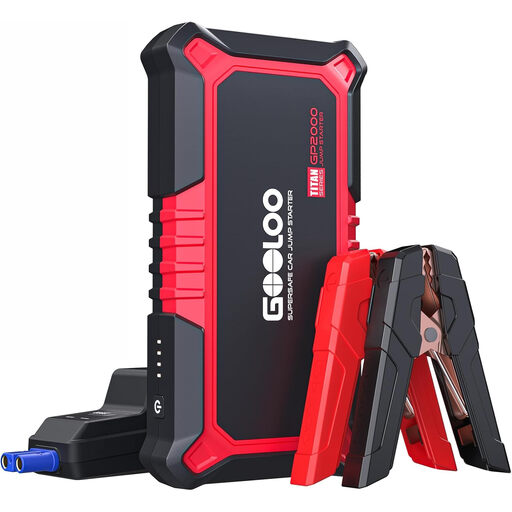
Why it suits this profile: According to the product information, this compact model is designed for 12V vehicles with petrol engines up to 8.0 litres and diesel engines up to 6.0 litres. That makes it suitable for many everyday cars, motorbikes and SUVs.
The specifications state limits for both petrol and diesel engines. The included smart cable is designed to help prevent incorrect connections; always check the instructions.
2000A peak current according to the product information, two USB outputs, a 400-lumen light and a stated weight of approximately 545 grams.
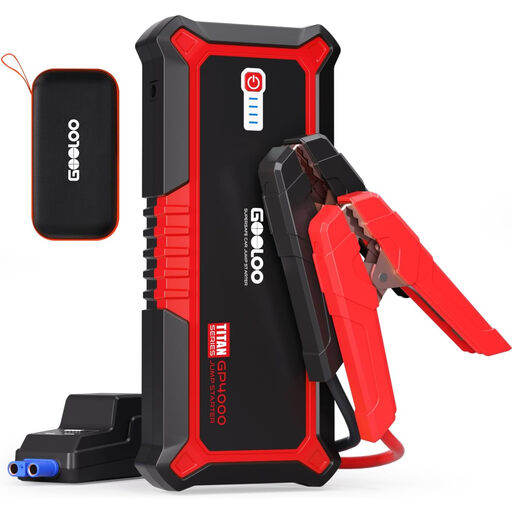
Why it suits this profile: According to GOOLOO, this 4000A car battery jump starter is suitable for all petrol engines and diesel engines up to 10.0 litres. That makes it relevant for larger SUVs, motorhomes, vans and recreational vehicles.
The product information lists the fuel type, engine limit and ten safety features. The wall charger is not included, so bear this in mind.
4000A peak current, USB and USB-C connections, metal clamps and an EVA storage case included according to the product description.
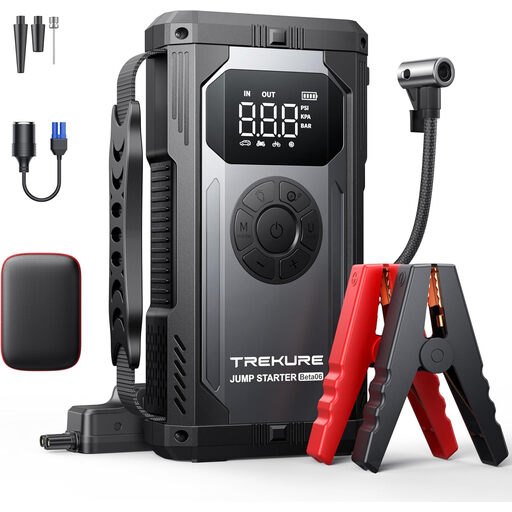
Why it suits this profile: According to TREKURE, this model combines a 5500A peak current with a compressor offering up to 150 PSI. It is aimed at larger 12V vehicles and users who also want to inflate tyres, bicycles or accessories while on the road.
According to the product information, the LCD display shows the battery status and tyre pressure. The instructions also include storage and connection guidance.
150 PSI compressor, automatic shut-off, two USB connections and a 12V output. The stated weight is approximately 0.89 kg.
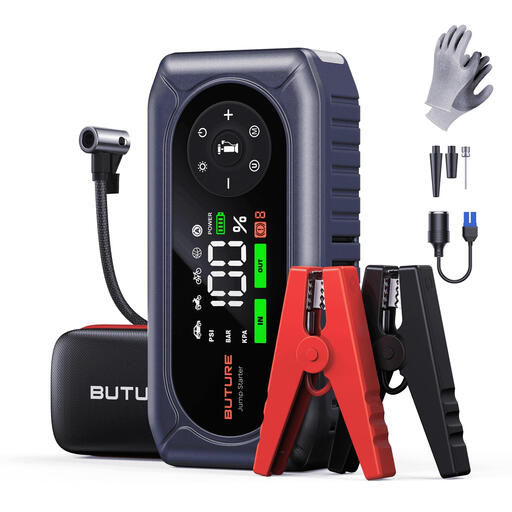
Why it suits this profile: According to BuTure, this 12V booster is suitable for petrol engines up to 9.0 litres and diesel engines up to 8.0 litres. The combination of a starting function, air compressor and light is practical for longer journeys.
The digital display shows the set tyre pressure, and according to the product information, the compressor switches off automatically once the set pressure is reached.
4500A peak current, compressor up to 150 PSI, five inflation modes, four nozzles and a 500-lumen light according to BuTure.
We have put together a complete, up-to-date list of products that fully meet these strict selection criteria and the applicable European safety regulations.
Only use the cables supplied or recommended by the manufacturer. If there is visible damage, a leaking battery or a frozen battery, do not use the jump starter.
That depends on the battery, charging cycles, temperature and storage conditions. Recharge the device regularly, even when you are not using it. Do not leave it in an extremely hot car for long periods, and follow the brand’s maintenance instructions.
You can, but avoid prolonged exposure to high temperatures. A sturdy storage case helps protect the jump starter, cables and accessories. Check the recommended storage temperature in the instructions.
A jump starter works independently and does not require a second car. Jump leads are often simpler and more affordable, but you do need a suitable helper vehicle and must connect them correctly. If you regularly drive alone, a portable emergency starter could therefore be useful; if you mainly want to keep costs down, you could also consider car jump leads.
