
Vandaag of morgen in huis

Kwaliteit gegarandeerd

Welkomstaanbiedingen ontgrendelen: GRATIS bezorging | Tot 80% korting | Gratis 30 dagen JoyPlus-proefperiode
Download de app
A flat car battery often strikes at the worst possible time: on a cold morning, on the motorway or at a campsite with no help nearby. With a car jump starter, you can try to start a 12V vehicle yourself. However, not every model is suitable for every car. A high current rating on the packaging doesn’t tell you everything.
Brands often advertise the peak current, such as 2,000A, 4,000A or even 8,000A. This is a short-lived peak figure. In practice, the stated starting current, engine type and maximum engine capacity are also important.
A car jump starter for a small petrol car doesn’t need the same capacity as a jump starter for a diesel van, SUV or lorry. Always check:
A portable jump starter may be suitable for cars, motorbikes, boats or motorhomes, but that doesn’t automatically mean every model provides enough power. A product described as suitable for up to 6.0 litres for petrol engines and 4.0 litres for diesel engines has a different range of applications from a model for 10.0-litre diesel engines.
Also check whether your vehicle has a conventional 12V battery. A jump starter isn’t a general solution for electric vehicles or systems for which the manufacturer specifies a particular starting procedure.
An LCD display, torch and power bank are useful, but they don’t replace good cables and clear safety features. Look for features such as reverse polarity protection, short-circuit protection, overheat protection and spark-proof clamps. Also check whether a charging cable, storage case and instruction manual are included.
A model with a compressor may look appealing, but check that it actually has a suitable 12V output and enough power to run a compressor. Some products list only a general DC output.
The peak current indicates how much current a car battery booster can deliver for a short time, according to the product specification. Starting current is an additional indication of its ability to start an engine. Consider both figures alongside the stated engine limit.
A compact model may be sufficient for a standard car. For an SUV, van or diesel engine, it’s practical to allow a little extra capacity. A powerful jump starter for an SUV or lorry should also have sturdy clamps and cables that make good contact with the battery terminals.
Capacity is often expressed in mAh. This tells you how much energy the internal lithium battery pack holds, but it doesn’t directly indicate how many starting attempts you can make. Power conversion losses, temperature and the condition of the vehicle also play a part.
A jump starter power bank with USB-A, USB-C or Quick Charge can also charge phones, tablets and navigation devices. Check the output, for example 5V/2.4A or 18W QC3.0, as well as how long the device itself takes to charge.
Store a car battery booster somewhere dry and avoid leaving it in direct sunlight for long periods. A car interior can get very hot in summer. Check the charge level every few months and follow the manual’s instructions for recharging. Some brands recommend longer intervals between maintenance charges in their product information, but this advice varies by model.
Don’t use a jump starter if the casing is damaged or the battery looks swollen or appears to be leaking. If in doubt, it’s safer to call breakdown assistance or a garage.
Always read the instruction manual supplied. The exact order may vary by brand.
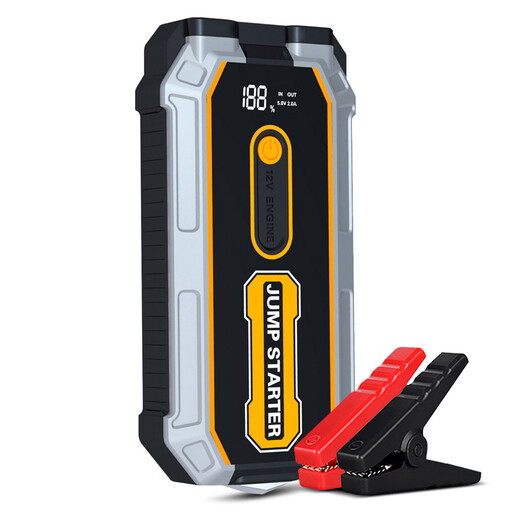
Why it suits this type of user: Weighing just 330 grams, this compact jump starter is suitable for 12V petrol and diesel vehicles, motorbikes, boats and SUVs. The LCD display shows the charge level.
The specifications list a 1,200A peak current, 600A starting current and 12800mAh battery separately. This makes it easier to compare the figures with your vehicle’s requirements.
330 grams, LCD display, 10W USB output and LED lighting with three settings.
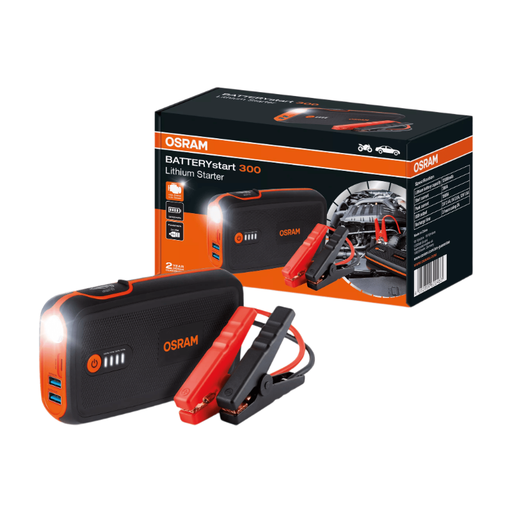
Why it suits this type of user: This model combines a 2,000A peak current with a 12V output, dual USB ports and a built-in torch, making it a good choice for drivers who want several functions in one device.
The product information specifies that it’s suitable for petrol engines up to 8 litres and diesel engines up to 4 litres, rather than making only a general claim of universal suitability.
16800mAh, 400A rated starting current, 12V output and a two-year manufacturer’s warranty, according to the product listing.
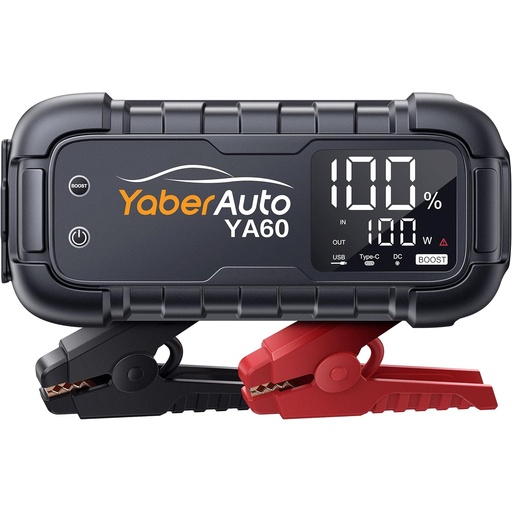
Why it suits this type of user: Its stated capacity is designed for larger vehicles, supporting petrol and diesel engines up to 12.0 litres. Motorhomes, pick-up trucks and boats are also listed as suitable uses.
Alongside the 8,000A peak current, the product specifications list 65W charging, 10 safety features and a 150W DC output separately. Check that your accessories are compatible with this output.
26800mAh, USB-C 65W, two USB-A outputs, 150W DC output and 600-lumen lighting, according to the product specifications.
We’ve put together a full, up-to-date list of products that meet these strict selection criteria and comply with the current European safety regulations.
It depends on the condition of the battery and the jump starter. With some models, a low voltage may mean you need to use a special boost mode. You shouldn’t try to start a damaged, leaking or frozen battery. Follow the manual and call breakdown assistance if in doubt.
Its lifespan depends on charging cycles, storage temperature and maintenance. Recharge the device periodically, even when you’re not using it. Store it somewhere dry and check the charge level, cables and casing before a long journey.
Only if you also want to inflate tyres and the model is specifically equipped for the job. A standard car battery booster is sufficient if you only need to start your vehicle and charge devices via USB. Before buying a jump starter with a compressor, check its maximum pressure, air hose and available 12V or DC output.
