
Vandaag of morgen in huis

Kwaliteit gegarandeerd

Welkomstaanbiedingen ontgrendelen: GRATIS bezorging | Tot 80% korting | Gratis 30 dagen JoyPlus-proefperiode
Download de app
A flat car battery often strikes at the worst possible time: on a cold morning, during a camping trip or in a car park with no help nearby. A car jump starter can get you moving again, but not every model is suitable for every car, motorbike or van.
Watch out for these three common pitfalls:
A good choice starts with your car battery’s specifications and the conditions in which you plan to use your portable car jump starter.
Most cars, motorbikes, SUVs and vans use a 12V lead-acid battery. Check your vehicle’s handbook before buying a portable battery starter. A 12V jump starter isn’t necessarily suitable for electric vehicles or other voltage systems.
Next, check the stated engine size. For example, a model’s product description might say it’s suitable for petrol engines up to 8.0 litres and diesel engines up to 6.0 litres. Diesel engines generally need more starting power, so check the diesel rating separately.
A rating such as 1200A, 2000A or 4000A peak current indicates the maximum peak current stated in the product specifications. This is useful information, but it doesn’t guarantee performance in every starting situation. Also check:
A car battery booster with a higher peak current may be worth considering for an SUV, campervan or van, but a lighter model may be enough for a small city car.
Jump leads with smart clamps can warn you if the polarity is reversed and switch off the output in the event of a short circuit or overheating. Check the product information to see which safety features are actually listed. Many models specify protection against issues such as overloading, overcurrent, overvoltage and sparks.
A jump starter still contains a lithium battery. Store it in a dry place, avoid leaving it in high temperatures for long periods and top it up regularly according to the handbook. A model left for months in a hot boot without being checked may not have enough charge when you need it.
Read the handbook and fully charge the device before using it for the first time. The general procedure is usually:
Don’t use the device with a leaking, swollen or visibly damaged battery. A jump starter is no substitute for a diagnosis: if the car stops again after starting, there may be a problem with the battery, alternator or wiring.

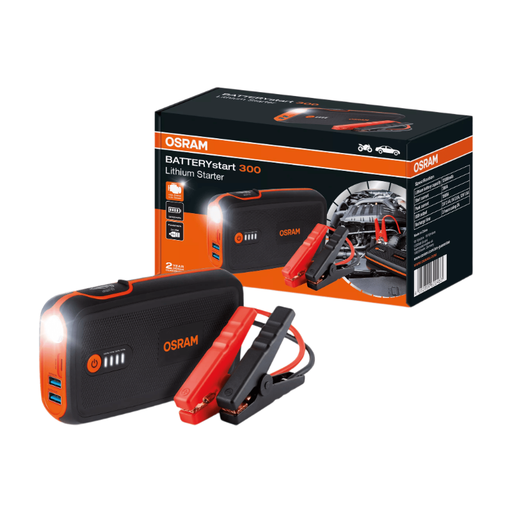
Why it suits this type of user: This compact model is ideal for drivers and motorcyclists who want to carry a straightforward car battery jump starter for 12V petrol and diesel vehicles.
The product information lists a 1200A peak current and 600A starting current separately, and states that it supports 12V petrol and diesel vehicles. This makes it easier to compare suitability than relying on mAh alone.
Around 330 grams, an LCD display, USB output and a three-mode LED light.
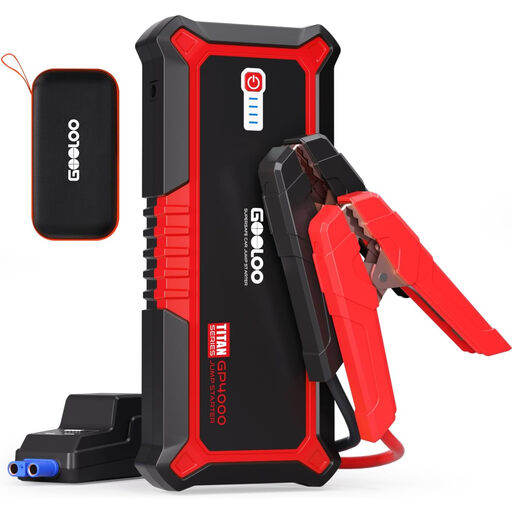
Why it suits this type of user: A good option if you’re looking for a branded model with a power bank function and an extra 12V socket for accessories such as a tyre inflator or cool box.
The product specifications list a 2000A peak current, 400A rated current and separate limits for petrol and diesel engines. This helps you avoid focusing only on the highest marketing figure.
16800mAh according to the product information, two USB ports, a 12V output and a two-year manufacturer’s warranty, as stated in the specifications.
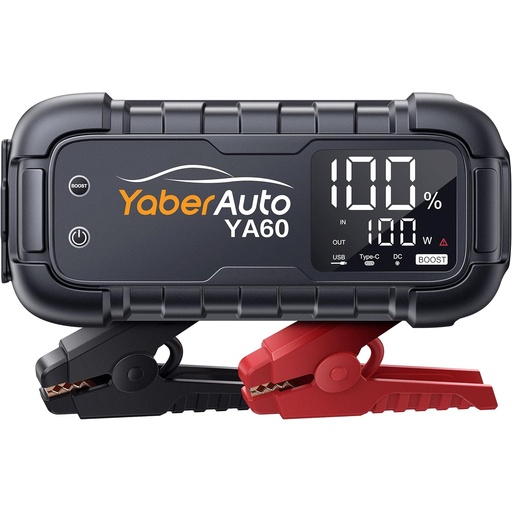
Why it suits this type of user: Its stated compatibility with all petrol engines and diesel engines up to 10.0 litres makes this model worth considering for campervans, pick-ups, lorries and larger vans, provided your vehicle’s specifications match.
The description lists a BOOST function for very low battery voltage and ten safety features. Always check the handbook and battery type before using this function.
4000A stated peak current, USB ports, a Type-C input, LED lighting and an included storage case.
Why it suits this type of user: With its stated 65W charging function, 150W DC output and support for larger engines, this model is well suited to campervan travellers and anyone who wants to power several devices on the go.
The product specifications list not only an 8000A peak current, but also 8AWG cables, ten safety features and separate engine limits. Compare these details with your vehicle’s specifications before buying.
26800mAh according to the product information, USB-C 65W, two USB-A outputs, a 600-lumen LED light and water and dust protection as described.
We’ve put together a full, up-to-date list of products that meet these strict selection criteria and the applicable European safety regulations.
Only if the model is suitable. Check the separate diesel rating, for example, up to 4.0, 6.0 or 10.0 litres. A jump starter for petrol and diesel engines won’t necessarily have the same capacity for both fuel types.
Follow the handbook for your specific product. As a general maintenance routine, it’s a good idea to check the charge level regularly and recharge the device straight after use. For longer-term storage, several product descriptions recommend recharging it after a few months. Don’t leave a lithium jump starter in extreme heat for long periods.
A jump starter can replace jump leads when you’re using it on your own, but the smart clamps still need to be connected to the battery correctly. Before setting off, check that the clamps, cable insulation and charge level are all in good condition. For added peace of mind, you can carry a traditional set of jump leads and a reflective safety vest alongside your car emergency starter.
