
Vandaag of morgen in huis

Kwaliteit gegarandeerd

Welkomstaanbiedingen ontgrendelen: GRATIS bezorging | Tot 80% korting | Gratis 30 dagen JoyPlus-proefperiode
Download de app
A flat car battery always seems to happen at the worst possible time: on a cold morning, by the roadside or just before you set off on holiday. With a car jump starter, you can often start a compatible 12V vehicle yourself, without needing another car or roadside assistance. But not every battery booster is suitable for every engine.
As a Joybuy Product Recommendation Officer, I look beyond the product claims to focus on practical details. I pay particular attention to vehicle compatibility, safety features and ease of use — not just a big number on the packaging.
A rating of 2000A, 4000A or even more sounds impressive. However, peak current alone doesn’t guarantee that a jump starter will start your car. Always check the stated engine capacity for petrol and diesel vehicles. Diesel engines generally need more starting power than petrol engines.
Also look at the difference between peak current and starting current. Manufacturers don’t always list these figures in the same way, which can make direct comparisons less useful.
Most portable jump starters in this category are designed for 12V lead-acid batteries. That doesn’t automatically mean they’re suitable for electric cars, high-voltage batteries or every vehicle with a 12V connection. Check your car’s handbook and the product information before you order.
A jump starter for a 12V car isn’t necessarily suitable for a lorry with a 24V system either.
A car jump starter is an emergency tool, but its internal battery slowly loses charge. Some models state a long standby time, but check the manufacturer’s charging advice. Depending on the model, you may need to recharge it periodically — for example, every three to six months.
Also, don’t leave your portable car power bank in direct sunlight or extreme heat for long periods. In summer, the boot can get considerably hotter than the surrounding air.
Start by identifying your vehicle type:
According to the product information, the GOOLOO GP2000 is rated for petrol engines up to 8.0 litres and diesel engines up to 6.0 litres. The Porbi S306 is described in its product specifications as suitable for 12V petrol and diesel vehicles, but its maximum engine capacity is less clearly specified. So base your choice on the information for your own vehicle.
A good emergency car jump starter has smart leads with clear polarity markings and protection against issues such as:
These features help reduce the risks of incorrect connection, but they don’t replace the instructions. Always check that the red clamp is connected to the positive terminal and the black clamp to the negative terminal or a suitable unpainted metal earth point, as directed by the manufacturer.
A compact jump starter is easier to fit in a glove compartment or emergency kit. Also consider:
A higher capacity is particularly useful if you want to charge several devices or are often on the road. For occasional use, a lighter model is usually easier to carry.

Why it suits this user: According to the product information, this compact car jump starter weighs around 330 grams and is designed for 12V petrol and diesel vehicles. That makes it handy for everyday use in a car or when travelling.
The LCD display shows the remaining battery level, so you’re less likely to set off with a flat device. Be sure to check engine compatibility first.
1200A peak current, 12800mAh battery according to the product specifications, USB output and three light modes.
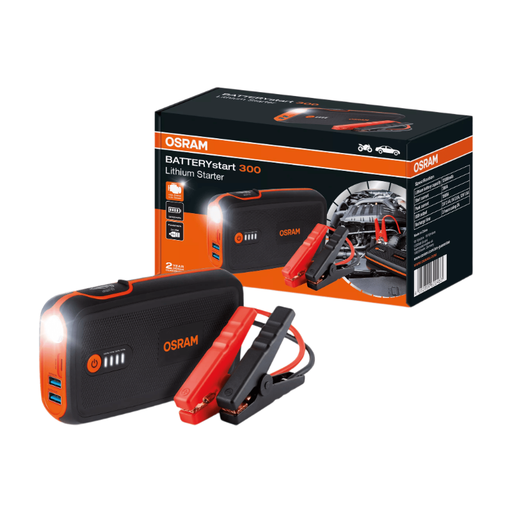
Why it suits this user: This 12V model combines a stated peak current of 2000A with a 12V output, two USB ports and a built-in torch. According to the product information, it’s suitable for petrol engines up to 8 litres and diesel engines up to 4 litres.
The product information clearly states the engine limits. This lets you compare its suitability with your car’s specifications instead of relying on the current rating alone.
16800mAh lithium-ion capacity, dual USB output, 12V connection and 2000A peak current according to the product specifications.
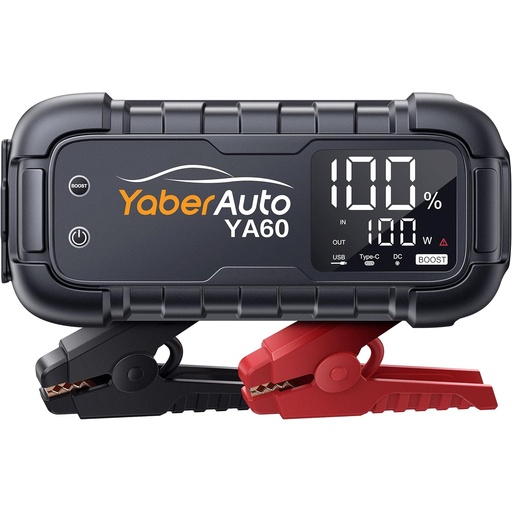
Why it suits this user: According to the product information, the YA60 is designed for larger vehicles and heavy use. Its stated compatibility extends to 12.0-litre diesel engines, and it has extra connections for devices such as laptops and 12V equipment.
As well as a high stated peak current, the model lists specific safety features, a 65W USB-C connection and a 150W DC output. Still, check that your vehicle uses 12V.
8000A peak current, 26800mAh battery, 65W two-way charging, 150W DC output and 600-lumen LED lighting according to the product description.
We’ve put together a complete, up-to-date list of products that meet these strict selection criteria and the applicable European safety regulations.
Don’t use a jump starter with a leaking, swollen or visibly damaged battery. If this happens, have the vehicle checked.
No. Check the battery voltage, battery type and maximum engine capacity. A 12V jump starter isn’t designed for a 24V system or automatically suitable for electric vehicles. The stated limits for petrol and diesel engines vary by model.
That depends on the internal battery, storage temperature and charging management. Recharge the device periodically according to the manual, even if you haven’t used it. Check the battery level before a long drive or holiday.
Many models have USB outputs, so they can also be used as a portable car power bank. Charging speeds and connections vary. A USB port isn’t the same as a 12V or DC output for a tyre inflator or cool box, so check the product specifications for those.
