
Vandaag of morgen in huis

Kwaliteit gegarandeerd

Welkomstaanbiedingen ontgrendelen: GRATIS bezorging | Tot 80% korting | Gratis 30 dagen JoyPlus-proefperiode
Download de app
A flat car battery always seems to happen at the worst possible time: on a cold morning, after a long day at work or just before setting off on holiday. A car jump starter can be a practical emergency solution. However, not every portable jump starter is suitable for every car. A high amperage figure on the packaging doesn’t tell you everything about how well it will work in practice.
The main pitfalls are:
The stated peak current, such as 1200 A, 2000 A or 4000 A, indicates how much current the car battery booster can deliver briefly, according to the product information. Also check the stated engine compatibility:
A powerful jump starter is only suitable if the stated engine capacity and battery voltage match your vehicle. The capacity you need may vary depending on whether you have a car, SUV, van, motorbike, boat or lawnmower.
A good car jump starter should come with clear instructions and safety features. Check whether the manufacturer lists protection against:
These are product features, not a guarantee that incorrect use is risk-free. Connect the red clamp to the positive terminal and the black clamp to the negative terminal or a suitable unpainted metal earth point, depending on the instructions. Only use the supplied cables if specified.
Also consider the cable thickness, clamp design and length. Sturdy metal clamps can be useful with larger batteries, while compact cables are easier to store.
A jump starter with compressor combines an emergency jump starter with a tyre inflator. Look out for:
The stated 150 PSI is the maximum system pressure, not necessarily how quickly a car tyre will inflate. A model with an airflow rate of 35 or 45 litres per minute may be more practical for car tyres than a device with a high maximum pressure alone.
Battery capacity is often listed in mAh, but the actual usable energy also depends on voltage and electronics. A portable battery charger with USB outputs can also charge a phone or tablet, but this reduces the energy available for a jump-start attempt. Keep the device dry, recharge it after use and follow the manufacturer’s maintenance schedule.
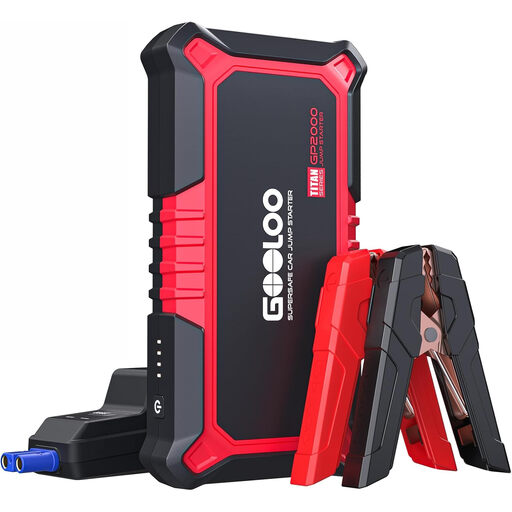
Why it suits this type of user: According to the product information, this model is designed for 12V vehicles with petrol engines up to 8.0 litres and diesel engines up to 6.0 litres. Its compact casing and weight of around 545 grams make it easy to store in the car.
The product specifications list 10 safety features, including protection against reverse polarity, short circuits and overheating. Even so, always check the battery voltage and read the instructions.
2000 A peak current, USB outputs and a 400-lumen light with standard, strobe and SOS modes, according to the product description.
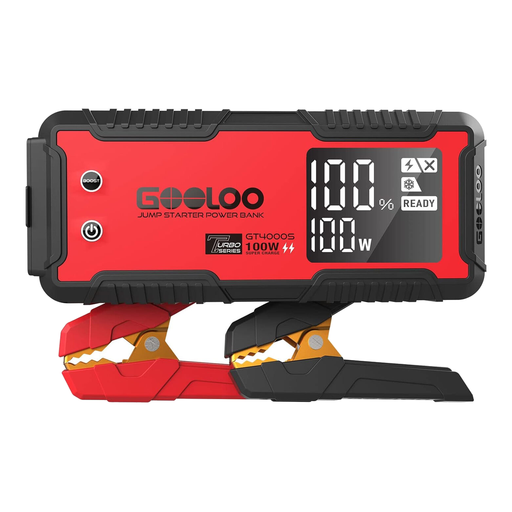
Why it suits this type of user: According to the product information, commuters and drivers of larger vehicles get 4000 A peak current, support for diesel engines up to 10.0 litres and USB-C charging of up to 100 W.
According to the product description, the 3.2-inch screen shows the device status. This helps you look beyond a high amperage figure alone.
100 W two-way charging, three USB ports, a 15V/10A output and a stated standby time of up to 24 months.
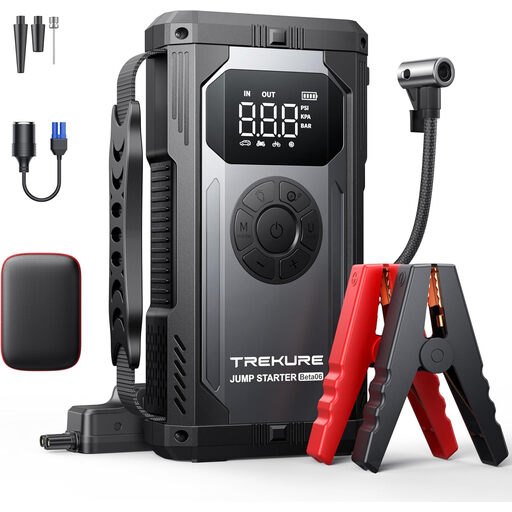
Why it suits this type of user: According to the product information, this model combines 5500 A peak current with a compressor rated at up to 150 PSI and support for diesel engines up to 10.0 litres.
According to the product specifications, the LCD display shows the current and preset tyre pressure. Automatic shut-off helps prevent overinflation, but always follow the tyre pressures recommended by your car manufacturer.
Airflow rate of 35 litres per minute, stated battery capacity of 23800 mAh and 10 listed safety features.
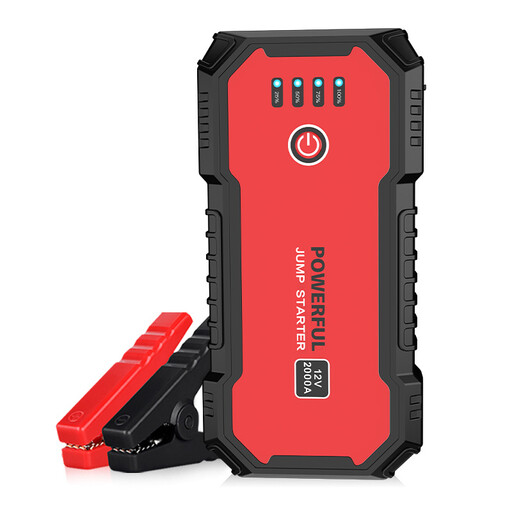
Why it suits this type of user: With a stated weight of around 430 grams, this portable jump starter is a good fit for drivers with limited space in a small car, on a motorbike or in their travel luggage.
The product specifications state a peak current of 1500 A and support for 12V petrol and diesel vehicles. Before buying, check that your engine capacity is within the stated limits.
Stated capacity of 20000 mAh, QC3.0 18 W USB output and LED lighting with steady, strobe and SOS modes.
We’ve put together a complete, up-to-date list of products that meet these strict selection criteria and the applicable European safety regulations.
Follow the supplied instructions for every model. The general steps are:
Don’t run a compressor for longer than permitted. Also check the tyre pressure against the figures on the sticker inside the door frame or fuel flap, or in your car’s manual.
That depends on the battery’s remaining voltage and condition. Some models have a boost function for very low voltage, but according to the product information, success isn’t guaranteed if the battery is damaged, frozen or completely faulty. A jump starter is no substitute for a new battery.
Follow the manufacturer’s instructions. Many models recommend recharging after use and carrying out periodic maintenance when the device isn’t being used. Checking it every two to three months is a practical routine, unless the instructions specify a different interval.
It depends on how you’ll use it. If you only need to deal with a flat battery, a compact car battery booster may be enough. For long journeys, camping or frequent driving outside town, a model with a tyre inflator offers extra functionality. Bear in mind the added weight and size, and that you’ll need to let the compressor cool down between uses.
