
Vandaag of morgen in huis

Kwaliteit gegarandeerd

Welkomstaanbiedingen ontgrendelen: GRATIS bezorging | Tot 80% korting | Gratis 30 dagen JoyPlus-proefperiode
Download de app
A flat 12V battery always seems to happen at the worst time: on a cold morning, during a road trip or in a remote car park. A car jump starter may let you start your vehicle yourself, without needing another car and jump leads. However, not every model is suitable for every car.
Claims about thousands of amps, large battery capacities and being “suitable for all vehicles” don’t always tell the whole story. Pay particular attention to compatibility with your engine, the quality of the cables and how you store the device.
A high peak current sounds appealing, but it doesn’t tell you everything about how well a jump starter will work in practice. It’s more important that the 12V jump starter is suitable for your vehicle’s engine type and capacity. A diesel engine generally needs more starting power than a smaller petrol engine.
Always check:
Battery capacity, measured in mAh, tells you how much energy the device can store. It’s not the same as the short burst of current available to start the engine. For example, a car power bank might charge several USB devices, but that doesn’t automatically make it a suitable emergency car jump starter.
Be aware of the difference between:
A jump starter may sit unused in your boot for months. High temperatures, damp and a flat internal battery can affect its performance. Choose a model with clear safety features, such as protection against reverse polarity, short circuits, overheating and overcharging.
Store your portable jump starter somewhere dry and out of direct sunlight for extended periods. Check its charge regularly and follow the manufacturer’s instructions. A safety system can help if you connect the clamps incorrectly, but it’s no substitute for careful use.
A car battery booster needs to be suitable for your vehicle’s engine. A compact model may be enough for a small petrol car. For an SUV, van or diesel car, a model with a higher stated capacity and wider engine compatibility is a more sensible choice.
Bear in mind that product listings often quote figures based on ideal conditions. A heavily discharged or damaged battery, low temperatures and poor connections can all make it harder to start the engine.
Sturdy clamps and cables that are long enough make connecting the jump starter easier. Smart cables with a warning system or display can help you check the connections and charge status. Before use, make sure the cables aren’t damaged.
Only use the cables supplied with the jump starter or those recommended by the manufacturer. Connect the red clamp to the positive terminal and the black clamp to the negative terminal, unless the manual specifies a different procedure.
A jump starter with an air compressor can come in handy if a tyre is low on air. Check:
A built-in light with steady, flashing and SOS modes is useful if you break down in the dark. These features make a device more versatile, but can also add to its weight and price.
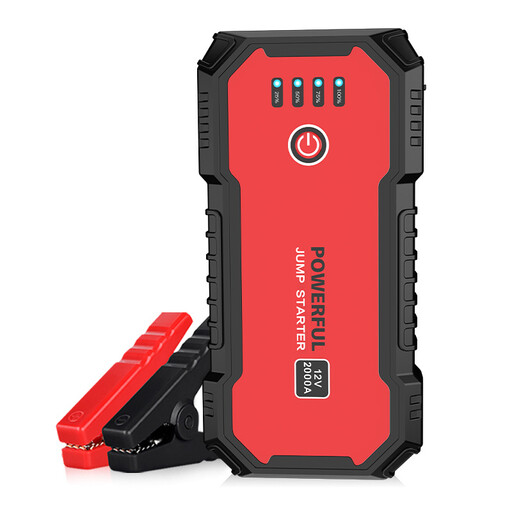
Why it suits this profile: According to the product information, the Porbi S901 is designed for 12V petrol and diesel vehicles, including cars, SUVs, vans and motorbikes. At around 430 grams, it’s easy to carry with you.
The specifications list a peak current of 1500A and a separate battery capacity of 20000mAh, with a stated nominal capacity of 10000mAh. This makes the difference between the two figures clearer.
12V support for petrol and diesel vehicles, USB QC3.0 18W output, USB-C input and three-mode LED lighting.
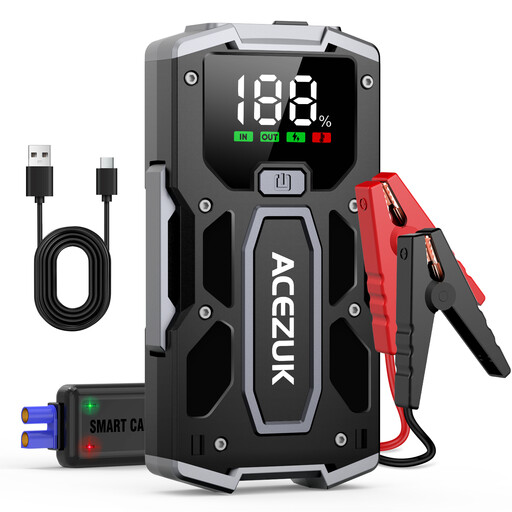
Why it suits this profile: According to the product information, this model is aimed at drivers of SUVs, trucks, motorbikes, tractors and lawn mowers. Its display shows the remaining battery charge and temperature.
The stated compatibility covers petrol engines up to 7.0 litres and diesel engines up to 5.5 litres. Make sure these figures match your vehicle’s specifications.
6000A peak current according to the product listing, LCD display, USB and USB-C connections, and a three-mode LED light.
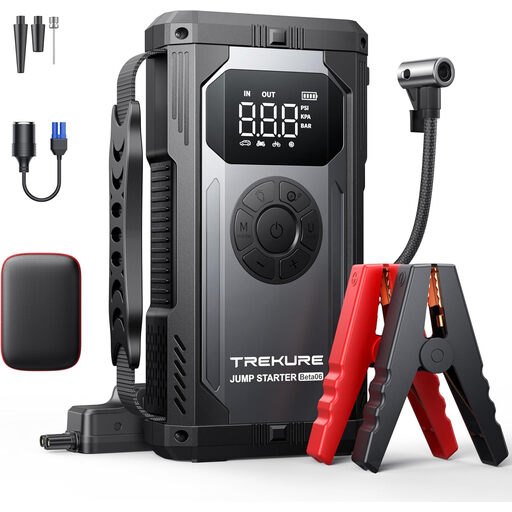
Why it suits this profile: A jump starter, portable compressor, 12V output and emergency light in one device make it a good fit for road trips, camping and drivers who want several functions on the go.
According to the product information, the compressor has an LCD display, adjustable pressure and an automatic shut-off. This means you don’t have to keep checking the tyre pressure manually while inflating.
Stated maximum pressure of 150 PSI, airflow up to 35 l/min, USB connections, SOS light and support for vehicles up to the stated engine capacity.
We’ve put together a complete, up-to-date list of products that meet these strict selection criteria and current European safety regulations.
Don’t use a jump starter if the cables, clamps or casing are damaged. It’s designed for emergencies and won’t fix a faulty battery.
Only if the manufacturer explicitly says it can. Also check the maximum engine capacity and the 12V system. A diesel engine may need more power to start than a comparable petrol engine.
It depends on the model and how you use it. Fully charge the device before a long journey and check its charge regularly if it’s been in the car for months. Follow the manufacturer’s care instructions. Don’t leave a lithium battery in a very hot car for long periods.
It depends on how you’ll use it. If you only want to be able to jump-start a car with a flat battery, a compact model may be enough. If you regularly go on road trips, camp or want to inflate tyres and other items, an integrated portable compressor could be useful. Bear in mind the extra weight, charging time and stated airflow performance.
