
Vandaag of morgen in huis

Kwaliteit gegarandeerd

Welkomstaanbiedingen ontgrendelen: GRATIS bezorging | Tot 80% korting | Gratis 30 dagen JoyPlus-proefperiode
Download de app
A flat car battery often strikes at the worst possible time: before you leave for work, in a dark car park or during a road trip. With a car jump starter, you can try to start your vehicle yourself in certain situations, without relying on jump leads or roadside assistance.
However, not every car jump starter is suitable for every vehicle. A high amp rating on the packaging doesn’t tell the whole story. Read on to find out what to look for, which common pitfalls to avoid and which type of portable jump starter suits your needs.
A rating such as 2000A or 7000A sounds impressive, but peak current is just one technical specification. Also check:
A 12V jump starter for a small petrol car won’t necessarily have enough capacity for a large diesel engine. Always use your vehicle’s specifications and the owner’s manual as your guide.
Many models are described as suitable for petrol and diesel vehicles. That doesn’t mean you can start every vehicle without limitations. Diesel engines generally need more starting power, especially in cold temperatures.
Also check the difference between:
A 12V jump starter isn’t designed for heavy 24V lorries, buses or other systems unless this is specifically stated in the product information.
A jump starter power bank with an LED light, USB ports or a compressor can be handy, but these features don’t replace proper safety protection. Check whether the smart cables offer protection against:
The safety features listed are based on the product information provided by the relevant brands. They’re no reason to skip the connection sequence or safety instructions.
First, check the maximum engine capacity stated. For example, a model’s product description might say it’s suitable for petrol engines up to 8.0 litres and diesel engines up to 6.0 litres. These figures are a guide based on the conditions used by the manufacturer, not a guarantee for every vehicle or battery condition.
A lighter model is often enough for a compact petrol car or motorbike. If you drive an SUV, van or diesel car, it’s sensible to choose one with extra starting power to spare.
Capacity is usually given in mAh or Wh. A higher capacity can provide more reserve for starting attempts and charging devices, but it doesn’t tell you how powerful the jump-starting function is on its own.
Also check:
A jump starter that spends months in the boot needs to have enough charge left when you need it. Extreme heat in a parked car and prolonged frost can affect the battery. Store the device according to the manual, preferably somewhere dry and out of direct sunlight.
A jump starter with a compressor is useful if you need to top up a soft tyre while you’re on the road. Check the maximum pressure, the length of the air hose, which attachments are included and whether it switches off automatically at the set pressure.
A built-in LED light with steady, flashing and SOS modes can help when you’re working at the roadside. USB-A, USB-C and, where available, a 12V output also make a battery booster useful as a power bank. Bear in mind, though, that extra features can make the device larger and heavier.
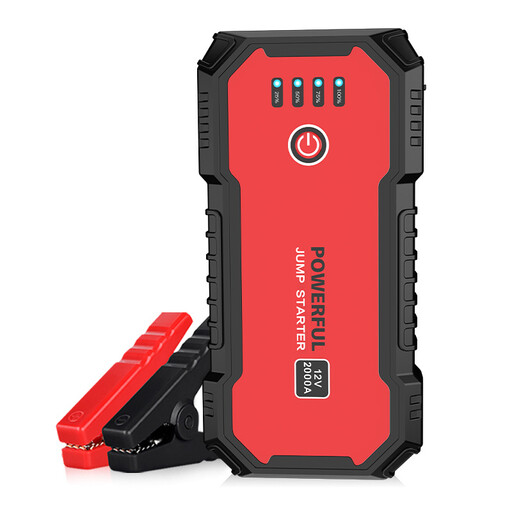
Why it suits this user: A compact choice for drivers and motorcyclists looking for a straightforward emergency car jump starter with a power bank function.
The product information states a peak current of 1500A, reverse-polarity protection and clear positioning for 12V petrol and diesel vehicles.
Around 430 grams, USB outputs, QC3.0 charging and LED lighting with three modes.
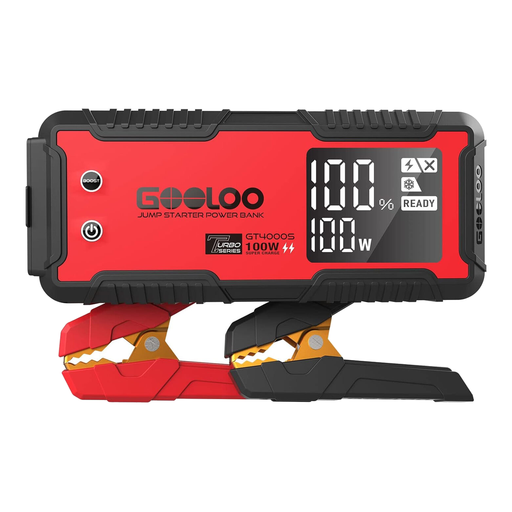
Why it suits this user: A good fit for drivers of larger cars, SUVs and motorhomes, and for anyone who values fast charging.
The product description lists a peak current of 4000A, a 3.2-inch display and ten safety features. Check the stated engine limit for your vehicle.
According to the product information, the model supports charging up to 100W and has USB, 12V and LED functions.
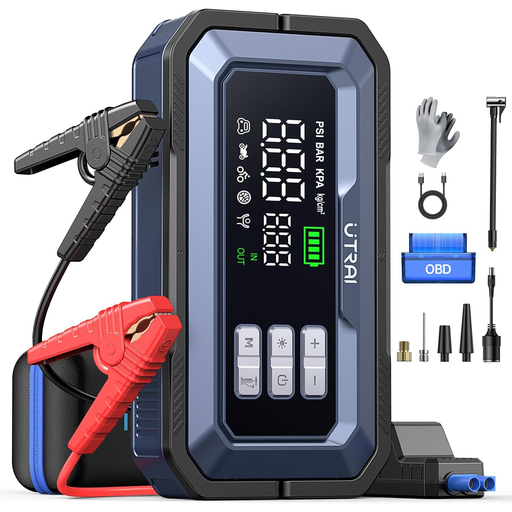
Why it suits this user: A good fit for SUV and diesel drivers, as well as road-trippers looking for one device to start their vehicle, inflate tyres, provide lighting and power 12V equipment.
The specifications list an automatic compressor, temperature protection, smart clamps and ten safety features. Allow the compressor to cool down between uses.
According to the product information: 7000A peak current, compressor up to 150 PSI, 160W DC output and 2000-lumen lighting.
Don’t use a jump starter with a damaged, leaking or frozen battery. If you keep having trouble starting the car, the car battery itself may be faulty; a booster won’t fix the underlying problem.
We’ve put together a complete, up-to-date list of products that meet these strict selection criteria and the applicable European safety regulations.
No. Check that the device is suitable for 12V, your engine type and your car’s engine capacity. A model for a small petrol engine won’t necessarily work with a large diesel engine or a 24V system.
That depends on the lithium battery, storage temperature and maintenance. Many product manuals recommend charging the device every three to six months, even when you haven’t used it. Always follow the manufacturer’s instructions.
Charging it uses electricity, but consumption is generally limited to charging the internal battery. Models with a compressor, power bank and powerful lighting use more energy when you use those features. Recharge the device after a jump-start attempt so it’s ready for the next emergency.
