
Vandaag of morgen in huis

Kwaliteit gegarandeerd

Welkomstaanbiedingen ontgrendelen: GRATIS bezorging | Tot 80% korting | Gratis 30 dagen JoyPlus-proefperiode
Download de app
A flat 12V battery always seems to happen at the worst possible moment. You might be in a car park, on the hard shoulder or at a campsite, wanting to start your car without jump leads or help from another vehicle. A car jump starter can come in handy in these situations. Some models also work as a car battery booster, power bank, emergency light or tyre inflator.
However, a high amp rating doesn’t tell you everything. If you only look at the big number on the packaging, you could end up buying a device that isn’t suitable for your engine, doesn’t offer enough protection or has run flat after being stored for a long time. Read on to find out which specifications make a practical difference.
A figure such as 3000A or 6000A sounds impressive, but peak current is a short-term maximum. The available starting current, vehicle compatibility and connecting cables are just as relevant. So check that the model is suitable for your engine type: petrol or diesel, engine capacity and 12V system.
A jump starter for a small city car won’t necessarily have enough capacity for a large diesel SUV, van or boat. The limits listed can vary according to each brand’s product information. So use the specifications to help you choose, rather than as a guarantee that it will start every flat battery in all conditions.
Manufacturers often list the nominal capacity in mAh. The rated capacity may be lower. For example, the Porbi X11 is listed as 24,800 mAh, with a rated capacity of 14,800 mAh. The Porbi S306 has a nominal capacity of 12,800 mAh and a rated capacity of 7,200 mAh.
This difference affects how much energy is available for jump-starting or charging a phone. Check the charging time too, and how to keep the device charged. If a portable jump starter has been sitting in your boot for months, check and recharge it according to the instructions before use.
A jump starter with an air compressor can be useful if your tyres are underinflated, but the compressor and jump-starting function use the same built-in battery. A model with a power bank is handy for charging a phone or laptop, but check the connections and output power.
Think about storage too: lithium batteries shouldn’t be kept for long periods in extreme heat, damp conditions or direct sunlight. The product information for the models mentioned recommends storing them in a cool, dry place. A built-in light with an SOS or flashing mode is useful at the roadside, but it’s no substitute for a hi-vis vest, warning triangle or safe positioning.
A 12V jump starter is designed for many cars, motorbikes and light commercial vehicles. Before you buy, check:
A car battery booster won’t start a vehicle with the wrong voltage. A compact model is often easier to carry on a motorbike. For a large diesel engine, a higher stated starting capacity and a suitable set of cables matter more than a small size.
Where possible, choose a device with clear instructions and safety features to protect against reverse polarity, short circuits, overheating and overloading, for example. According to the product information, the ACEZUK M01 has several safety features built into its smart clamp cable. Always check that these features are actually listed in the product specifications.
Connect red to the positive terminal and black to the negative terminal, unless your model’s instructions say otherwise. Switch the vehicle off before connecting the clamps. Once the engine has started, remove the clamps according to the instructions. Don’t work in an unsafe position beside busy traffic.
A jump starter with power bank can charge USB devices. Check the output power: the Porbi S306 lists a 10W USB output, while the Porbi S903 and S901 have a QC3.0 output of up to 18W. The Porbi X11 also lists USB-C PD up to 65W for devices such as tablets or laptops.
If you want a jump starter with an air compressor, check the maximum pressure, automatic shut-off function and included attachments. A rating of 150 PSI indicates the maximum pressure; it doesn’t automatically tell you how quickly the compressor will inflate a car tyre. Always use the vehicle manufacturer’s recommended tyre pressure.
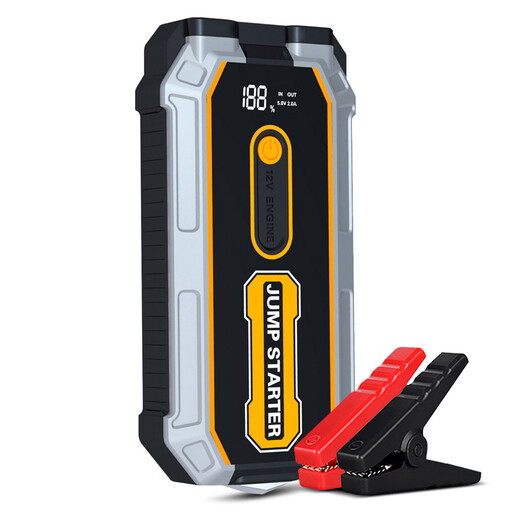
Why it suits this profile: According to the product information, this compact model weighs around 330 grams and is designed for 12V petrol and diesel vehicles, motorbikes and boats. It’s easy to fit in a small car or emergency kit.
The product page lists both a peak current of 1200A and a starting current of 600A. This lets you assess each figure separately, rather than relying on a single marketing number.
1200A peak current, LCD display, 10W USB output and an integrated light with three modes.
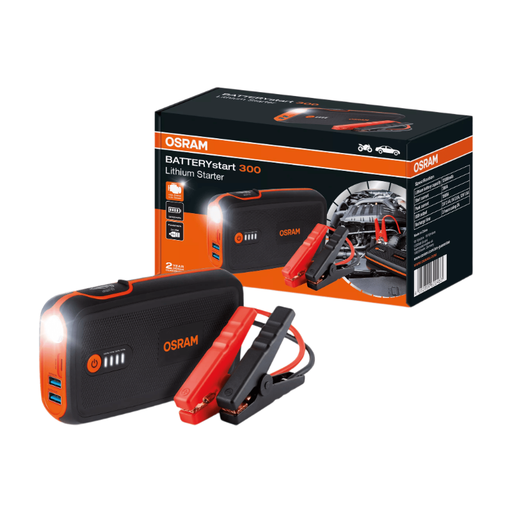
Why it suits this profile: For drivers looking for a branded product with extra connection options. According to the product information, this model is suitable for 12V systems and engines up to 8 litres for petrol or 4 litres for diesel.
The product specifications list the 16,800 mAh capacity, 400A starting current and 2000A peak output separately. A 12V output is also listed.
Two USB ports, a 12V output, an LED light and, according to the product page, a two-year manufacturer’s warranty.
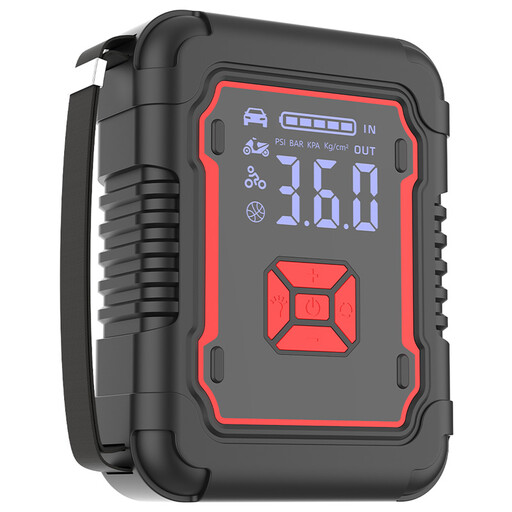
Why it suits this profile: A good fit for drivers, campers and outdoor enthusiasts who want to carry a tyre inflator as well as a jump starter.
The product description lists a compressor with a maximum pressure of 150 PSI and an automatic shut-off function. Check the required tyre pressure, and allow the compressor to cool down if you’re using it for a longer period.
3000A peak current, 150 PSI compressor, QC3.0 output up to 18W and a stated weight of around 800 grams.
We’ve put together a complete, up-to-date list of products that meet these strict selection criteria and the applicable European safety regulations.
A jump starter provides a short burst of power to start your vehicle. A car battery charger is designed to charge a battery in a controlled way or keep it topped up. If your vehicle is often left unused, an intelligent 12V battery charger may be a more practical choice.
According to the product information, the EAFC 12V 6A supports AGM, GEL, EFB and wet lead-acid batteries from 4 to 100 Ah, among others. The EAFC 12A is listed on the product page as suitable for lead-acid batteries from 2 to 150 Ah. Always check the battery type and capacity before connecting a charger. The stated charging and repair functions are claims made by the brand; they don’t guarantee that a worn or damaged battery can be made usable again.
No. Check the voltage, fuel type, engine capacity and stated starting current. A completely faulty battery, damaged cable or problem with the charging system can’t be fixed with a jump starter.
It depends on how it’s stored, the temperature, charge level and how often it’s used. Store the device in a cool, dry place, check the charge level regularly and follow the maintenance instructions. Don’t leave a lithium battery in a hot car for long periods.
A jump starter works on its own, so you don’t need another vehicle. Jump leads are cheaper, but you’ll need a suitable car to provide assistance and must connect them in the correct order. For everyday use, keeping both jump leads and a portable emergency jump starter in your car can be a practical precaution.
