
Vandaag of morgen in huis

Kwaliteit gegarandeerd

Welkomstaanbiedingen ontgrendelen: GRATIS bezorging | Tot 80% korting | Gratis 30 dagen JoyPlus-proefperiode
Download de app
A flat car battery often strikes at the worst possible moment: in a car park, on a camping trip or just before you leave for work. A car jump starter can get you out of trouble, but not every model is right for every vehicle. For example, a compact portable jump starter for a small petrol car won’t necessarily be suitable for a diesel SUV, motorhome or lorry.
Look out for these three common pitfalls:
Most models in this category are designed for 12V vehicles. Check your car’s handbook to confirm. A 12V jump starter will usually work with cars, motorbikes, SUVs and some vans, but the stated limits vary.
Check the combination of:
A car jump starter for a diesel engine will generally need to deliver more starting power than a model for a small petrol engine. For motorhomes, boats, pick-ups and lorries, it’s wise to choose a model with higher specifications. Don’t use a booster with electric vehicles unless the manufacturer explicitly says it’s suitable.
A car battery booster should have safety features to protect against short circuits, reverse polarity, overloading and overheating, among other things. These help reduce the risk if the connections are wrong, but you should still follow the instructions carefully.
Also check:
Safety features are a product specification; they don’t guarantee that the device will work perfectly in every situation.
A jump starter with a compressor can come in handy if a tyre is slowly losing air. Check the maximum pressure, the valve adaptors supplied, the length of the air hose and whether it has an automatic shut-off function. If you’ll be using it repeatedly, check the recommended cool-down time too.
A car power bank can charge smartphones, tablets and other USB devices. Check the number of ports, the output power and whether a charging cable is included. A built-in light with an SOS or flashing mode is useful if you break down in the dark, but check its brightness in lumens too.
If you want to charge or maintain a battery steadily, a smart battery charger is a better choice. It runs from the mains and isn’t designed to replace a car emergency jump starter.
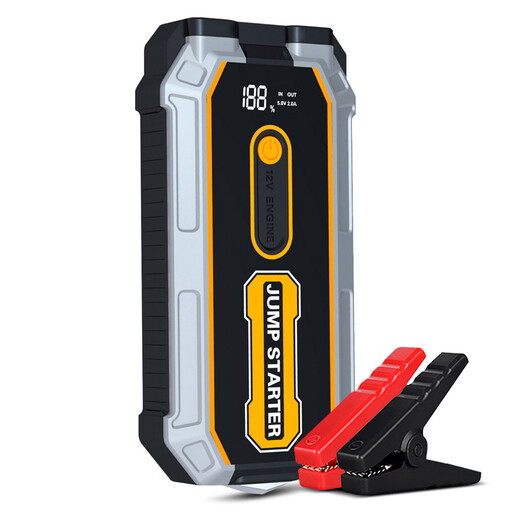
Why it suits this type of user: According to the product information, this compact model weighs around 330 grams and is designed for 12V petrol and diesel vehicles. It’s a good fit for drivers who want to keep a simple emergency device in the glove compartment.
The product description lists vehicle compatibility, an LCD display and safety features. Check that the limits of 6.0 litres for petrol and 4.0 litres for diesel are suitable for your car.
1200A peak current according to the product specifications, a USB output and a three-mode light.
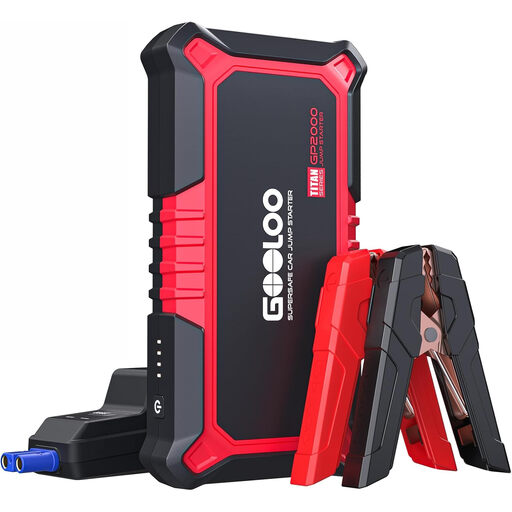
Why it suits this type of user: The GP2000 combines a portable jump starter with USB charging and a light. According to the product description, it’s designed for 12V vehicles with petrol engines up to 8.0 litres and diesel engines up to 6.0 litres.
The specifications list ten safety features and a status light on the smart cable. Charge the device fully and check your vehicle’s battery voltage beforehand.
2000A peak current according to the manufacturer, two USB outputs and a casing weighing around 545 grams.
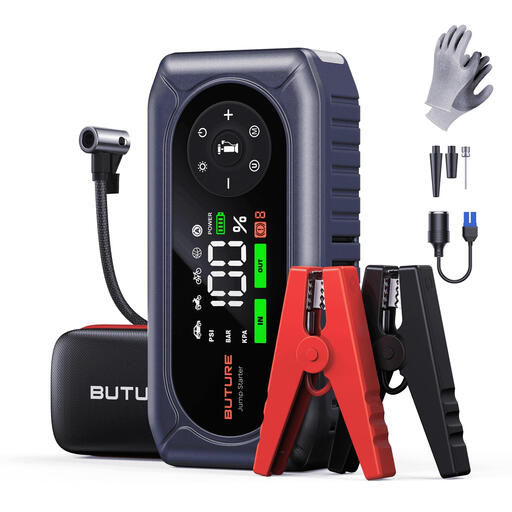
Why it suits this type of user: This model is aimed at drivers of larger cars, SUVs, lorries and motorhomes who want to top up their tyres on the road as well as jump-start their vehicle.
The product specifications list a digital compressor with automatic shut-off, five modes and four nozzles. Allow for the recommended cool-down breaks when inflating for longer periods.
4500A peak current and a compressor rated up to 150 PSI according to the product information, plus USB charging and a 500-lumen light.
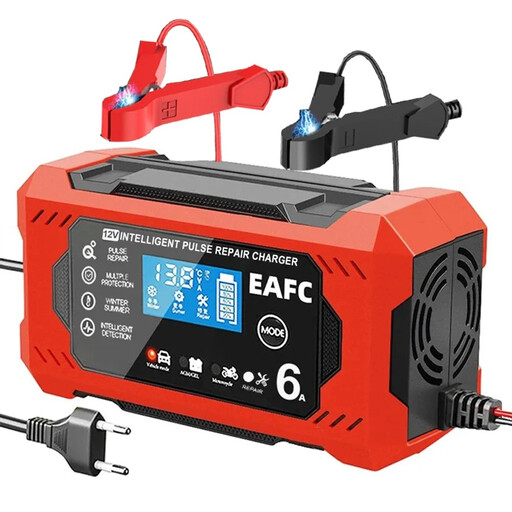
Why it suits this type of user: If you regularly want to charge a car, motorbike or seasonal vehicle from the mains, an automatic charger is more practical than an emergency jump starter alone.
According to the specifications, the charger is designed for 12V lead-acid batteries from 4 to 100 Ah and includes protection against overheating and reverse polarity, among other things.
6A charging current, an LCD display and support for AGM, GEL, EFB and wet batteries, among others, according to the product description.
We’ve put together a complete, up-to-date list of products that meet these strict selection criteria and the applicable European safety regulations.
Fully charge a new jump starter before using it for the first time. Store it somewhere dry and check its charge regularly, especially if it spends months in the boot. Some manufacturers recommend recharging the device every few months; follow the instructions in the manual.
When using it:
Don’t use a booster with a damaged, leaking or frozen battery. Have a vehicle checked if it has recurring starting problems; a jump starter won’t fix the cause of a faulty battery.
No. A jump starter briefly delivers a high current to start the engine. A car battery charger gradually charges the battery from a mains socket. A smart battery charger is more suitable for regular maintenance.
That depends on how it’s used, its storage temperature and charging habits. Lithium batteries slowly lose capacity even when stored. Follow the charging intervals in the manual and don’t leave the device in a very hot car for long periods.
Only if the product specifications support your diesel engine. Check the maximum engine capacity, 12V voltage and minimum charge before connecting it. A model for a small petrol engine isn’t automatically suitable as a jump starter for diesel and petrol engines.
