
Vandaag of morgen in huis

Kwaliteit gegarandeerd

Welkomstaanbiedingen ontgrendelen: GRATIS bezorging | Tot 80% korting | Gratis 30 dagen JoyPlus-proefperiode
Download de app
A flat battery often strikes at the worst possible moment: in a dark car park, on a cold morning or while you’re travelling with a caravan. A car jump starter can get you going without needing another car and jump leads. However, not every portable jump starter is suitable for every vehicle.
Product descriptions sometimes feature high amp ratings and broad compatibility claims, too. So it’s worth looking beyond the biggest number. Read on to find out which specifications matter, which common pitfalls to avoid and what type of car battery jump starter suits your needs.
A rating such as 3000A or 8000A sounds impressive, but it doesn’t tell you everything about real-world starting performance. Manufacturers use different testing methods and don’t always clearly distinguish between peak current and continuous starting current.
Always check:
A large diesel engine, motorhome or van will generally need more starting power than a small petrol car.
A capacity rating in mAh mainly indicates how much energy is available for charging and repeated use. On its own, it doesn’t determine whether a battery booster can start your engine. So, as well as capacity, check the stated starting and peak current, vehicle compatibility and the quality of the jump leads.
Also consider the charging options. A jump starter with a power bank can come in handy for charging a phone or sat nav, but USB ports don’t replace the jump-starting function.
Incorrectly connected clamps can cause damage. Look for features such as reverse polarity, short-circuit, overheating and overcurrent protection. Smart leads with an indicator light or audible warning can make connecting the clamps easier, but always follow the manual.
A jump starter may sit unused in your car for months. High summer temperatures, frost and a gradually discharging battery can affect whether it’s ready when you need it. Check how often the manufacturer recommends recharging it. Store the device somewhere dry, away from direct sunlight and combustible materials.
Most cars, SUVs, motorbikes, motorhomes and light commercial vehicles use a 12V system. Check your vehicle’s handbook to confirm. A 12V jump starter isn’t automatically suitable for electric vehicles or vehicles with a different voltage system.
Next, compare the maximum engine capacity. A model rated for up to 6.0 litres of petrol and 4.0 litres of diesel offers a different level of compatibility from one rated for 9.0 litres of petrol and 8.0 litres of diesel.
Metal clamps, leads that are long enough and sturdy insulation are all practical considerations. The usual procedure is:
Don’t use a car jump starter if the battery is visibly leaking, damaged or frozen.
A jump starter with a torch is useful if you break down at night. SOS and flashing modes can serve as warning lights. A USB-C input or fast-charging function can reduce charging time, while a 12V output may be suitable for certain accessories.
A built-in compressor, found on some larger models, is particularly useful for drivers who also want to check their tyre pressure on the road. Check that the stated pressure and hose are suitable for your tyres.
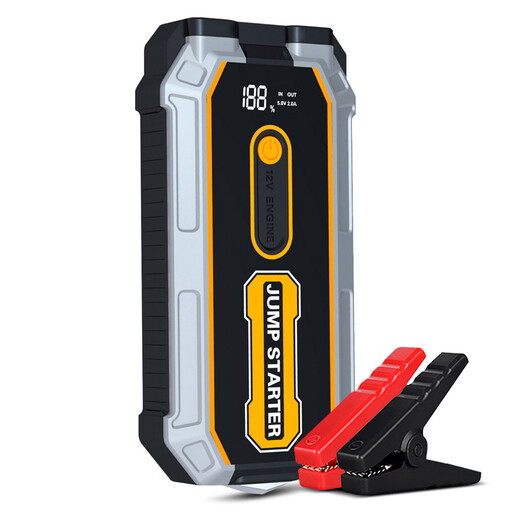
Why it suits this user: According to the product information, this compact car jump starter weighs around 330 grams, making it easy to keep in your glove compartment or emergency kit.
The specifications list a peak current of 1200A and 12V compatibility separately, and state that it supports petrol and diesel vehicles. This makes it easier to compare its suitability than relying on a single marketing figure.
12800mAh battery according to the product description, LCD status display, USB output and a three-mode LED torch.
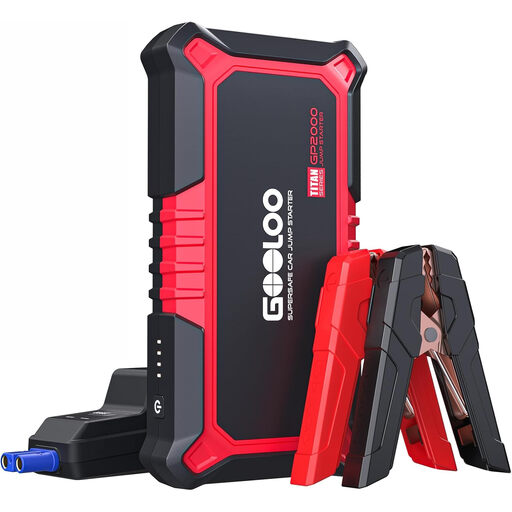
Why it suits this user: This model combines broad stated engine compatibility with a sturdy casing, storage case and smart jump leads, making it suitable for regular use in a car, SUV or van.
The product description lists ten safety features, including reverse polarity, short-circuit and overheating protection. Check the manual for details of how they work.
2000A peak current, stated support for engines up to 8.0 litres of petrol and 6.0 litres of diesel, two USB outputs and a 400-lumen LED torch according to the product specifications.
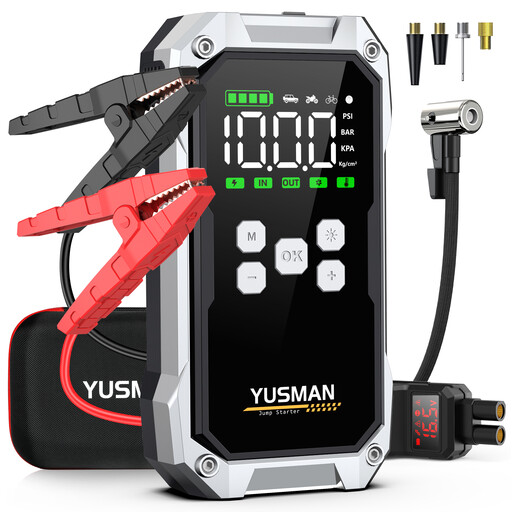
Why it suits this user: This model is designed for drivers of larger vehicles, travellers and anyone who wants to carry a portable compressor as well as a jump starter.
The product information lists an LCD screen, smart clamps and warnings for incorrect connections. You should still compare its maximum compatibility with your vehicle’s specifications.
Stated 5000A peak current, support for diesel engines up to 10.0 litres and a compressor with a stated maximum pressure of 150 PSI.
We’ve put together a complete, up-to-date list of products that meet these strict selection criteria and the applicable European safety regulations.
Only if this is explicitly stated in the product specifications. Diesel cars often need more starting power. Check the maximum engine capacity for both engine types and compare it with your car, SUV, motorhome or van.
It varies by model. Some product descriptions state a long standby time, while other manufacturers recommend topping up the charge every two to six months. Follow the manual and recharge the car battery booster after use. Keeping it fully charged is important in case you need it unexpectedly.
There are no fuel or subscription costs for using one. You mainly pay for the electricity used to charge its internal battery. Its overall value depends on its lifespan, maintenance and whether you actually use extra features such as a power bank, torch or compressor. Check the warranty terms and included accessories before placing your order.
