
Vandaag of morgen in huis

Kwaliteit gegarandeerd

Welkomstaanbiedingen ontgrendelen: GRATIS bezorging | Tot 80% korting | Gratis 30 dagen JoyPlus-proefperiode
Download de app
It's a familiar scenario: you get in your car, turn the key, and hear nothing but a disappointing click. A dead battery. This is a common problem, especially with older cars or on cold winter mornings. In the past, you had to rely on jumper cables and a helpful neighbor. Today, there's a more compact and self-sufficient solution: the jump starter, also known as a booster pack.
These portable devices are powerful enough to bring your car, motorcycle, or even your boat back to life, without the help of another vehicle. But the market is filled with choices, from simple models to all-in-one powerhouses. As a Joybuy Product Recommendation Officer, I'll help you understand the specifications so you can choose a model that fits your vehicle and your needs.
Before you make a choice, it's helpful to understand a few key specifications. This will prevent you from buying a model that's too weak for your engine or one that's unnecessarily powerful and expensive.
The peak current, expressed in amperes (A), is the most important feature of a car jump starter. This number indicates how much power the booster can deliver for a short burst to start an engine. A larger engine, and particularly a diesel engine, requires a higher peak current than a small gasoline engine.
Many modern jump starters are more than just a starting aid. A jump starter with a power bank is ideal for life on the go. You can easily charge your smartphone, tablet, or navigation system via its USB ports. Some models even offer fast charging (Quick Charge or Power Delivery).
A jump starter with an air compressor is an even more complete solution. With it, you can not only start your car but also inflate your tires to the correct pressure. It's convenient for emergencies or before a long trip.
Starting a car with a dead battery must be safe. Modern jump starters are equipped with 'smart' clamps. These provide protection against common mistakes, such as:
A good model will indicate with a light or a sound signal whether the connection is correct and safe. This makes a portable jump starter much safer than traditional jumper cables, especially for those who are less technically inclined.
Based on specifications and functionality, we have highlighted a few popular choices for you.
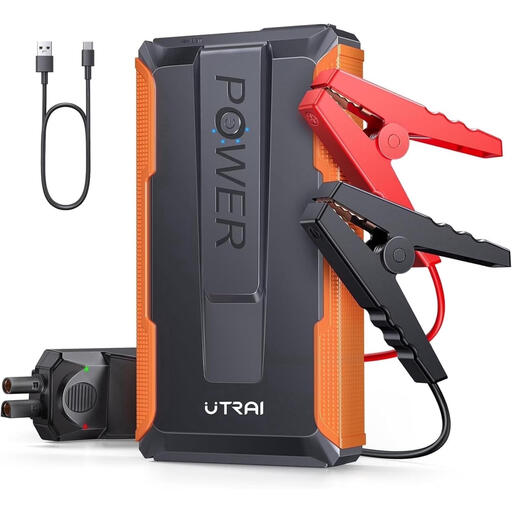
Why it stands out: The Utrai T1 offers an excellent balance of power, portability, and functionality. With 2000A of peak current, it's suitable for most passenger cars, including larger gasoline engines and mid-size diesels.
Key Features:
Who is it for? For the everyday driver looking for a reliable and compact solution for passenger cars, SUVs, or small vans.
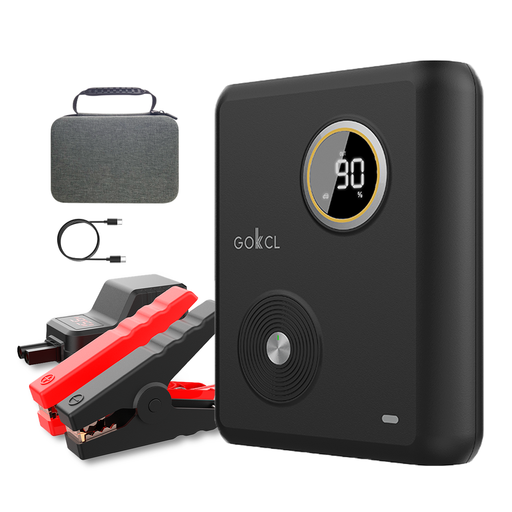
Why it stands out: This model uses a sodium-ion battery instead of the common lithium-ion type. According to the manufacturer GOKKCL, this offers advantages in terms of safety and lifespan. The battery is said to be more stable at extreme temperatures and has a very low self-discharge rate.
Key Features:
Who is it for? For users seeking a maintenance-free and durable solution that can be left in the car worry-free, even in extreme cold or heat.
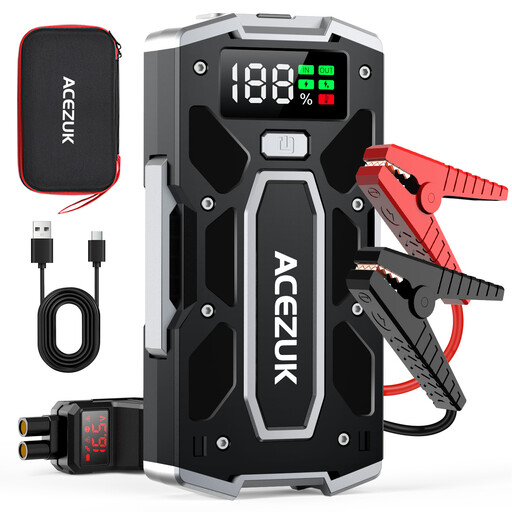
Why it stands out: With an impressive peak current of 8000A, the ACEZUK M02 is designed for heavy-duty tasks. It is aimed at starting vehicles with large engine displacements, such as trucks, RVs, and large SUVs.
Key Features:
Who is it for? For owners of heavy-duty vehicles, professionals, or anyone who needs maximum starting power for a pickup truck, RV, or boat.
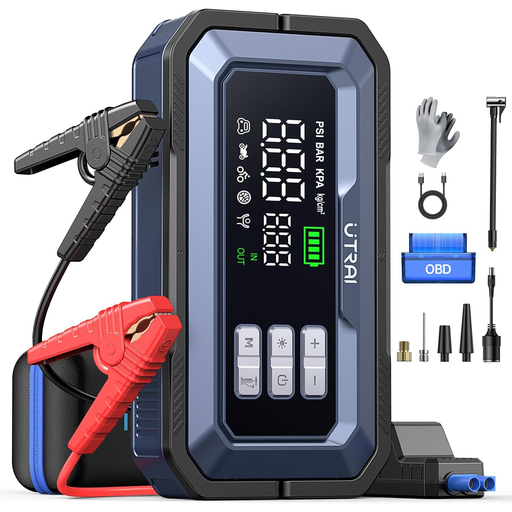
Why it stands out: The UTRAI JS-30 is a complete emergency solution for the road. In addition to a very powerful jump starter, it features a built-in air compressor, a powerful work light, and even an OBD2 fault code reader.
Key Features:
Who is it for? For the outdoor enthusiast, RVer, or professional who needs a multifunctional and robust device that is prepared for almost any emergency on the road.
These recommendations are just a selection of the available models. Everyone has different needs and a different budget. Are you looking for another type, a more compact model, or do you simply want to compare more options?
Check out our full range of portable chargers and find the perfect match for your situation.
This varies by model, but most manufacturers recommend fully charging the jump starter every 3 to 6 months, even if you don't use it. This ensures the battery remains in good condition and is always ready for use. Models with very low self-discharge, like the GOKKCL GK03, require less frequent charging.
Yes, most portable jump starters are designed to be stored in a vehicle. However, pay attention to the manufacturer's recommended temperature range. Extreme heat in the summer or freezing cold in the winter can affect the battery's performance and lifespan. Choose a model with a wide temperature range if you live in a climate with extreme temperatures.
Modern jump starters with smart clamps are very safe. They are equipped with multiple safety mechanisms that prevent damage to your car's electronics. Protection against reverse polarity, short circuits, and overvoltage ensures that you can use the battery booster safely, even if you have no technical knowledge. Always follow the instructions in the user manual for correct use.
