
Vandaag of morgen in huis

Kwaliteit gegarandeerd

Welkomstaanbiedingen ontgrendelen: GRATIS bezorging | Tot 80% korting | Gratis 30 dagen JoyPlus-proefperiode
Download de app
A flat battery or soft tyre usually strikes at the worst possible moment: in a car park, on a camping trip or on a dark country road. A car jump starter with compressor combines a car jump starter with a portable air compressor. Some models also work as a power bank and emergency light.
Choosing one isn’t as simple as the high amp figure on the packaging might suggest. Read on to find out which specifications really matter, which common pitfalls to avoid and which type suits your vehicle and how you plan to use it.
A figure such as 5.000A or 7.000A sounds impressive, but it’s a peak value. Always check what the device is suitable for: petrol or diesel engines, maximum engine capacity and vehicle type. A compact 12V jump starter may be ideal for a small petrol car, but less suitable for a large diesel SUV.
Also check the minimum battery voltage at which the boost function works. Some models have a separate boost or reset mode for a deeply discharged battery; use it only as instructed in the manual.
150 PSI is usually the pump’s maximum pressure, not the normal tyre pressure for a passenger car. Car tyres in the UK are generally set to a much lower pressure. The pump’s actual speed, such as its stated airflow in litres per minute, is a more useful guide when inflating a tyre.
An automatic stop function and a digital pressure display reduce the risk of overinflating. Also check that the hose, valves and supplied attachments are suitable for your car, motorbike or bicycle.
A light, power bank and compressor make an emergency kit for the road more versatile. But a jump starter still relies on its internal lithium battery. A device left unused in a cold boot for months may have less charge when you need it.
So check:
Most portable jump starters in this category are designed for 12V vehicles. Look beyond the word “car”: a motorbike, SUV, boat, van and lorry don’t automatically have the same requirements.
Use the stated engine limits as a guide when choosing:
The amp ratings come from the brand’s product information. Treat them as a point of comparison, not a guarantee that every flat or faulty battery will start.
A battery booster with air compressor is particularly handy for a soft tyre or a small top-up while you’re out and about. Check:
A higher maximum pressure isn’t automatically more useful. For everyday motoring, a clear gauge and reliable stop function are often more important than a big marketing figure.
If possible, choose a model with protection against reverse polarity, short circuits, overheating and overloading. These features don’t replace correct connection. Connect red to the positive terminal and black to the negative terminal, unless the manual specifies a different procedure.
Check the product information for the CE mark, manual, responsible seller and warranty terms. Store your car battery booster somewhere dry, away from extreme heat and loose metal objects that could cause a short circuit.
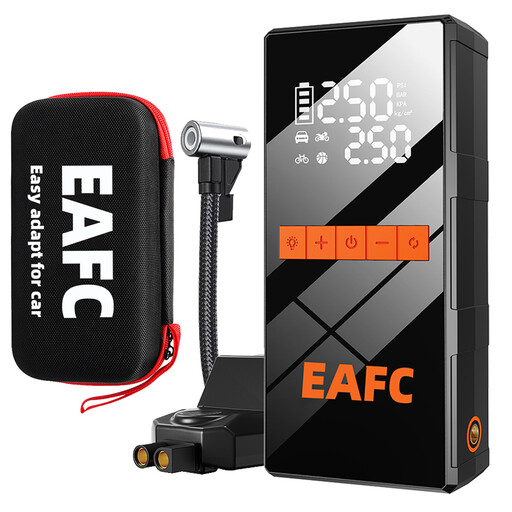
Why it suits this type of user: According to the product description, this compact model combines a 12V car emergency starter, 150 PSI compressor, power bank and LED light for drives and short trips.
The listing clearly states an engine limit of 4,0 litres for petrol and 2,0 litres for diesel. It also mentions several pressure units and automatic shut-off.
8000mAh capacity according to the specifications, 150 PSI pump, LED modes and compact dimensions of 190 × 87 × 42 mm.

Why it suits this type of user: According to the product details, this is a versatile 12V jump starter for cars, SUVs, lorries and motorbikes, with particular attention to a clear display and safety features.
The stated compatibility covers engines up to 9,0 litres for petrol and 8,0 litres for diesel. The compressor has five presets and, according to the listing, switches off automatically.
4500A peak current according to the manufacturer, LCD screen, four air nozzles, 500-lumen LED light and USB power bank.
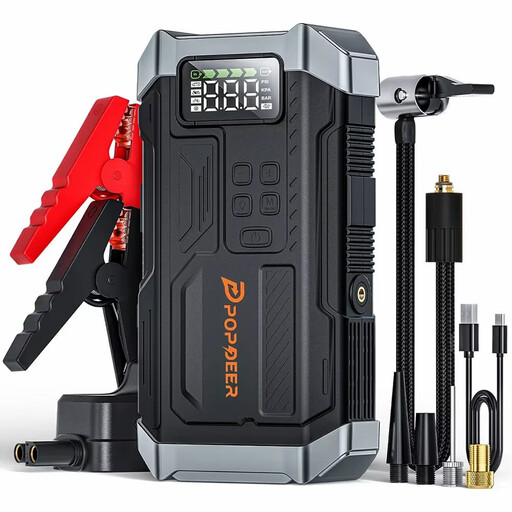
Why it suits this type of user: According to the product description, this model is designed for larger 12V vehicles and users who want one device for jump starting, inflating tyres, lighting and portable power.
The listing gives limits of 10 litres for petrol and 8 litres for diesel, as well as four pump settings, automatic shut-off and a pressure display.
5000A peak current, 150 PSI compressor, stated airflow of 35 l/min and support for PSI, bar and kPa.
Please note: the product image above links to the product page. Check the current price, box contents and specifications there before ordering.
A jump starter delivers a short burst of power to start a vehicle. A 12V battery charger is designed to charge the battery in a controlled way using mains electricity. They serve different purposes.
For home use, an EAFC charger may be a better choice. According to the product information, the 6A version is designed for lead-acid batteries from 4 to 100Ah and includes protection against reverse polarity, short circuits and overheating. The 15A version features automatic charging modes, a display and support for various 12V lead-acid battery types. Use these chargers indoors and follow the connection sequence in the manual.
We’ve put together a complete, up-to-date list of products that meet these strict selection criteria and the applicable European safety requirements.
Usually not in the same way as a battery charger. A jump starter provides a short, powerful burst to start the engine. To charge a car battery, use a suitable 12V charger. Always check the battery type and capacity.
It varies by model. Some product descriptions recommend charging every two to three months; others specify a longer standby period. Follow the manual and don’t store the device completely flat. Check the charge before a long drive or holiday.
The maximum pressure alone doesn’t guarantee that it’s suitable. Check the hose, valve, airflow and automatic stop function. Set the pressure according to the car manufacturer’s recommendation, not the compressor’s maximum rating.
