
Vandaag of morgen in huis

Kwaliteit gegarandeerd

Welkomstaanbiedingen ontgrendelen: GRATIS bezorging | Tot 80% korting | Gratis 30 dagen JoyPlus-proefperiode
Download de app
A flat battery or soft tyre always seems to happen at the worst possible moment. A car jump starter with compressor can do more than just start your vehicle – it can often pump up tyres, charge a phone and light up your surroundings too. However, a high amp rating isn't everything. If you only focus on big numbers, you could end up buying a device that doesn't suit your engine, charges too slowly or proves awkward to use.
This guide helps motorists, SUV and pickup owners, diesel drivers, campers and travellers compare the right specifications.
Brands often highlight the peak current, for example 3000A, 5500A or even 7000A. That is a short maximum value. You should also check the stated starting current, the type of vehicle and the maximum engine capacity.
A 12V jump starter for a small petrol car has different requirements to a starter booster for an SUV, pickup or diesel engine. A high peak current is therefore no automatic guarantee that it can start every vehicle.
A 150 PSI compressor can sound impressive, but PSI is the maximum pressure and is not the same as the speed at which a car tyre is inflated. Also pay attention to:
For a soft car tyre by the roadside, ease of use and control are often more important than the highest possible maximum pressure.
A portable jump starter contains a lithium battery. In a locked car, the temperature can rise significantly in summer. Therefore, check the stated operating and storage temperature and do not store the device in direct sunlight for long periods.
Recharge the emergency starter after use and check the battery status regularly. Some models recommend recharging every two to three months; follow the manufacturer's instructions for this.
First, check whether the device is suitable for a 12V system. Then look at the engine support:
A car battery booster with smart jump leads is more practical when the clamps offer protection against reverse polarity, short circuits and overload. The protection does not remove the need to connect correctly: red goes on the positive terminal and black on the negative terminal or a suitable earth point as per the instructions.
For a jump starter with an air pump, a digital pressure display is useful. Some devices work with PSI, bar and kPa. Choose the unit you are familiar with and set the recommended tyre pressure from your vehicle manufacturer.
An automatic shut-off prevents you from having to stand next to the tyre constantly. Allow the compressor to cool down in between when the instructions advise this. Use the supplied attachments only for applications the product is designed for.
The capacity is often shown in mAh. This helps with comparison, but the actual usage time also depends on the output voltage and energy consumption. Also check:
A separate emergency light can also be useful if you already have a compact jump starter without a built-in light.
The selection below is based on the stated product specifications. Claims about starting power, temperature, lighting and compressor performance come from the product information of the respective brands or sellers and should be read as stated product specifications.
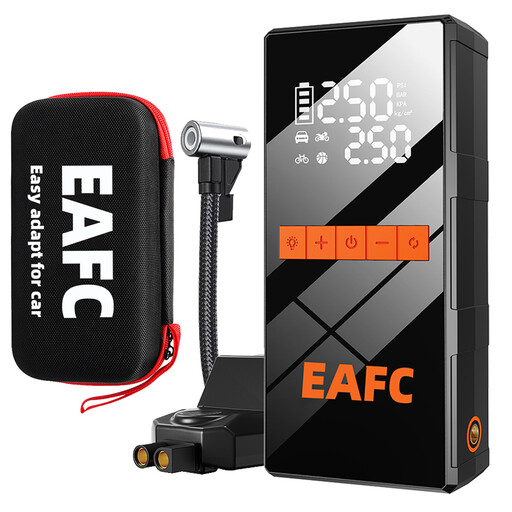
Why this fits the profile: This model combines starting, tyre inflation, USB charging and lighting in one compact housing. According to the product information, it supports petrol engines up to 4.0 litres and diesel engines up to 2.0 litres.
The stated pressure is linked to automatic shut-off and multiple pressure units. Do check whether your engine falls within the stated limits.
150 PSI as stated maximum, 8000mAh battery, LED with three modes and smart safety clamps.
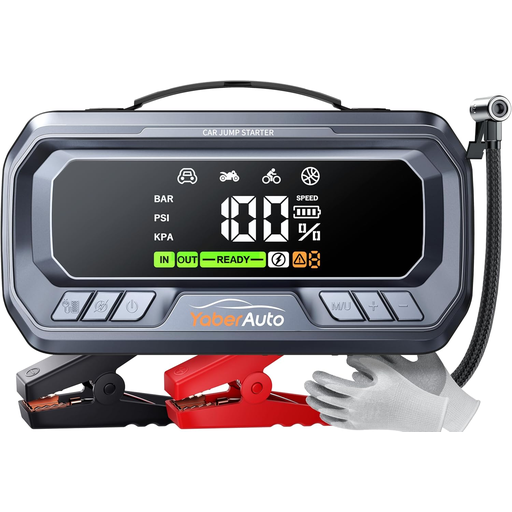
Why this fits the profile: The combination of a 160 PSI compressor, LCD screen and 65W USB-C port suits long journeys, modern devices and larger vehicles.
The display shows tyre pressure according to the product information and supports automatic stop. The stated operating temperature ranges from -20 °C to 60 °C.
16000mAh battery, 65W bidirectional USB-C, 600 lumen lighting and support for diesel engines up to 8.0 litres according to the product specification.
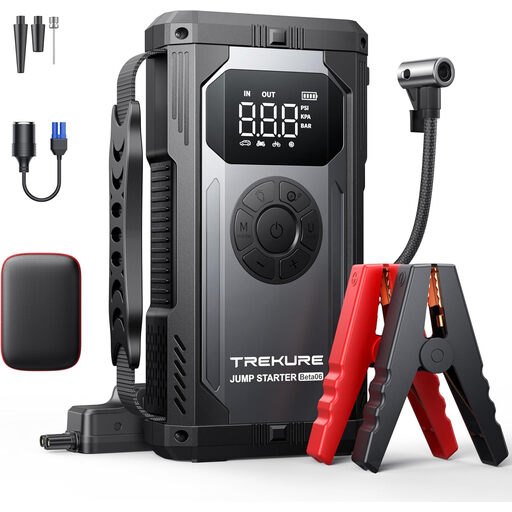
Why this fits the profile: This model is aimed at drivers of larger cars, SUVs, campervans or vans who also want a 12V output and large battery capacity.
The LCD display combines battery status and tyre pressure. The manufacturer states an automatic stop and a compressor with 150 PSI; allow the device to cool down during prolonged pumping.
23800mAh, two USB-A outputs, 12V socket, three light modes and a stated peak current of 5500A.
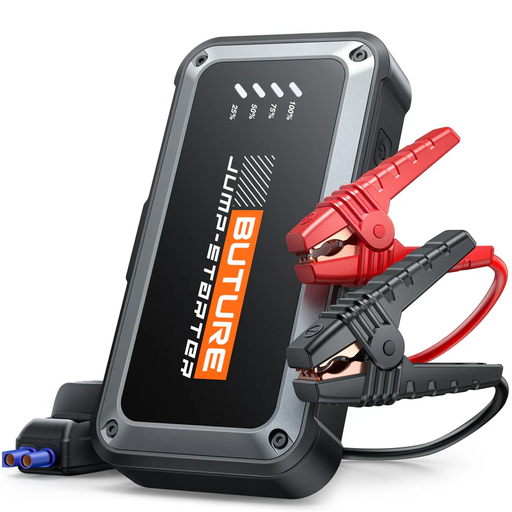
Why this fits the profile: The lightweight housing, power bank function and wide LED lighting are handy for camping, travel and a vehicle with a larger petrol or diesel engine.
The product information states ten protections, including protection against overheating, overload and reverse polarity. This model does not have a built-in compressor.
16800mAh power bank, weight of approximately 370 grams, four light modes and stated support up to 9.0 litres petrol and 8.5 litres diesel.
We have compiled a full, up-to-date list of products that fully meet these strict selection criteria and comply with current European safety regulations.
A separate magnetic warning light, such as the OSRAM ROAD FLARE TA20, can provide extra visibility on a dark road when you break down. Do check the UK traffic regulations before using an additional warning light on the public highway.
No. Check whether the device is suitable for 12V vehicles and compare the stated engine capacity for petrol and diesel. A jump starter for a small car is not automatically suitable for a heavy diesel SUV or pickup.
The lifespan depends on charging frequency, storage temperature and use. Regular recharging according to the instructions helps keep the battery ready for use. Do not leave a lithium device in a very hot, locked car for long periods.
Yes. Pumping up a tyre uses the internal battery and can drain a lot of energy if you do several tyres. Therefore, fully charge the car battery booster beforehand and choose a model with a clear battery display. The compressor itself should not run continuously without a break; pauses limit heat build-up.
