
Vandaag of morgen in huis

Kwaliteit gegarandeerd

Welkomstaanbiedingen ontgrendelen: GRATIS bezorging | Tot 80% korting | Gratis 30 dagen JoyPlus-proefperiode
Download de app
A flat car battery or under-inflated tyre usually happens at the worst possible time. With a car jump starter with compressor, you can try to start a 12V vehicle yourself in many situations and correct the tyre pressure while you’re on the road. However, many models look similar, even though there can be major differences in starting power, battery life and ease of use.
Pay particular attention to these three common pitfalls:
Most portable battery boosters in this category are designed for 12V vehicles. That doesn’t mean every model is suitable for every car. Check:
A powerful 12V jump starter for a small city car may have different requirements from a car emergency starter for a diesel SUV. Only use a forced-start function if the clamps are connected correctly and the manual allows it. A jump starter is not a substitute for a faulty, frozen or leaking battery.
A jump starter with a 150 PSI air compressor is suitable for many car, motorbike and bicycle applications. In practice, these factors are at least as important:
Automatic shut-off means you don’t have to keep checking the tyre constantly, but always check your vehicle’s recommended tyre pressure. The compressor is designed for topping up and emergencies, not as a replacement for professional tyre maintenance.
A car jump starter may sit unused in the boot for months. That’s why charging behaviour and storage are important. Look for:
According to the GOKKCL GK01 product specifications, this model uses a 52.5 Wh sodium-ion battery, with stated self-discharge of approximately 1% per month and an operating temperature of -40 °C to 80 °C. These are manufacturer details; always check the latest manual and safety information before use.
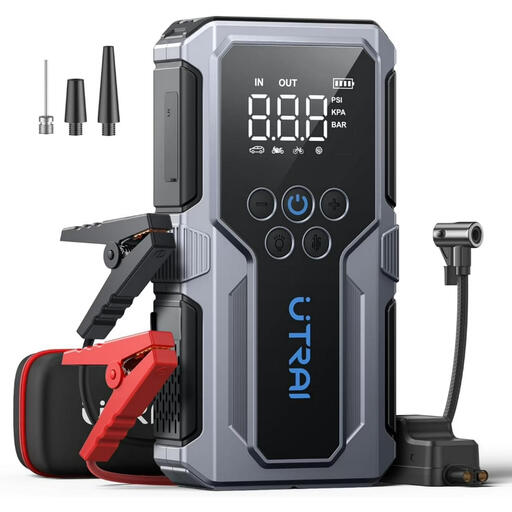
Why it suits this profile: This compact model combines jump-starting, tyre inflation, power-bank functionality and LED lighting, without requiring you to carry a bulky device. According to the product description, it is suitable for 12V cars, SUVs, boats and motorbikes.
According to the product specifications, the 2-inch display shows the battery status and tyre pressure. The compressor has an automatic stop function, so you don’t need to monitor the set pressure constantly.
3000A peak current, 150 PSI compressor, USB and USB-C charging ports, and three lighting modes.
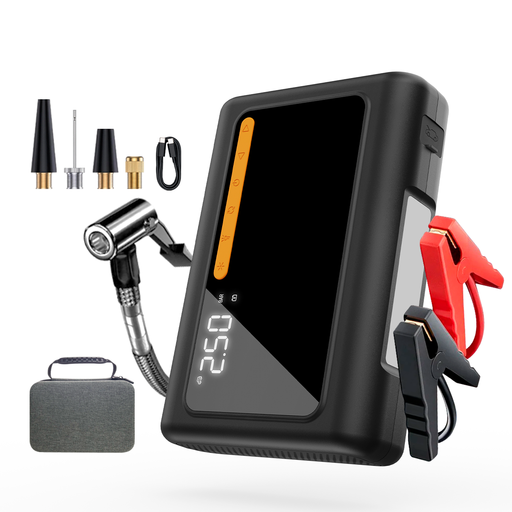
Why it suits this profile: The combination of a sodium-ion battery, PD60W charging and a 150 PSI air pump is appealing to motorists who want to keep the device in the car for extended periods.
The stated self-discharge of approximately 1% per month may reduce maintenance between uses. This is a claim from GOKKCL’s product information, not an independent guarantee.
600A starting current, 1500A peak current, 25-cylinder pump and 200-lumen dual LED lighting.
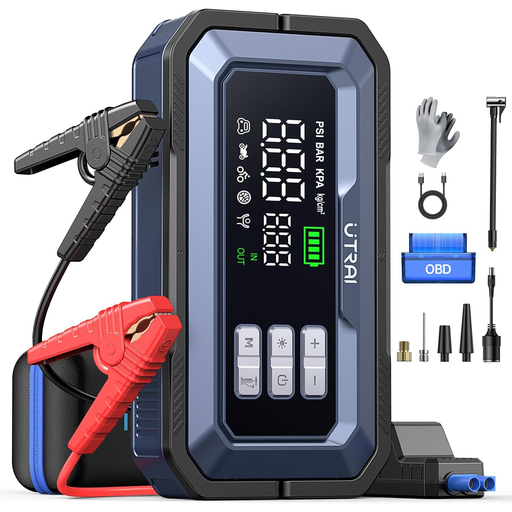
Why it suits this profile: According to the product information, this model is designed for larger 12V vehicles, including diesel engines up to 14 litres, and also provides a 160W DC output for 12V equipment.
The LCD display, temperature protection and automatic pressure setting provide greater control than a basic compressor without a display.
7000A peak current, 150 PSI pump, 2000-lumen lighting, OBD2 adapter and 160W DC output.
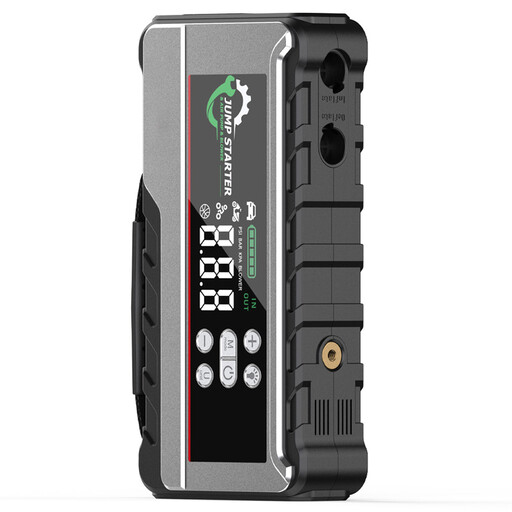
Why it suits this profile: The X11 combines a car battery starter with a power bank, air pump and air blower. This can be useful for camping trips, motorhomes and longer car journeys.
The stated 65W PD charging function and digital pressure control make it clear which additional features are included. However, check beforehand that your devices support this charging mode.
3000A peak current, stated capacity of 24,800 mAh, 150 PSI compressor, PD65W and air blower.
We’ve put together a complete, up-to-date list of products that fully meet these strict selection criteria and the applicable European safety regulations.
Read the manual before using the device for the first time and charge it fully. Follow this sequence when jump-starting:
Allow the compressor to cool down after prolonged use. Don’t touch a hot air hose directly, and don’t use a jump starter with damaged cables, casing or battery.
That depends on the model and the condition of the battery. Some devices have a boost or forced-start function for very low voltage. According to the product information for certain models, this may help, but it is not guaranteed. You must not attempt to start a damaged, leaking or frozen battery in this way.
Follow the manufacturer’s recommended charging interval. Many lithium models recommend topping up the charge regularly, for example every three to six months. Models with lower stated self-discharge may remain on standby for longer, but check the charge level before setting off on a journey.
Yes, for topping up car tyres, a maximum pressure of 150 PSI is generally well above the recommended tyre pressure. However, practical inflation speed depends on the airflow, tyre size and compressor temperature. Always use the pressure specified in the vehicle or tyre manual.
