
Vandaag of morgen in huis

Kwaliteit gegarandeerd

Welkomstaanbiedingen ontgrendelen: GRATIS bezorging | Tot 80% korting | Gratis 30 dagen JoyPlus-proefperiode
Download de app
A flat battery or underinflated tyre rarely happens at a convenient time. With a car jump starter with compressor, you can often get yourself back on the road without having to wait for another car or roadside assistance. However, many models look similar, even though there can be significant differences in engine support, compressor capacity and safety features.
A high peak current sounds appealing, but it doesn’t tell you everything. Check which 12V vehicles the jump starter is suitable for, and the maximum engine capacity specified for petrol and diesel engines. A compact 12V jump starter for a small petrol car won’t necessarily be suitable for a diesel van, campervan or SUV.
Also, be aware of the difference between peak current and continuous starting current. The peak figure is the maximum current delivered for a short time; in practice, performance also depends on the condition of the car battery, the temperature and whether the cables are connected correctly.
A 150 PSI tyre inflator may have a high maximum pressure, but for car tyres, airflow, adjustable pressure and automatic shut-off are more relevant. A compressor delivering 35 L/min may perform differently in use from a model with a lower airflow. Also check that the hose, valve adapter and cable are long enough for your vehicle.
Smart clamps may include features such as reverse-polarity, short-circuit, overheating and overcurrent protection. These reduce the risk of incorrect use, but don’t replace the instructions. Don’t use a car battery jump starter with a damaged, leaking or frozen battery. A jump starter is also no substitute for regular maintenance or replacing a worn-out battery in good time.
Choose a model based on your car first. For an average petrol car, a model rated for engines up to 4.0 or 6.0 litres may be sufficient. For a diesel SUV, campervan or van, having more capacity to spare can be useful. Always check the product listing and your vehicle’s handbook.
Also check the voltage. The models below are designed for 12V systems. They are not intended for the high-voltage batteries in electric cars and are generally not suitable for the 24V systems found in heavy lorries or buses.
A jump starter with air compressor is most useful when it offers more than just a PSI rating. Look for:
A compressor is designed to top up tyres or temporarily deal with a minor leak. Don’t drive on a visibly damaged tyre.
A portable car power bank can charge phones, tablets and other USB devices. Check how many USB ports it has and whether USB-C is for input only or also supports output. A display showing the battery level, pressure and error messages makes it easier to use while you’re on the road.
Fully charge the jump starter before using it for the first time, and store it in a dry place away from direct sunlight. Some manufacturers recommend recharging it every two to three months; follow the instructions for your chosen model.
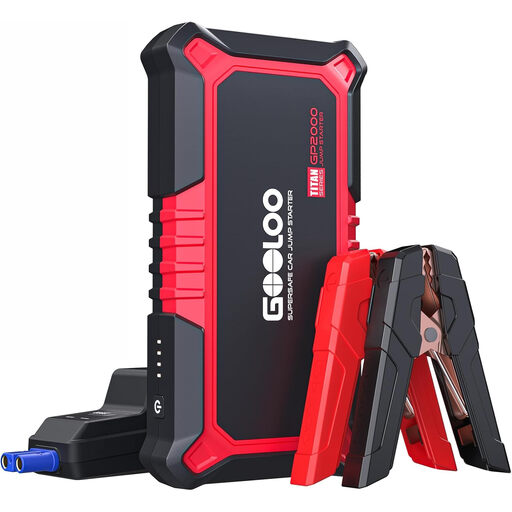
Why it suits this type of buyer: This model is aimed at drivers looking for a compact, portable jump starter for a 12V car, motorbike, SUV or van. It’s listed as suitable for petrol engines up to 8.0 litres and diesel engines up to 6.0 litres.
The product listing mentions 10 safety features and smart jump leads. According to the product specifications, these help make it clearer when the connection is ready.
2000 A peak current, around 545 grams, two USB outputs and a 400-lumen light with standard, strobe and SOS modes.
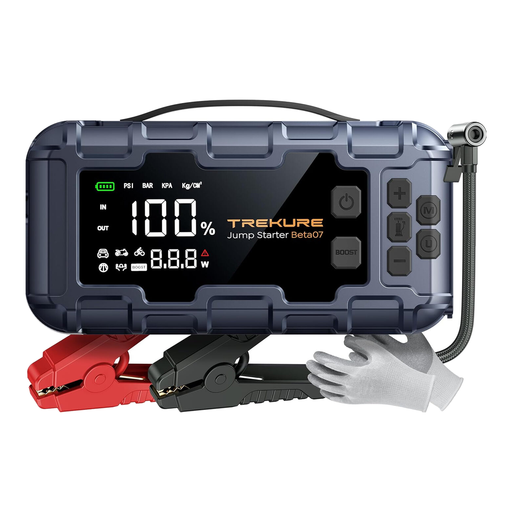
Why it suits this type of buyer: This combination is aimed at drivers of larger petrol and diesel vehicles who also want a digital compressor, fast charging and a clear display.
The listing specifies a 160 PSI compressor, 45 L/min airflow, automatic shut-off and five pressure modes. This gives you more information than a high PSI figure alone.
6000 A peak current, support for engines up to 12 litres according to the product listing, 45W USB-C PD and 600-lumen lighting.
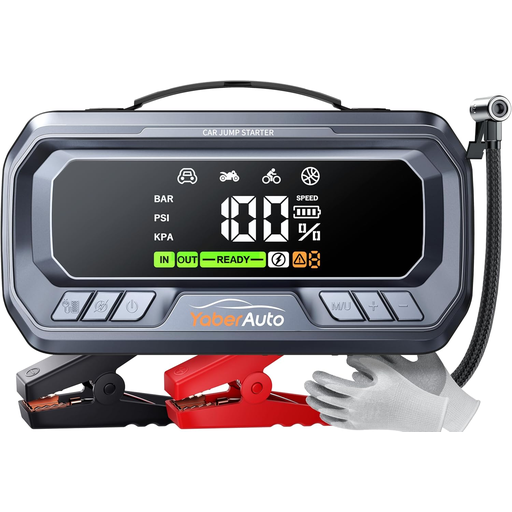
Why it suits this type of buyer: This model is a good fit for campervan, SUV and outdoor users who want to charge devices via USB-C or a 12V output, as well as jump-starting and inflating tyres.
The product information lists a 3.3-inch LCD screen, automatic compressor shut-off and an operating temperature range of -20 to 60 °C. Before buying, check that these features suit your needs.
6500 A peak current, 160 PSI air pump, 65W USB-C PD and a 600-lumen light with multiple modes.
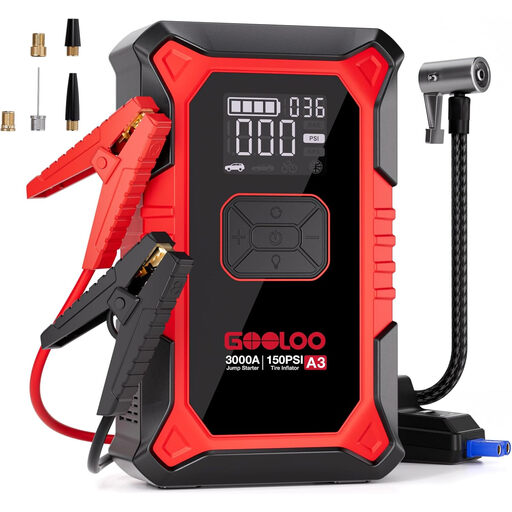
Why it suits this type of buyer: A practical choice for motorists who want one device for jump-starting, topping up tyres, lighting and charging USB devices.
The product specifications list five inflation modes, a pressure display, automatic shut-off and adjustable units. This makes it easier to compare how it works before buying.
3000 A peak current, 150 PSI and 35 L/min, with support for petrol engines up to 9.0 litres and diesel engines up to 6.5 litres, according to the listing.
We’ve put together a complete, up-to-date list of products that meet these strict selection criteria and the applicable European safety regulations.
Only use the supplied jump leads with smart clamps if the manufacturer specifies this. If you notice smoke, excessive heat, a leak or damaged cables, stop immediately.
No. Check the voltage, engine type and maximum engine capacity. The models mentioned are designed for 12V vehicles, but their specified support for petrol and diesel engines varies. They are not suitable for a 24V system or the high-voltage battery in an electric car.
How long it lasts depends on battery capacity, storage temperature, charging interval and the number of starts. Recharge the device regularly according to the instructions, even if you don’t use it often. Long-term storage without maintenance can reduce its available capacity.
The compressor uses considerably more energy while inflating than a USB charger. How often you need to recharge it depends on tyre pressure, tyre size and how long you use it. Don’t run the compressor for longer than recommended, and give it time to cool down.
