
Vandaag of morgen in huis

Kwaliteit gegarandeerd

Welkomstaanbiedingen ontgrendelen: GRATIS bezorging | Tot 80% korting | Gratis 30 dagen JoyPlus-proefperiode
Download de app
A flat battery or underinflated tyre rarely happens at a convenient time. A car jump starter with compressor combines a portable jump starter, tyre inflator and car power bank in one device. It’s handy for your daily commute, camping trips and long drives.
However, not every model is suitable for every car. Marketing terms such as “high peak power” or “150 PSI compressor” don’t tell the whole story. Before you buy, look out for these common pitfalls.
A high peak current sounds appealing, but it doesn’t automatically mean a device is suitable for your vehicle. Check whether the jump starter is designed for a 12V system, which engine types it supports and whether it has an upper limit for engine capacity.
A compact 12V jump starter may suit a small petrol car, while an SUV, van or diesel engine may need more starting power. So when choosing a jump starter for an SUV or truck, check the technical specifications as well as the packaging.
150 PSI is a maximum pressure rating. It doesn’t mean that a car tyre will always inflate quickly. Check the airflow, hose length, valve connection and maximum operating time too.
A compressor can get hot during use. For example, the UTRAI model is specified for no more than 10 minutes of continuous use, after which it needs to cool down. This kind of information matters more than the number on the front.
Incorrectly connected jump leads can cause damage. Check whether the car battery booster has features such as reverse polarity protection, short-circuit protection and overheat protection. A display or indicator light can also make things clearer than a simple on/off button.
A portable jump starter needs maintenance too. Fully charge it before first use and store it according to the instructions. Many models need recharging every few months, even when they haven’t been used.
Check the following:
Only use a car emergency starter according to the instructions. Connect the red clamp to the positive terminal and the black clamp to the negative terminal or a suitable metal earth point, if specified by the manufacturer. Don’t start the vehicle if a warning signal appears.
These features are useful in a car tyre inflator:
Set the tyre pressure to the value shown on the door frame, fuel flap or in your car’s manual. The compressor’s maximum pressure is not the recommended tyre pressure.
A jump starter with an LED light can be useful if you break down in the dark. A USB or USB-C port also lets you use the device as a power bank for your car and mobile devices.
Also check:
A larger capacity can mean more weight. So if you’re keeping the device in your glove compartment, consider its shape and portability as well as its battery capacity.
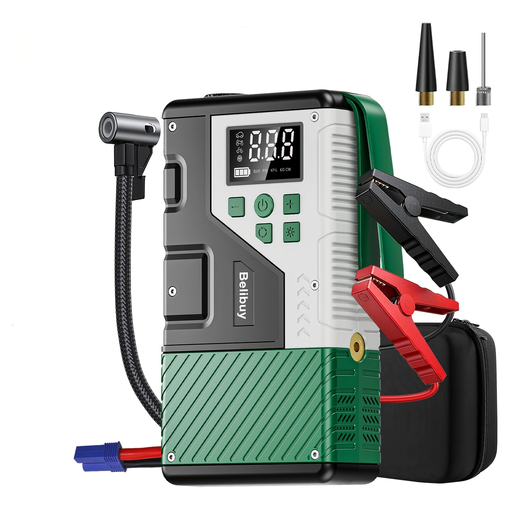
Why it suits this user: A straightforward choice for drivers who want one compact device for jump-starting, topping up tyres and providing light on the go. The large LCD display makes the available information easy to read.
The product name mentions both 12V support and a compressor rated up to 150 PSI. Before buying, check the latest vehicle compatibility information and operating time in the product details.
Combines a jump starter, 150 PSI compressor, LCD display and LED light in a portable design.
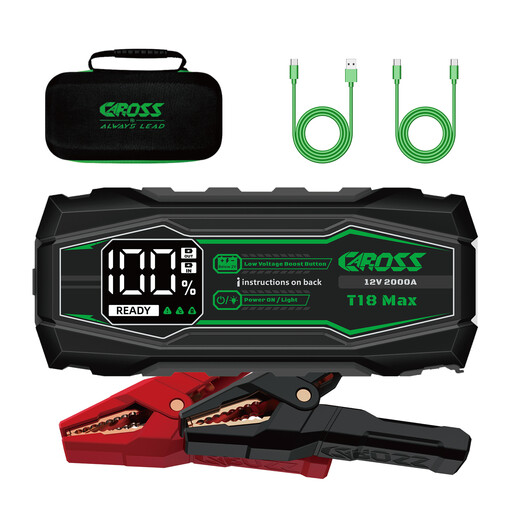
Why it suits this user: A good fit for drivers who prioritise starting power, battery capacity and straightforward controls, and don’t need a compressor function.
The specifications list 2000A, 20000mAh, a boost function, spark-free technology and reverse polarity protection. Compare these figures with your vehicle’s requirements.
2000A peak current, 20000mAh lithium-ion battery, 2.3-inch screen, QC 18W and protective case.
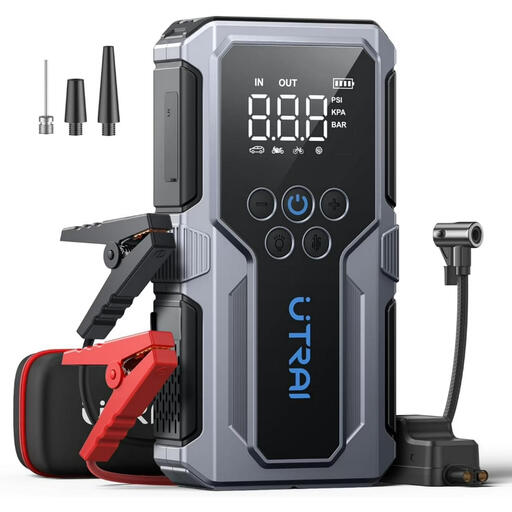
Why it suits this user: Designed for drivers of larger vehicles, campers and anyone who wants one device for jump-starting, inflating tyres, charging mobile devices and providing light.
The product information lists vehicle types, engine capacity, automatic pressure shut-off and ten stated safety features. The compressor has a maximum continuous operating time of 10 minutes.
3000A, 150 PSI compressor, 15000mAh power bank, USB and USB-C ports, LCD screen and three-mode LED light.
We’ve put together a complete, up-to-date list of products that meet these strict selection criteria and current European safety regulations.
Put the car in park or neutral and switch off all electronics. Connect the jump leads according to the instructions and check the indicator. Only start the engine once the device shows that the connection is correct. To inflate a tyre, set the desired pressure, attach the hose and let the compressor stop automatically if that feature is available.
Don’t use the device with a damaged, leaking or frozen battery. After the stated maximum operating time, let the compressor cool down.
It depends on the battery capacity, storage temperature, number of starts and maintenance. Recharge the jump starter after use and check its charge level regularly. If it’s being stored for a long time, it’s important to recharge it periodically as instructed. Extreme heat, moisture and direct sunlight can affect its lifespan.
The cost of electricity for charging is usually low, but varies depending on battery capacity and your electricity tariff. The compressor uses more energy while inflating than the LED light or USB output. Also consider accessories, any replacement cables and the battery’s storage requirements. When buying, look beyond the purchase price and consider the warranty, capacity and operating time.
