
Vandaag of morgen in huis

Kwaliteit gegarandeerd

Welkomstaanbiedingen ontgrendelen: GRATIS bezorging | Tot 80% korting | Gratis 30 dagen JoyPlus-proefperiode
Download de app
A flat car battery usually strikes at the worst possible time: on a cold morning, after a weekend camping or while you’re on the road in a van. With a car jump starter, you can sometimes get a 12V vehicle going again yourself, without another car or traditional jump leads. However, not every device is suitable for every vehicle.
The biggest pitfall is treating high amp figures as the main selling point. In practice, engine compatibility, battery capacity, safety features and charge level matter too. Below, you’ll find what to look for in a portable jump starter and which models suit different needs.
A figure such as 2000A, 4000A or 8000A sounds impressive, but it doesn’t tell you everything about real-world performance. Manufacturers may list peak current and starting current differently. So check:
A powerful car battery booster for a large diesel engine may be unnecessarily bulky for a small city car. Conversely, a compact model may not be up to the job of starting an SUV, campervan or van.
A jump starter power bank only works if its internal battery has enough charge. Some models recommend a charge level of at least 25 or 50 per cent before you try to start your vehicle. If you leave the device unused for months, you could still find yourself with a flat emergency car starter when you need it.
When buying, check:
An LED light, power bank and compressor can all be useful, but they often make a device heavier. A jump starter with a compressor is a good option for drivers who also want to check their tyre pressure on the go. If you only need it for starting, a more compact model may make more sense.
Check the stated inflation pressure too. A maximum of 150 PSI doesn’t mean every tyre will inflate equally quickly. Actual inflation time depends on tyre volume, starting pressure and temperature.
A model for 12V petrol engines is usually sufficient for a standard car, while diesel engines may need more current to start. So check both figures: peak current and any stated starting current.
A model described as suitable for engines up to 6.0 litres petrol and 4.0 litres diesel is not automatically suitable for a larger lorry engine. Also check that your vehicle doesn’t use a 24V system. A 12V jump starter isn’t designed for heavy vehicles with a 24V electrical system.
Where possible, choose a car jump starter with smart clamps and clear fault alerts. Useful safety features include:
These features reduce the risk of misuse, but they don’t replace the manual. Never try to start a damaged, leaking or frozen battery with a jump starter.
Capacity is often listed in mAh, but the usable capacity may be lower than the stated figure. So don’t just look at 10.000 or 20.000 mAh; check the USB output, charging time and dimensions too.
A portable car battery charger is especially handy if you also want to charge a phone, tablet, GPS device or camera while you’re out and about. An integrated LED light with an SOS or flashing mode can also help you stay visible at the roadside.
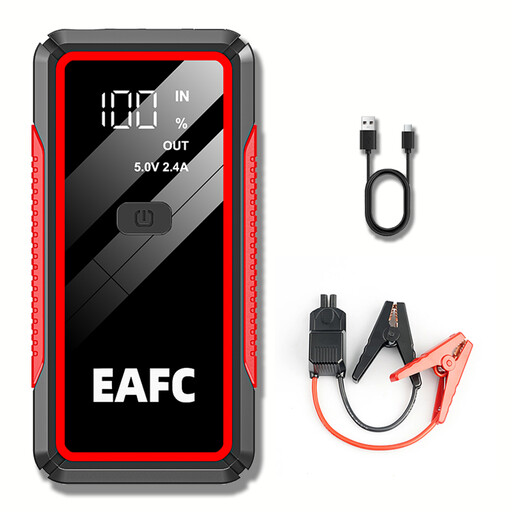
Why it suits this profile: A compact 12V jump starter for drivers looking for basic help with a flat battery and a power bank function. According to the product description, it’s designed for petrol engines up to 6.0 litres and diesel engines up to 4.0 litres.
The product information lists a battery indicator, smart clamps and protection against reverse polarity, short circuits, overvoltage and undervoltage.
10.000 mAh according to the product specifications, a USB output, an LED light with three modes and a stated weight of approximately 700 grams.
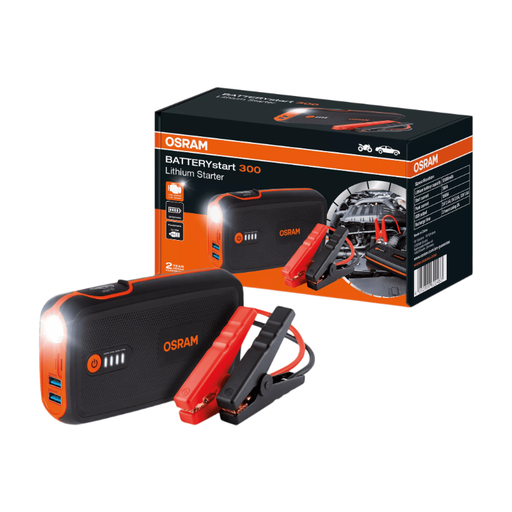
Why it suits this profile: A good choice for car and small van drivers who value a trusted brand, clear specifications and an official warranty, as stated in the product listing.
The product page lists a 12V system, charge level monitoring, polarity instructions and an official two-year warranty.
1500A peak current, 13.000 mAh, dual USB output and support, according to the product description, for petrol engines up to 6 litres and diesel engines up to 3 litres.
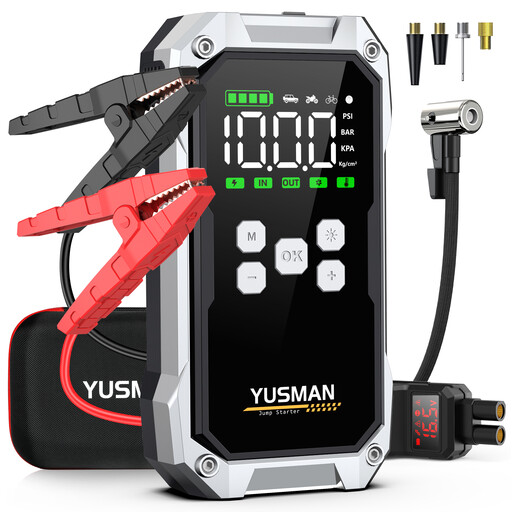
Why it suits this profile: Designed for people with SUVs, campervans, vans or other vehicles who want to inflate tyres as well as jump-start their vehicle.
The product specifications list an LCD screen, smart clamps and several safety features. The manufacturer also recommends recharging the jump starter every 2 to 3 months.
According to the product description, it offers 5000A peak current, 21.800 mAh, a compressor up to 150 PSI, two USB ports and support for 12V vehicles.
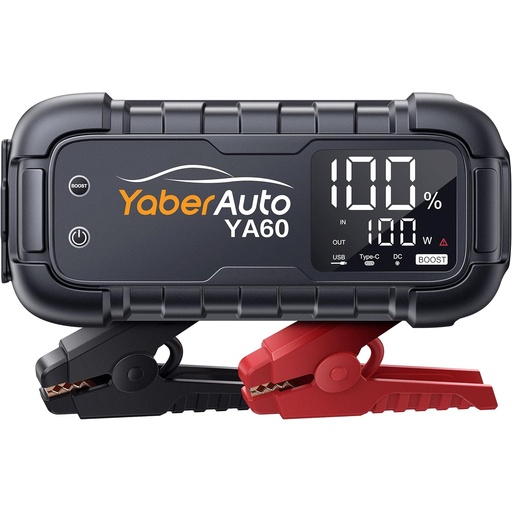
Why it suits this profile: A good option for campervan and outdoor enthusiasts who want to combine a jump starter, power bank and extra power outlet in one device.
The listed 65W USB-C charging function, 150W DC output and battery status help you plan how to use it. Always check that any device you connect is electrically compatible.
According to the product information, it offers 8000A peak current, 26.800 mAh, 600-lumen LED lighting and support for petrol and diesel engines up to 12 litres.
We’ve put together a complete, up-to-date list of products that meet these strict selection criteria and current European safety regulations.
Before using it for the first time, read the manual and fully charge the device. Then check that your vehicle has a 12V battery. In most cases, follow these steps:
Don’t use the jump starter with a damaged or leaking battery. If you’re unsure about the connection or vehicle type, it’s safer to call for roadside assistance than to try it yourself.
No. Check the voltage, engine type and maximum engine size. Most portable models in this category are designed for 12V vehicles. A 24V lorry or an electric car with a high-voltage battery isn’t automatically covered.
That depends on the battery chemistry, storage temperature, charging frequency and how it’s used. Follow the manufacturer’s care instructions. Many models recommend checking and recharging the jump starter every two to six months. Store it somewhere dry and avoid leaving it in a hot car for long periods.
The electricity used to charge one is generally minimal. The main costs are the purchase price and, eventually, replacing the internal battery. A model with a power bank, LED light or compressor can offer extra value if you’ll actually use those features. Also check whether a charging adapter and storage case are included.
