
Vandaag of morgen in huis

Kwaliteit gegarandeerd

Welkomstaanbiedingen ontgrendelen: GRATIS bezorging | Tot 80% korting | Gratis 30 dagen JoyPlus-proefperiode
Download de app
A flat car battery rarely happens at a convenient time. You might be in a car park, on the motorway or at a campsite, and want to get going again without assistance. An car jump starter can be the answer, but not every model is suitable for every vehicle or situation.
As a Joybuy Product Recommendation Officer, I filter product specifications and marketing claims for practical usefulness. Pay particular attention to three common pitfalls: high peak power without clear vehicle compatibility, a battery that is difficult to keep charged in practice, and safety features that are not explained clearly enough.
A high figure on the packaging may sound appealing, but it does not tell you everything. Also check whether the 12V jump starter is suitable for your vehicle’s engine type and capacity. A car with a small petrol engine generally requires something different from a diesel van, SUV or lorry.
Also pay attention to the difference between starting current and peak current. Peak current is a maximum value available for a short period. Starting current often gives a more useful indication of the support provided during starting. Always follow the vehicle limits stated in the product description and manual.
A jump starter power bank with 20,000 mAh may appear generously sized, but capacity and starting power are different properties. Check both values carefully. Some product descriptions list a lower rated capacity alongside the nominal capacity.
A lithium jump starter is often compact and relatively lightweight. That makes it convenient to store in the boot, but lithium batteries must be stored and charged according to the instructions. Do not leave the device in direct sunlight or in a very hot car for extended periods.
A car jump starter operates with high current levels. Look for clear information about reverse polarity, short circuits, overheating and spark protection. Check that the jump leads are sturdy and that the connection points are clearly marked.
A CE marking in a product listing is not a substitute for reading the manual. Also check the warranty, included cables, minimum charge level before use and instructions for connecting the clamps.
For most everyday cars, a model for 12V vehicles is sufficient, but the recommended engine capacity varies by product. For example, one model may be suitable for petrol engines up to 6.0 litres and diesel engines up to 4.0 litres, while a heavier battery booster may state higher limits.
If you drive an SUV, van, motorhome, tractor or lorry, check the following first:
A jump starter for petrol and diesel cars is therefore not automatically suitable for heavy commercial vehicles. With lorries and buses, you need to pay particular attention to the electrical system.
Do not look at mAh alone; also consider the weight and dimensions. A compact car battery booster is easier to carry, while a heavier model may offer more connection options.
Useful features to check include:
A jump starter with fast charging can be practical when you want to recharge the device quickly after use. However, check whether the required adapter is included. Some models come with only a USB cable.
A jump starter with an LED light is useful when you need to reach the battery in the dark. Some models offer continuous light, flashing light and SOS modes. Treat the SOS function as a signalling feature; it is not a substitute for a warning triangle or other mandatory safety measures.
A splash-proof or rain-resistant housing can be useful when you break down at the roadside, but check the exact protection rating. “Waterproof” in marketing copy does not mean that the device can be used underwater.
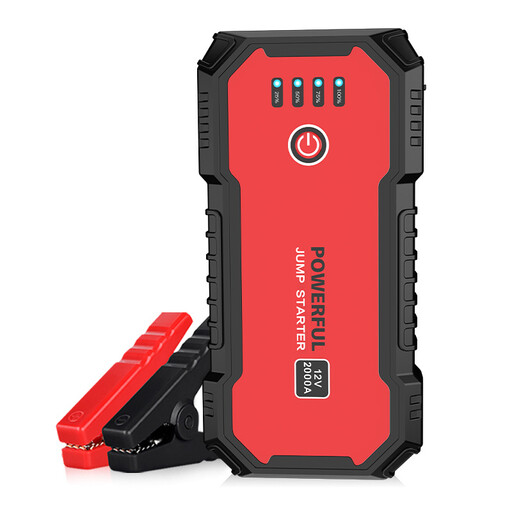
Why it suits this profile: For drivers of an ordinary car, motorbike or light van looking for a compact emergency car starter to keep on the road. According to the product description, this model is intended for 12V petrol and diesel vehicles.
The listing states both a 1500A peak current and compatibility with 12V petrol and diesel vehicles. This means you can compare the offer using more than just the amp rating.
Stated capacity of 20,000 mAh, QC3.0 18W USB output, USB-C input and an LED light with three modes. The stated weight is approximately 430 grams.
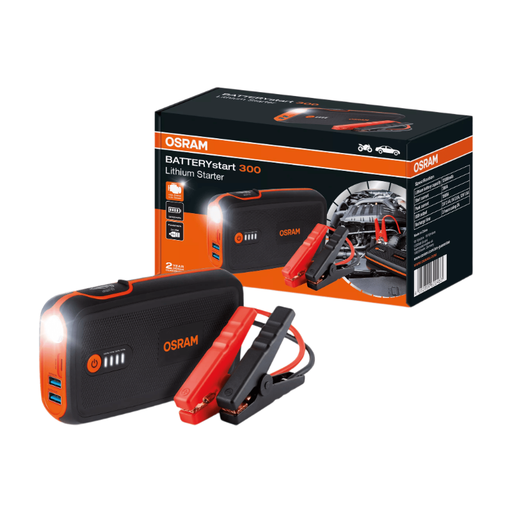
Why it suits this profile: For motorists who value a branded product, an additional 12V connection and a longer stated warranty. The specifications state support for petrol engines up to 8 litres and diesel engines up to 4 litres.
The product information lists the rated starting current of 400A and peak output of 2000A separately. This provides more context than simply quoting a large peak figure.
16,800 mAh lithium-ion battery, two USB ports, a 12V output, LED light and a stated two-year warranty.
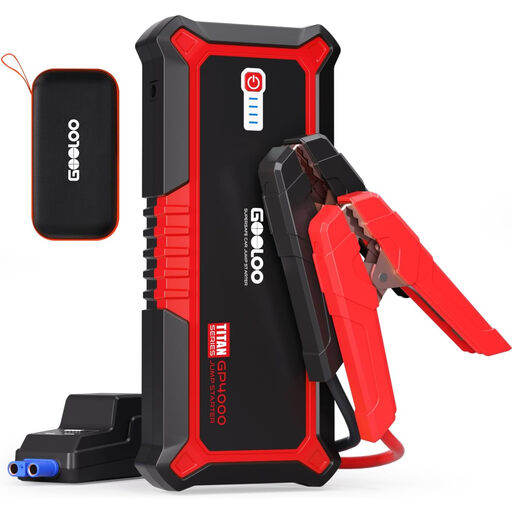
Why it suits this profile: For drivers of SUVs, motorhomes, vans and other vehicles that, according to the product description, require greater starting reserve. Check your vehicle’s engine capacity before ordering.
Alongside a 4000A peak current, the manufacturer states support for petrol engines up to 10.0 litres and diesel engines up to 10.0 litres. These are manufacturer claims; compare them with your vehicle’s manual.
Two USB outputs, USB-C input, BOOST function, metal clamps, LED light and an EVA storage case included.
We have put together a complete, up-to-date list of products that fully meet these strict selection criteria and the applicable European safety regulations.
Store the jump starter somewhere cool and dry. Check the charge level every few months, even if you do not use it. A device left unchecked in the car for months may not have enough charge when you need it.
No. Most models in this category are intended for 12V vehicles. Also check the maximum engine capacity, fuel type and minimum battery voltage. A 24V lorry or a completely failed battery may fall outside the stated application.
Its lifespan depends on the storage temperature, charging habits and usage. Follow the manufacturer’s maintenance instructions and recharge the device after use. Some models also recommend periodic recharging during storage.
That depends on your membership, the purchase price and how often you use the device. A jump starter is a one-off purchase and can also charge phones or other USB devices. However, it is still important to have the car’s battery and charging system checked if the car frequently struggles to start.
