
Vandaag of morgen in huis

Kwaliteit gegarandeerd

Welkomstaanbiedingen ontgrendelen: GRATIS bezorging | Tot 80% korting | Gratis 30 dagen JoyPlus-proefperiode
Download de app
A flat car battery often happens at the worst possible time: on a cold morning, during a camping trip or in a car park far from home. With a car jump starter, you can sometimes start a vehicle yourself, without jump leads or help from another driver.
However, not every car booster pack is suitable for every vehicle. High amp ratings, unclear compatibility and poor maintenance can all lead to a disappointing purchase. In this guide, you’ll learn what to look out for and which models suit different situations.
A manufacturer may quote a peak current of 1,500A, 3,000A or 6,000A, for example. This figure does not automatically indicate how often, or under what conditions, a car can be started. The suitable engine size, fuel type, battery condition and temperature also play a part.
Always check:
A car battery charger generally charges a vehicle battery slowly and in a controlled manner. A jump starter delivers a high current for a short period to help start the engine. The device therefore does not automatically replace a battery charger or regular checks on a worn battery.
If the battery keeps going flat, it could be worn out or there may be a problem with the charging system. In that case, a jump starter is mainly an emergency aid.
A jump starter with compressor, power bank or emergency light can be useful. However, these features add weight, size and extra components. First check that the starting function, cable quality and storage options suit your vehicle.
Also be wary of marketing claims. Statements such as “starts in seconds”, “extreme protection” or a large number of safety layers should be assessed against the technical specifications, manual and product safety information. According to a brand’s product description, such a claim is not an independent guarantee for every situation.
Choose a car battery booster based on your vehicle, not simply the highest number. A compact petrol car will generally require a different capacity from a diesel van, SUV or motorhome.
The product information should make the following clear at a minimum:
For motorbikes, lawnmowers and smaller vehicles, a compact model is often sufficient. Vans, large SUVs and diesel engines require more headroom.
Capacity is often stated in mAh, but this figure can only be properly compared when the voltage and rated power are also known. Also consider the charging method. USB-C, fast charging and a 12V socket can be useful when you’re on the move.
A portable jump starter needs to be charged regularly, even when you’re not using it. Some manufacturers recommend topping up the device periodically because lithium batteries slowly discharge. Store the unit according to the manual and do not leave it in a very hot car for extended periods.
Smart clamps with protection against reverse polarity, short circuits, overload and overheating can reduce the risk of incorrect connection. This does not make the device foolproof: always check that the red clamp is connected to the positive terminal and the black clamp to the negative terminal, unless the manual specifies a different procedure.
A display showing the charge level helps prevent you from setting off with an almost flat car emergency starter. A storage bag keeps cables, adapters and air nozzles together.
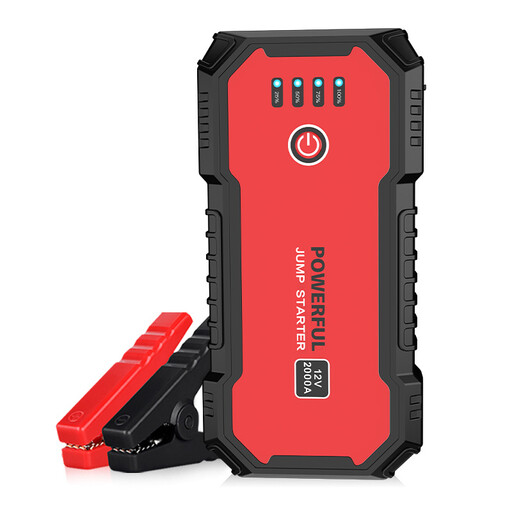
Why it suits this profile: The Porbi S901 is aimed at drivers of 12V cars, SUVs, vans and motorbikes looking for a compact emergency solution without a compressor.
The product information states both 12V compatibility and support for petrol and diesel vehicles. However, check that your engine capacity falls within the stated specifications.
1500A peak current, a 14,000mAh battery according to the product description, QC3.0 USB output and an LED light with three modes.
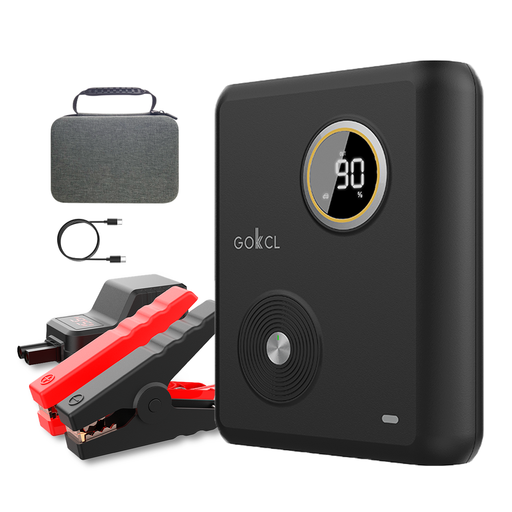
Why it suits this profile: This model is worth considering if you want to keep a device in your car regularly and value a low stated self-discharge rate.
According to the brand’s product description, the GK03 uses a sodium-ion battery and has a stated self-discharge rate of around 1% per month. Check the manual and storage temperature for your intended use.
1500A peak current, 12V system, 60W PD charging and a stated operating temperature of -40°C to 80°C.
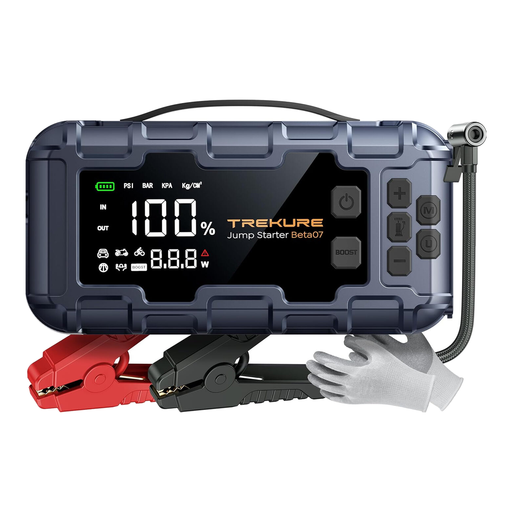
Why it suits this profile: Suitable for drivers of larger petrol and diesel cars who want to inflate tyres and charge devices as well as start their vehicle.
The product description specifies vehicle limits, a 160PSI compressor and a display. This means you can compare its features more effectively in advance than with a model that only makes a peak current claim.
According to the manufacturer: 6000A peak current, suitable for engines up to 12 litres, 45W USB-C PD and an airflow rate of 45 litres per minute.
We’ve put together a complete, up-to-date list of products that fully meet these strict selection criteria and the applicable European safety regulations.
Read the manual for your chosen 12V jump starter before use. The general procedure is usually as follows:
Do not use damaged cables or clamps. Keep the device dry, avoid prolonged exposure to heat and do not store lithium batteries completely flat for months at a time. A jump starter is not intended for electric vehicles unless the manufacturer expressly states otherwise.
This is possible with models that, according to their product information, are suitable for diesel engines. Diesel cars often require more starting power, particularly in low temperatures. Therefore, check the stated maximum diesel engine capacity and voltage before buying.
Its service life depends on the battery type, charging cycles, storage temperature and maintenance. Charge the device periodically according to the manual and avoid storing it in a hot car for extended periods. A stated number of charging cycles or standby time is a claim from the manufacturer’s product information, not a fixed service life for every owner.
Not always, but jump leads can be a useful addition when a second vehicle is available. A jump starter works independently, but it must be sufficiently charged beforehand and suitable for the vehicle. Check both solutions regularly before you need them in an emergency.
