
Vandaag of morgen in huis

Kwaliteit gegarandeerd

Welkomstaanbiedingen ontgrendelen: GRATIS bezorging | Tot 80% korting | Gratis 30 dagen JoyPlus-proefperiode
Download de app
A dead battery. It's one of the most frustrating problems for any car owner, especially on a cold morning or when you're in a hurry. Fortunately, you no longer have to wait for roadside assistance. A modern car jump starter, also known as a jump starter, is a compact and powerful solution to get your car back on the road yourself.
But the market is flooded with models that promise the world. Many of these are based on marketing claims that hold little real-world value. As a Joybuy Product Recommendation Officer, I'm here to help you make the right choices. Let's look at the three most common pitfalls so you don't waste money on a device that will let you down.
Manufacturers love to advertise huge numbers like 3000A or even 8000A. This is the peak current, a very short burst of power. While it sounds impressive, it's not the most important figure. What really matters is the starting current: the power the booster can deliver for several seconds to actually turn an engine over. A model with a lower but stable starting current can start an engine better than a model with a high but brief peak current. So don't be fooled by the biggest number on the box.
The capacity, expressed in milliampere-hours (mAh), is often used to indicate how "powerful" the built-in power bank is. The pitfall here is that the advertised capacity is usually based on the internal 3.7V battery cells. To charge your phone or start your car (a 12V jump starter), this voltage is converted, and a portion of the capacity is lost in the process. A high mAh value is nice if you're looking for a jump starter with a power bank to charge your devices frequently, but it says little about its ability to jump-start a dead battery.
You buy a portable jump starter for emergencies. You put it in your glove compartment and forget about it. Three months later, you need it, but it's dead. This is the problem of self-discharge. Cheaper models can lose their charge within a few months. A good emergency car starter has a low self-discharge rate and remains ready to use for months.
To avoid a bad purchase, focus on the specifications that truly matter. Check these three points before making a choice.
This is the most important check. Diesel engines have a higher compression ratio and require significantly more power to start than petrol engines of a similar size. Therefore, always check the manufacturer's specifications, which indicate the maximum engine displacement (in litres) the car jump starter is suitable for, specified for both petrol and diesel. A booster that works perfectly for a 2.0L petrol engine may completely fail on a 2.0L diesel engine.
The smart clamps are your connection to the battery. Cheap, thin cables and weak clamps cannot conduct the current properly and can even melt during a demanding start attempt. Look for models with sturdy, all-metal clamps and thicker cables (indicated by a lower AWG value, e.g., 8AWG). Modern smart clamps also offer crucial protections against short circuits, reverse polarity, and overheating, which makes them much safer to use.
Although the primary function is to start your car, the extras are often what make a model truly practical. Starting a car with a power bank is convenient, but check the output ports. For example, a USB-C PD port can charge your laptop, while a Quick Charge (QC) port will charge your phone faster. A built-in LED flashlight with different modes (normal, strobe, SOS) is indispensable for a breakdown in the dark.
Below are some popular choices, matched to specific needs and vehicles.
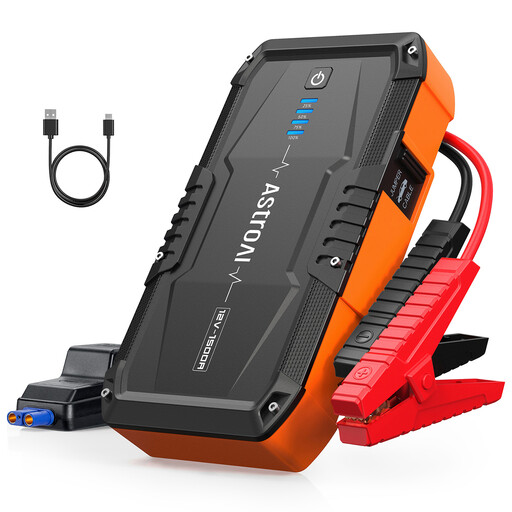
Why This Fits Their Persona: Perfect for drivers of a compact or mid-size petrol car (up to 6.0L) or a small diesel (up to 3.0L). This model is compact, fits easily in the glove compartment, and offers reliable core functionality without unnecessary frills.
The specifications are clear and realistic. The 1500A peak current is linked to concrete engine compatibility, so you know exactly what you're buying, avoiding the "peak amps" myth.
Compact size and high-quality metal clamps with 8 built-in safety protections. The "BOOST" button is useful for completely dead batteries.
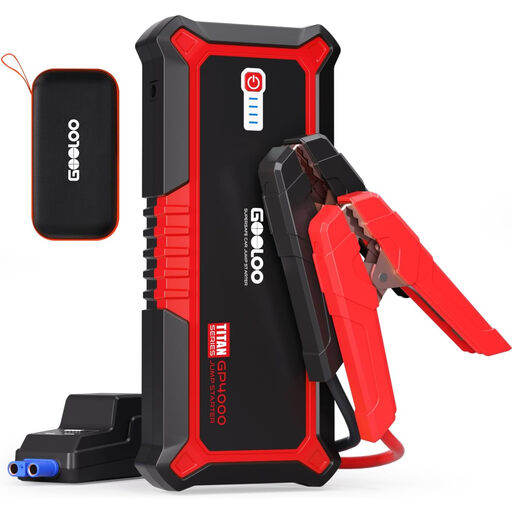
Why This Fits Their Persona: Ideal for those with an SUV, van, or a car with a large diesel engine (up to 10.0L). This model delivers the power needed for demanding starts, ensuring you're not left with an underpowered booster.
This model focuses on actual starting power for large engines. The 4000A peak current is backed by a robust design suitable for all petrol engines and large diesels, which inspires confidence.
Extremely powerful, suitable for virtually all passenger cars and light-duty trucks. It has a "BOOST" function and serves as a large power bank with fast-charging ports.
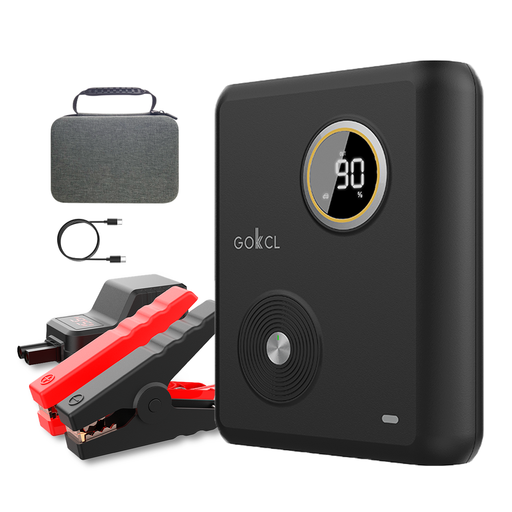
Why This Fits Their Persona: For those who want to be prepared for anything. The sodium-ion technology is ideal for people who leave the booster in their car, regardless of the season. Perfect for campers who need a reliable power source that won't drain over time.
This model directly addresses the self-discharge pitfall. According to the manufacturer, it has a standby time of up to 5 years, meaning the device is ready when you need it, unlike many lithium models.
Operates in extreme temperatures (-40°C to 80°C). The sodium-ion battery is considered safer and has a much longer lifespan (more charge cycles) than traditional lithium batteries.
We have compiled a complete, up-to-date list of products that fully meet these strict selection criteria and safety regulations.
This depends on the model and battery technology. Most manufacturers of lithium-ion boosters recommend charging the device every 3 to 6 months to keep the battery in good condition and counteract self-discharge. Models with newer technology, such as sodium-ion, often have a much lower self-discharge rate. Always check your specific model's manual for the best advice.
Yes, modern jump starters are designed with safety as a priority. The "smart" jumper clamps include multiple built-in protections, such as reverse polarity protection (connecting the clamps incorrectly), short-circuit protection, over-voltage, and overheating protection. These systems prevent damage to your car's electronics and the booster itself.
No, this is a common mistake. Diesel engines require significantly more starting power than petrol engines. You must choose a battery booster that is explicitly recommended by the manufacturer for the size of your diesel engine (e.g., "suitable for up to 8.0L diesel"). A booster that is too weak will not be able to start the engine and could even be damaged.
