
Vandaag of morgen in huis

Kwaliteit gegarandeerd

Welkomstaanbiedingen ontgrendelen: GRATIS bezorging | Tot 80% korting | Gratis 30 dagen JoyPlus-proefperiode
Download de app
A flat car battery always seems to happen at the worst time: on a cold morning, after a weekend away or when you’re setting off in a campervan, boat or van. A car jump starter can come to the rescue, but not every model is right for every vehicle. A high amp rating on the packaging doesn’t tell you everything.
When choosing, look out for these three common pitfalls:
Most cars, motorbikes, campers and light commercial vehicles use a 12V battery system. Always check this before buying. A portable 12V car jump starter isn’t designed for heavy 24V lorries or buses.
Also check the stated compatibility with petrol and diesel engines. Diesel engines often need more power to start. A model listed in its specifications as supporting up to 9,0-litre petrol and 6,5-litre diesel engines offers a different margin from a compact model designed for, say, 6,0-litre petrol and 4,0-litre diesel engines.
The stated peak power is a manufacturer’s product specification. Don’t use it as your only point of comparison: cable quality, battery charge, temperature and the condition of the vehicle’s battery can all affect starting.
A jump starter with compressor combines a car battery jump starter with a portable air compressor. A maximum pressure of 150 PSI is useful for car and motorbike tyres, bicycles and balls, but it doesn’t tell you how quickly a tyre will inflate.
Also look for:
According to the product information for some models, the compressor shouldn’t run for more than ten minutes at a time. Let the device cool down afterwards. Check the recommended tyre pressure in your car’s manual or on the sticker inside the door frame, rather than relying only on the pump’s maximum pressure.
A good 12V battery booster has clear connection instructions and safeguards against issues such as reverse polarity, short circuits, overheating and overcharging. A CE mark indicates that the manufacturer declares the product meets applicable European requirements; it isn’t an independent quality rating.
Useful extras include:
A smaller car battery charger is a different type of product. A jump starter provides a short burst of starting power; a battery charger charges the battery in a controlled way using mains power. If your main aim is to maintain a battery, you may also want to look at a car battery charger.
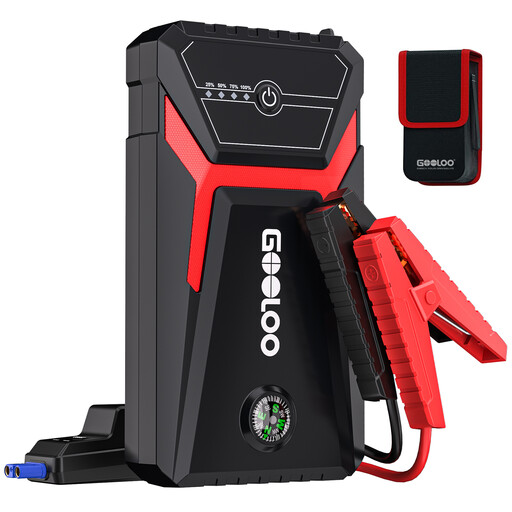
Why it suits this profile: This compact model is designed for everyday use in a car or motorbike and, according to the product information, supports 12V vehicles with engines up to 6,0 litres petrol and 4,0 litres diesel.
The product specifications state the supported engine sizes and list ten safety features, so you don’t have to rely on the amp rating alone.
1500 A peak current, two USB outputs, a three-mode LED light and a weight of approximately 0,878 kg.
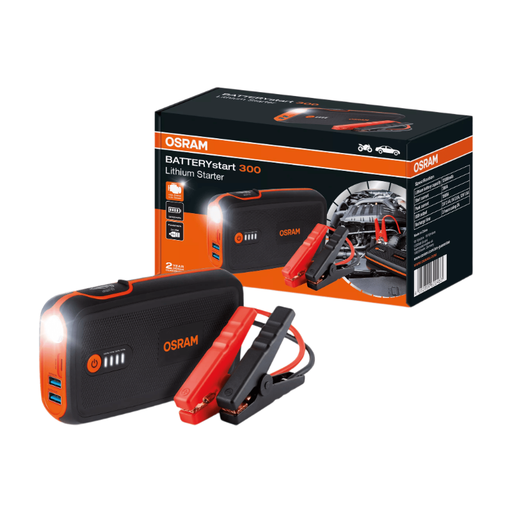
Why it suits this profile: A good choice for drivers who value a well-known brand, a 12V output and a longer stated warranty.
The stated limits are specific: up to 8 litres petrol and 4 litres diesel. This makes it easy to check compatibility before buying.
2000 A peak power, 16.800 mAh, dual USB ports, a 12V output and, according to the product information, a two-year warranty.
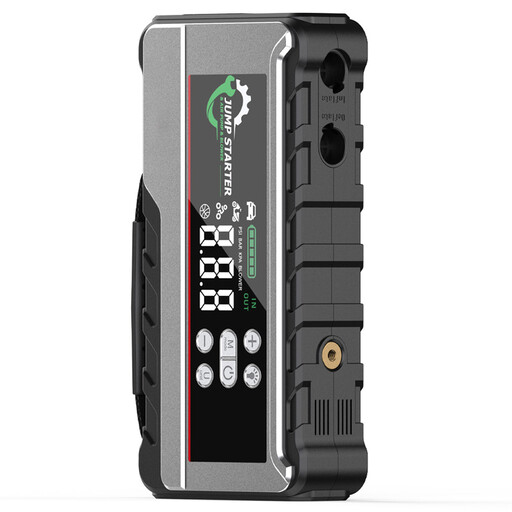
Why it suits this profile: Designed for SUV and van owners, campervan drivers and outdoor enthusiasts who want to inflate tyres and other inflatables as well as start their vehicle.
The specifications list 150 PSI alongside automatic functions, charging ports and a separate air blower. This means you can see in advance exactly which extra features you’ll get.
3000 A peak current, 150 PSI compressor, PD65W charging, power bank, LED emergency light and support for 12V petrol and diesel vehicles.
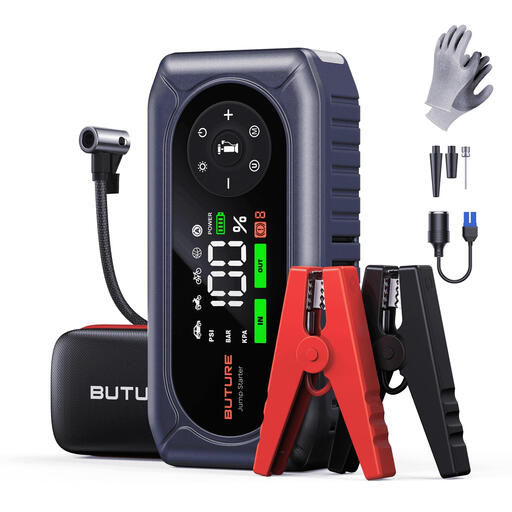
Why it suits this profile: Its stated compatibility with engines up to 9,0 litres petrol and 8,0 litres diesel makes it a good fit for larger SUVs, boats, trucks and other 12V vehicles.
The product information sets a ten-minute operating limit for the compressor and recommends letting it cool between uses.
4500 A peak current, 150 PSI, five inflation modes, LCD screen, ten listed safety features and a stated two-year warranty.
We’ve put together a full, up-to-date list of products that meet these strict selection criteria and the applicable European safety requirements.
Don’t use a jump starter with a damaged, leaking or frozen battery. Some models won’t work with a completely faulty battery, and an emergency car jump starter is no substitute for diagnosis or repair.
It depends on the model and the condition of the battery. Some products have a boost function for very low voltage, but manufacturers don’t guarantee that this will start every completely flat or damaged battery. Check the minimum voltage and instructions in the manual.
This depends on storage conditions, temperature, charge level and the number of starting attempts. Recharge the device after use and check the remaining charge every few months. Any stated number of charge cycles is a manufacturer’s product specification, not a guarantee of a fixed lifespan.
Not always for occasional emergency starts. A jump starter provides temporary starting power. If you regularly need to charge or maintain a 12V battery, you’ll need a separate charger that’s suitable for the battery type, such as AGM, EFB, gel or flooded lead-acid.
