
Vandaag of morgen in huis

Kwaliteit gegarandeerd

Welkomstaanbiedingen ontgrendelen: GRATIS bezorging | Tot 80% korting | Gratis 30 dagen JoyPlus-proefperiode
Download de app
A flat car battery often strikes at the worst possible moment: in a dark car park, just before you leave for work or halfway through a long family journey. With a car jump starter, you can try to start a 12V vehicle yourself, without relying on another car.
However, not every portable jump starter is right for every driver. Manufacturers often highlight a high peak current, lots of features or a large number of jump starts. Those figures don’t tell the whole story. You should also consider engine compatibility, charge level, cables, storage and the difference between a jump starter and a regular car power bank.
A high peak current sounds appealing, but the first thing to check is whether the manufacturer says the product is suitable for your engine type. A 12V jump starter for a compact petrol car has different requirements from a battery booster for an SUV, campervan or diesel van.
Check:
A jump starter for a 24V lorry system isn’t automatically suitable for a standard car.
A jump starter with compressor or jump starter with air pump can come in handy when a tyre is soft, but a maximum pressure of 150 PSI doesn’t mean every tyre will inflate in seconds. The actual speed depends on the tyre’s volume, its starting pressure and how much heat the pump generates.
Check that the compressor has:
Use the pump as instructed and let the device cool down when advised.
A jump starter left unused in your car for months may not have enough charge when you need it. Some product descriptions recommend charging the battery every two to three months; other models specify a longer storage period. Always follow the instructions for your particular model.
Store the device somewhere dry, away from direct sunlight and not in an extremely hot car. Check the charge level before a long journey, and keep the jump leads, charging cable and any compressor accessories together.
A higher peak current doesn’t automatically guarantee a successful start. Use the stated vehicle limits as your first point of comparison. A compact model may be enough for a small city car. For an SUV, campervan, tractor or diesel vehicle, it’s sensible to choose one that supports a wider range of engines.
Also check the starting procedure. Some devices require a special boost function when the battery voltage is very low. That doesn’t mean you should use a damaged, leaking or frozen battery.
Ideally, choose a model with smart jump leads and protection against reverse polarity, short circuits, overheating and overcurrent, among other risks. These features help reduce the risk of incorrect connections, but they don’t replace careful use.
The usual procedure is:
Don’t use a car jump starter if the battery is visibly damaged, and don’t keep cranking the engine for long periods.
A larger battery often offers more capacity, but it also takes up more space. A compact model is practical for commuters who keep their jump starter in a small boot. If you also want to charge a phone, tablet or laptop on the go, look for USB-A, USB-C or DC ports.
An LED light with a standard beam, flashing mode or SOS signal is useful if you break down in the dark. Treat these features as extras, not as a replacement for a warning triangle and the usual roadside safety precautions.
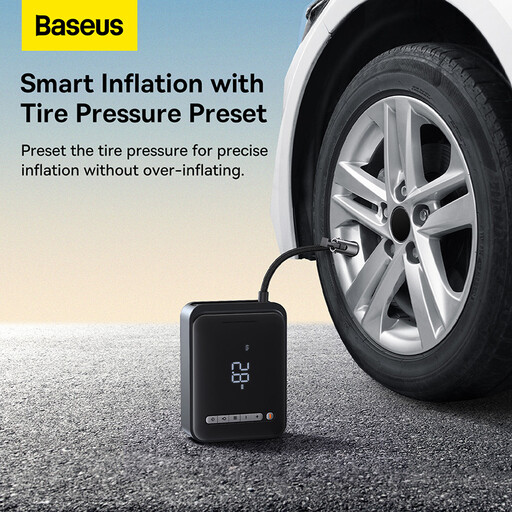
Why it suits this profile: This model combines a car jump starter with a compressor and, at around 1,36 kg, is still manageable for everyday use.
The product details state both a peak current of 1000A and a pressure gauge range of 5–150 PSI. Check beforehand that your engine falls within the stated vehicle limits.
8000mAh capacity, two USB outputs and, according to the product specifications, around 7–9 minutes to inflate an R195 tyre.

Why it suits this profile: The product description says it supports petrol engines up to 9 litres and diesel engines up to 7 litres, making it suitable for larger cars, campervans and boats.
As well as its peak current, this model features a BOOST function for very low battery voltage and lists ten safety protections. Follow the manual if the battery is extremely flat.
USB-C and USB outputs, a 400-lumen light and a stated operating temperature range of around -20 to 60 °C.
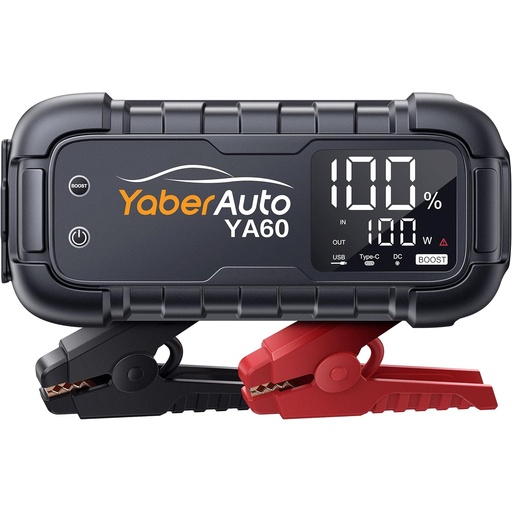
Why it suits this profile: With its 65W USB-C function, 150W DC output and stated suitability for diesel engines up to 12 litres, this model is aimed at larger vehicles and frequent use on the go.
The specifications list ten safety features, heavy-duty 8AWG cables and clear instructions for boost starts. Still, check the connections before every attempt.
26800mAh, a 600-lumen LED light, USB-C 65W and a stated charging time of around 1,5 hours with a suitable power supply.
We’ve put together a complete, up-to-date list of products that meet these strict selection criteria and the applicable European safety requirements.
No. Check the vehicle limits in the product description. Pay particular attention to the difference between petrol and diesel engines, and to the maximum engine capacity. A 12V rating only tells you the system voltage, not the maximum engine size.
That depends on the battery type, how it’s used, storage temperature and maintenance. Charge the device as instructed in the manual, preferably before a long journey. Don’t use a model if its casing is swollen, cracked or damaged.
Charging it generally uses less electricity than charging a large household battery, but consumption varies by capacity and charger. A compressor uses significantly more energy while inflating a tyre than the USB function does. Recharge the jump starter after use so it’s ready for the next emergency.
