
Vandaag of morgen in huis

Kwaliteit gegarandeerd

Welkomstaanbiedingen ontgrendelen: GRATIS bezorging | Tot 80% korting | Gratis 30 dagen JoyPlus-proefperiode
Download de app
A flat car battery often strikes at the worst possible moment: on a cold morning, during a camping trip or just before setting off with a caravan. With a car jump starter, you can often try to get going yourself, without relying on another car and jump leads.
However, not every portable car jump starter is suitable for every vehicle. A high amp rating on the packaging doesn’t tell you everything. Before buying a car battery booster, check that it’s compatible with your vehicle, what safety features it has and how it needs to be maintained.
A product rated at, for example, 2.000A or 4.000A sounds powerful, but the stated peak current isn’t the same as the normal starting current. The maximum engine capacity also varies by fuel type. A device may be listed as suitable for petrol engines up to 8,0 litres, but only for diesel engines up to 6,0 litres.
Always check:
A jump starter is designed for emergency starting, not for repairing a worn-out battery or an alternator problem.
Smart jump leads may include features such as reverse polarity, short-circuit, overload and spark protection. These reduce the risk of connecting the leads incorrectly, but they don’t make misuse risk-free. Always follow the instructions for the model you choose.
A protected jump lead should also connect securely. Thin cables, small clamps or a damaged casing are practical reasons not to use a product. A CE mark indicates that the manufacturer declares the product complies with relevant EU requirements; it isn’t an independent quality mark and doesn’t replace checking the specifications.
Lithium batteries lose charge over time. Heat inside a parked car, damp conditions and prolonged storage without checks can affect how well the device works. Check the recommended charging frequency in the manual. Some manufacturers, for example, advise recharging a device after a few months.
Keep your car battery booster somewhere dry, check its charge level before a long journey and don’t use it if the casing is bulging or cracked, or if any liquid is leaking.
For most cars, motorbikes, campervans and light commercial vehicles, a 12V jump starter is the relevant category. Then check the maximum engine capacity. A compact model may be enough for a small petrol car. For a diesel campervan, SUV or van, it’s wise to allow for some extra capacity.
The label “suitable for petrol and diesel” doesn’t automatically mean that every vehicle is supported. Check the specifications for the specific model and, if in doubt, consult your vehicle’s handbook.
Peak current is useful when comparing models, but also check the stated starting current and battery capacity. A higher capacity can be useful if you also want to use the device as a power bank for your car, for example to charge a phone, sat nav or camera.
Bear in mind that stated capacities aren’t always directly comparable. Some manufacturers list the internal capacity, while others give the usable capacity. Treat the technical specifications as a way to compare products in the range, not as a guarantee of a certain number of starts.
Useful features to have on the road include:
Follow the instructions when connecting the leads. In many cases, the red clamp goes on the positive terminal and the black clamp goes on a suitable unpainted metal earth point. Don’t crank the engine for longer than instructed, and remove the clamps in the specified order once the engine has started.
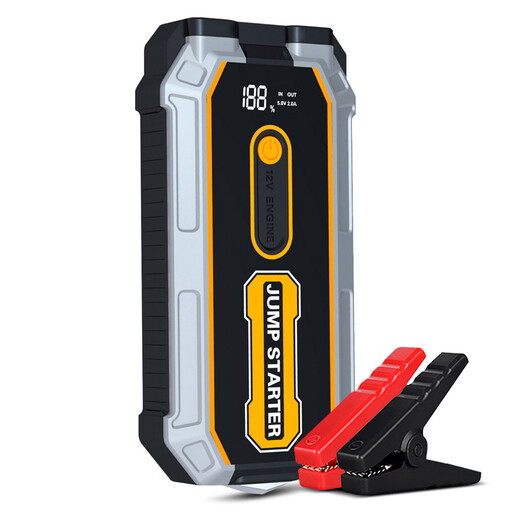
Why it suits this profile: A compact option for drivers and motorcyclists looking for a straightforward emergency starting solution with a display.
The stated 1200A peak current is accompanied by clear information about 12V petrol and diesel vehicles. The LCD display shows the remaining charge level.
Around 330 grams, 10W USB output, LCD display and three-mode LED light.
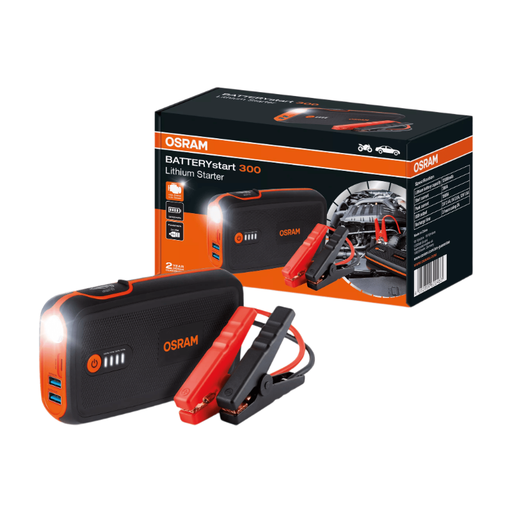
Why it suits this profile: A good choice if you want to power USB devices and 12V accessories on the go as well as start your vehicle.
The product information lists the 12V voltage, maximum engine capacity and charge level separately. Check these details against your vehicle as well.
2000A peak power according to the product specifications, two USB ports, 12V output and a two-year manufacturer’s warranty according to the offer.
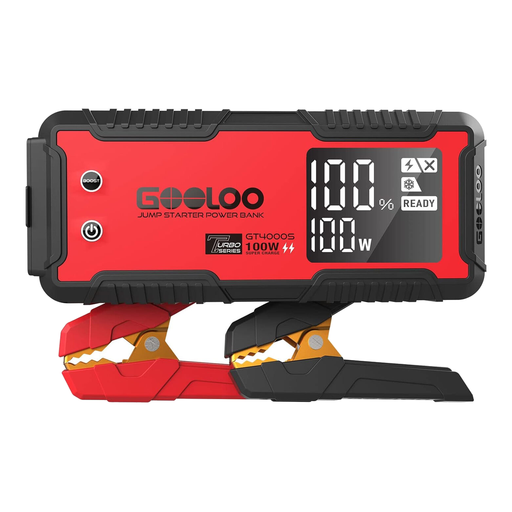
Why it suits this profile: A compelling option for campervans, larger vehicles and users who want fast charging via USB-C.
The product description lists 10 protection features, a display and a BOOST function. Use these features only as directed in the manual.
4000A peak power according to the product information, support for petrol and diesel engines up to 10 litres, 100W USB-C and a 15V output.
We’ve put together a complete, up-to-date list of products that meet these strict selection criteria and the applicable European safety requirements.
Yes, as long as the product information lists both fuel types and the right maximum engine capacity. A jump starter for petrol and diesel must also be suitable for your vehicle’s 12V system. If you have a diesel engine, check the stated limit particularly carefully.
Its lifespan depends on storage temperature, charging frequency and use. Charge the device as instructed in the manual, keep it dry and check its charge level before travelling. Don’t use a jump starter if its battery or casing is damaged.
Not always. An emergency jump starter works on its own, whereas standard jump leads require a second vehicle. It can still be useful to know about both options. When choosing a car jump starter, look for clear connection instructions, sturdy clamps and suitable safety features.
