
Vandaag of morgen in huis

Kwaliteit gegarandeerd

Welkomstaanbiedingen ontgrendelen: GRATIS bezorging | Tot 80% korting | Gratis 30 dagen JoyPlus-proefperiode
Download de app
A dead battery always happens unexpectedly and at the worst possible moment. Waiting for roadside assistance is time-consuming, and relying on another vehicle with jumper cables isn't always an option. A portable jump starter, also known as a battery booster, is the perfect solution. However, the market is flooded with models promising impressive specifications. Unfortunately, these marketing terms often lead to a bad purchase.
As a Joybuy Product Recommendation Officer, I'm here to help you make the right choice. We'll look past the hype and focus on what really counts. Here are the most common pitfalls and how to avoid them.
Pitfall 1: The Myth of Sky-High Peak Amps Many manufacturers advertise an extremely high peak amperage (e.g., 7000A). This number is often misleading. It represents the maximum current the device can deliver for a fraction of a second. For starting your car, the cranking amps are far more important, but this figure is rarely featured prominently. Insufficient cranking amps mean the booster won't be able to turn over your engine, especially in cold weather or with a diesel engine.
Pitfall 2: Unrealistic Battery Capacity (mAh) The capacity in milliampere-hours (mAh) seems like a good indicator of how many times you can start a car or charge your phone. The pitfall is that the advertised capacity is often that of the internal 3.7V cells. The actual output at 12V (for your car) or 5V (for USB) is significantly lower. As a result, a powerbank startbooster may perform far below its promises in real-world use.
Pitfall 3: Weak Clamps and Thin Cables The quality of the jumper cables and clamps is crucial for safety and performance. Cheap, thin cables and clamps with weak springs cannot transfer the necessary current efficiently. They can overheat, melt, or simply fail to make a solid connection with the battery terminals, causing the car jump starter to fail when you need it most.
To make a smart purchase, ignore the marketing hype and focus on three concrete specifications.
Look beyond the biggest number. The most important question is: is the car jump starter suitable for your engine?
jumpstarter with 2000A to 3000A.startbooster diesel engines (above 5.0L) and commercial vans: Opt for a powerful model with 3000A or more. A 12v startbooster for this segment must be robust.The specifications almost always state the engine displacement (in litres) the device is suitable for. Always check this.
Most jump starters use lithium-ion batteries. They are compact and powerful but have drawbacks: they lose their charge over time and perform poorly in extreme temperatures. You typically need to recharge them every 3 months.
Newer models sometimes use sodium-ion technology. According to manufacturers like GOKKCL, these have a much longer standby time (up to 5 years), a longer lifespan (more charge cycles), and are safer at high temperatures.
A modern auto booster is often a multifunctional device. Consider which extra features would be useful for you:
Jump starter with air compressor: Extremely useful for inflating a low tire without needing a separate air pump. Ideal for road trips or camping.Power bank jump starter: Most models have USB ports to charge your phone, tablet, or other devices. Pay attention to the output (fast charging like QC 3.0 is a plus).Below are several models that suit different user profiles, selected based on their specifications and functionality.
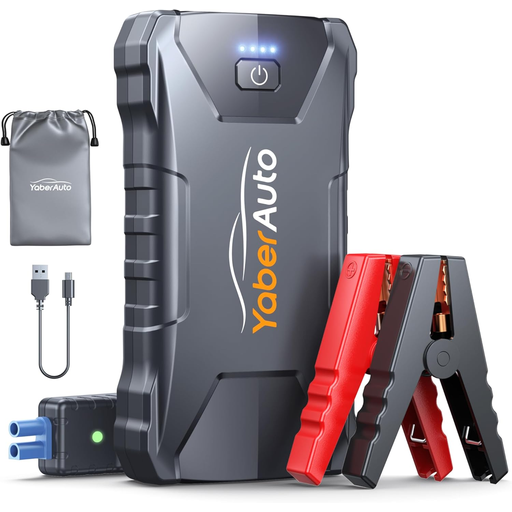
Why This Fits Their Persona: Perfect for those seeking a compact, reliable solution for a standard gasoline or small diesel car. Weighing just 340 grams, it fits easily in the glove compartment and isn't unnecessarily powerful or expensive.
This model focuses on realistic performance (2000A peak) for the most common cars (up to 7.0L gasoline/5.5L diesel) and avoids the pitfall of exaggerated specs you don't need.
Extremely compact and lightweight: Easy to store. Built-in safety features: Protection against short circuits, reverse polarity, and more.
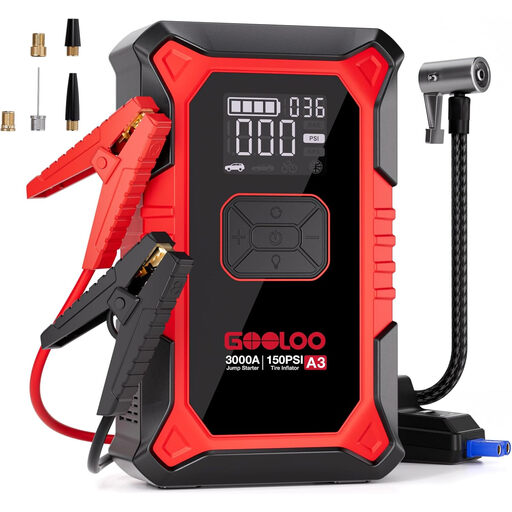
Why This Fits Their Persona: Ideal for those who want an all-in-one solution. Besides a powerful 3000A jump starter for larger engines, the built-in 150 PSI compressor is a lifesaver for a low tire. It's handy for RV owners, families, and adventurers.
This model combines features that truly matter. Instead of focusing on a single exaggerated spec, it offers a practical all-in-one package with a powerful starter and a fully functional air pump.
Jump starter with air compressor: 150 PSI pump with an auto-stop function. Powerful: Suitable for engines up to 9.0L gasoline/6.5L diesel.
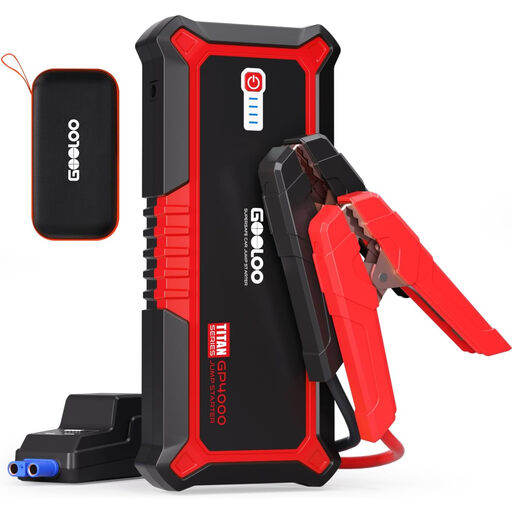
Why This Fits Their Persona: For owners of large SUVs, vans, RVs, or boats with heavy-duty diesel engines. This 4000A booster delivers the power needed to start even engines up to 10.0L diesel, where lighter models fall short.
This model actually delivers the high cranking current needed for heavy-duty engines. The "BOOST" function for deeply discharged batteries and the robust, all-metal clamps bypass the pitfall of weak performance and poor build quality.
Extremely powerful: Starts all gasoline engines and diesels up to 10.0L. Robust build quality: All-metal clamps and a sturdy housing.
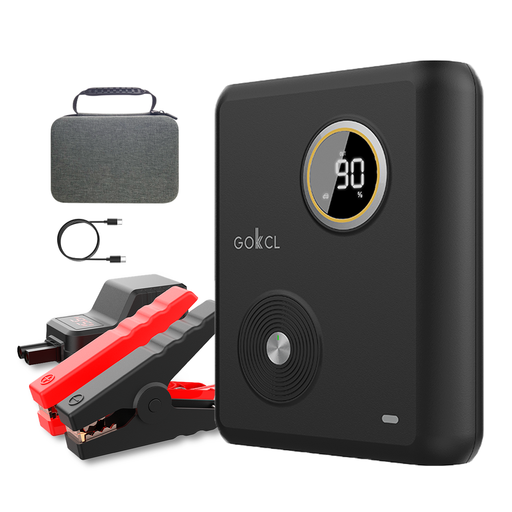
Why This Fits Their Persona: For the user looking for the latest technology with a focus on durability and minimal maintenance. According to the manufacturer, its sodium-ion technology offers a solution to the drawbacks of traditional lithium boosters.
This model tackles the pitfall of battery degradation and maintenance. The claimed 5-year standby time means you don't have to constantly recharge it, making it more reliable when you need it.
Sodium-ion technology: Safer and more durable, according to the manufacturer. Long standby time: Up to 5 years without recharging, always ready for use.
We have compiled a complete, up-to-date list of products that meet these strict selection criteria and safety standards.
For most lithium-ion jump starters, it is recommended to fully charge them every 2 to 3 months, even if you don't use them. This keeps the battery in good condition. Models with sodium-ion technology claim a much longer standby time, but always check the manufacturer's recommendations.
Yes, but with a few caveats. Most jump starters have an operating temperature range of approximately -20°C to +60°C (-4°F to 140°F). In a typical winter, this is usually not a problem. However, in a car parked in direct sunlight, the interior temperature can exceed 60°C (140°F). This can shorten the battery's lifespan and poses a potential safety risk. It's best to store it in the glove compartment or under a seat, out of direct sunlight.
Modern, high-quality jump starters are equipped with multiple safety mechanisms. These protect against short circuits, reverse polarity (connecting the clamps incorrectly), over-voltage, and overheating. These systems ensure that your car's sensitive electronics, such as the ECU, are not damaged. Always choose a model that clearly lists these safety features.
