
Vandaag of morgen in huis

Kwaliteit gegarandeerd

Welkomstaanbiedingen ontgrendelen: GRATIS bezorging | Tot 80% korting | Gratis 30 dagen JoyPlus-proefperiode
Download de app
A dead battery always happens unexpectedly and at the worst possible moment. Whether it's on an icy cold morning or in the supermarket car park, it's a problem you'd rather solve yourself than wait hours for roadside assistance. A portable car jump starter is the solution. But the market is flooded with models that promise the world. Many of these promises are based on marketing tricks designed to mislead you.
As a Joybuy Product Recommendation Officer, I'm here to help you cut through the noise. Before you make a purchase, it's crucial to recognise the three most common traps that many car owners fall into.
To avoid a bad purchase, focus on the specifications that truly matter. These are the three factors that determine whether a jump starter is reliable.
Don't ignore peak amps completely, but look beyond them. Always check which engine sizes (in litres) the jump starter is suitable for. Manufacturers usually specify this separately for gasoline and diesel. A diesel engine has higher compression and requires significantly more starting power than a gasoline engine of the same size.
Most jump starters use a lithium-ion battery. It's lightweight and powerful but has drawbacks: performance degrades in freezing temperatures, and its lifespan is limited. A newer technology is sodium-ion. According to manufacturers like GOKKCL, these batteries offer significant advantages:
A good car jump starter must be equipped with "smart" clamps featuring built-in protections. Check if the following features are present:
These features not only protect your car but also ensure you can use the booster safely, even if you have no technical expertise.
Based on these criteria, we have selected a few models that suit different user profiles.
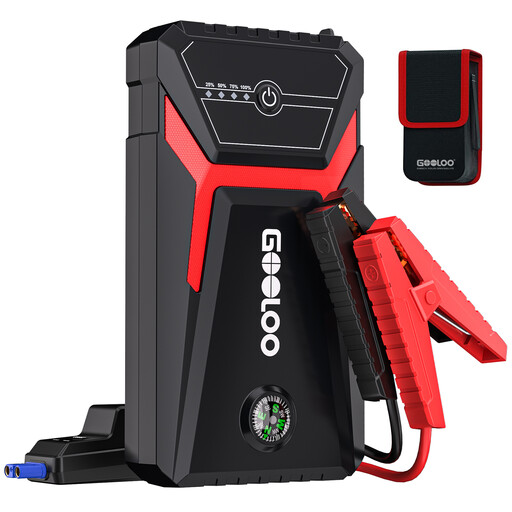
Why This Fits Their Persona: A compact and affordable choice for those seeking a reliable solution for a passenger car. It's small enough for the glove compartment and powerful enough for most gasoline engines and smaller diesels.
This model provides clear specifications for engines up to 6.0L gasoline and 4.0L diesel, without focusing on an exaggerated peak current. The smart clamps offer the 10 essential safety features.
Excellent value for money. Compact and lightweight, with convenient USB ports for charging your phone.
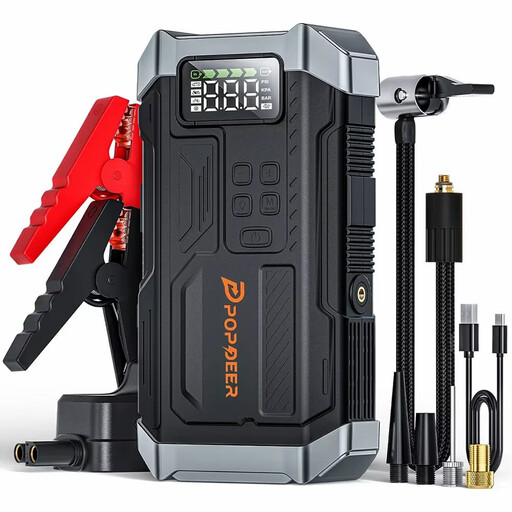
Why This Fits Their Persona: This is an all-in-one tool for those who want to be prepared for more than just a dead battery. Ideal for campers, boat owners, or DIY enthusiasts who also want an air compressor on hand.
The high 5000A peak current is backed by clear compatibility for large engines (10L gasoline/8L diesel). The jump starter with compressor is a functional addition with a maximum pressure of 150 PSI.
Very powerful and multifunctional. The built-in air compressor with an auto-stop function is practical for inflating tyres and other inflatables.
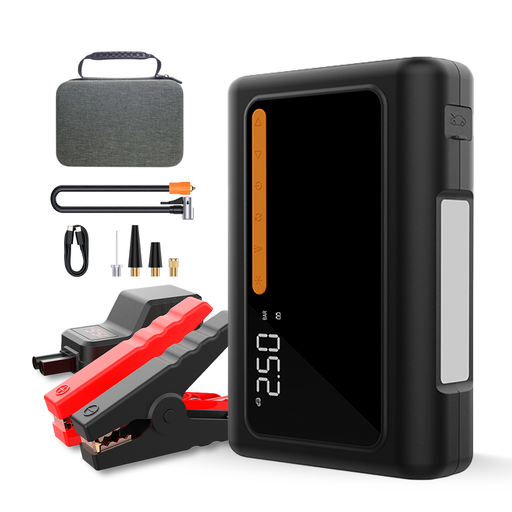
Why This Fits Their Persona: For those who invest in durability, safety, and the latest technology. This booster is designed to last for years and performs reliably in all weather conditions, from harsh winters to hot summers.
It addresses the drawbacks of lithium-ion. The sodium-ion battery offers a superior lifespan (≥ 6,000 cycles) and an extremely wide temperature range (-40°C to 80°C), according to the manufacturer, which guarantees its reliability.
Exceptional durability and safety. According to the manufacturer, the battery can be revived even after a complete discharge and has a very low self-discharge rate.
We have compiled a complete, up-to-date list of products that fully meet these strict selection criteria and safety regulations.
Even if you don't use it, it's advisable to fully charge a portable jump starter every 3 to 6 months. This helps to keep the battery in good condition. Some models with low self-discharge, such as those with sodium-ion technology, can hold their charge for longer. Always check the manufacturer's recommendations.
Yes, a modern jump starter with smart clamps is safe for your car's electronics. These clamps contain multiple built-in protections that prevent damage from incorrect connections, short circuits, or power surges. As long as you follow the instructions, you run no risk.
No, not every jump starter is powerful enough for a diesel engine. Diesel engines require a higher cranking current. Therefore, always check the manufacturer's specifications to see if the booster is suitable for the engine size of your diesel car. This is usually clearly indicated, for example, "suitable for diesel engines up to 8.0L".
